PLAGUE ART MINIMALISM AT FLORENCE'S SANTISSIMA ANNUNZIATA
During the Spring of 2020, the city of Florence was slowly emerging from a long and intense COVID lockdown (not the last, alas).
Meanwhile, I was packing up my house and moving back to America after several decades in Italy— an excruciating task.
WHAT WAS I DOING IN ITALY ALL THOSE YEARS? SEE:
ITALY AND ME...

As the weeks passed, more and more redundant treasures made their way to the dumpster at the end of the block.
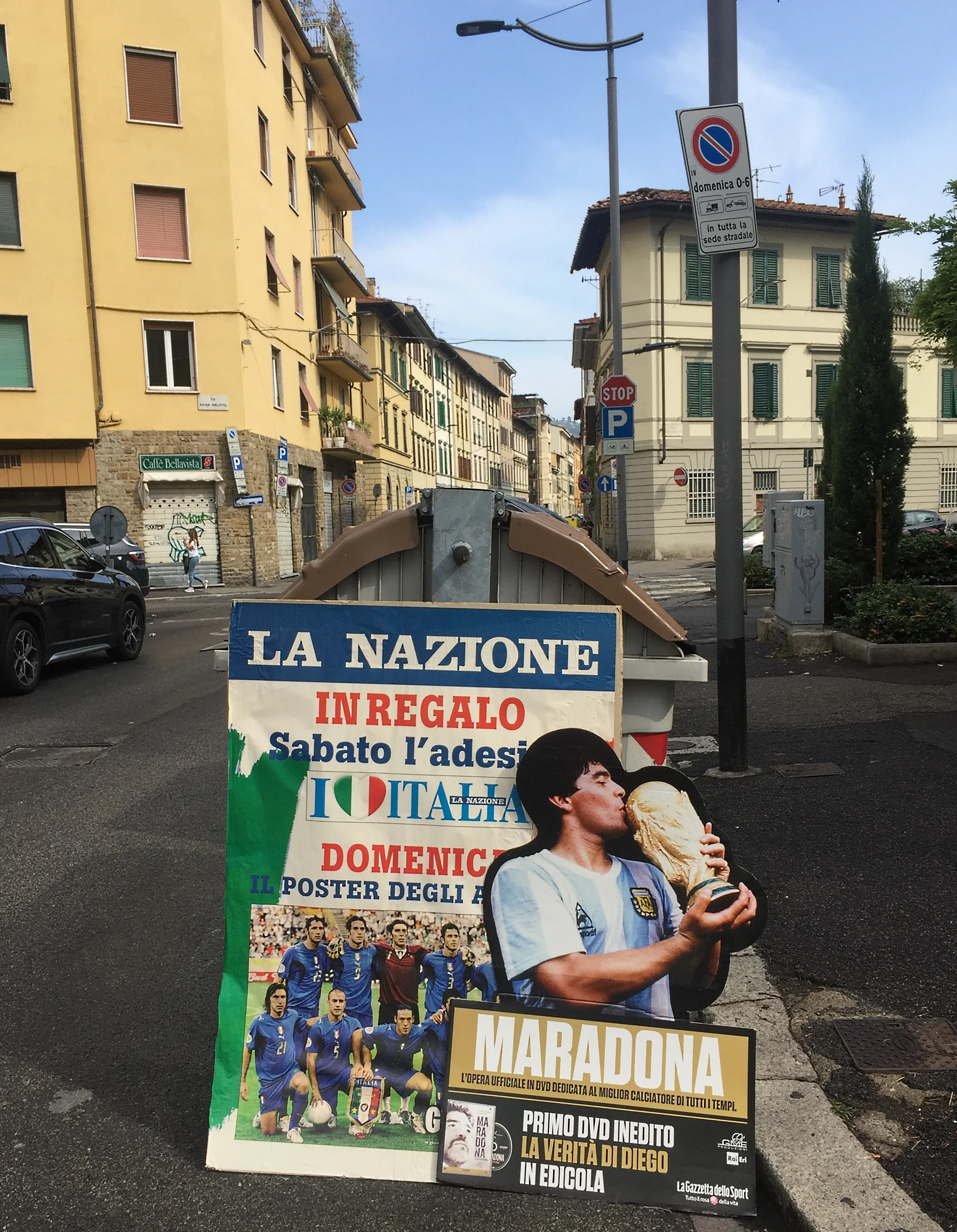
Meanwhile, I started making the rounds, taking last looks at what I long took for granted as everyday sights.
For half a century, the Basilica della Santissima Annunziata had been my favorite church in Florence —with its opulent decoration and shifting moods.
It is one of those places where you can sit for hours, watching shadows come and go, revealing then obscuring curious details.
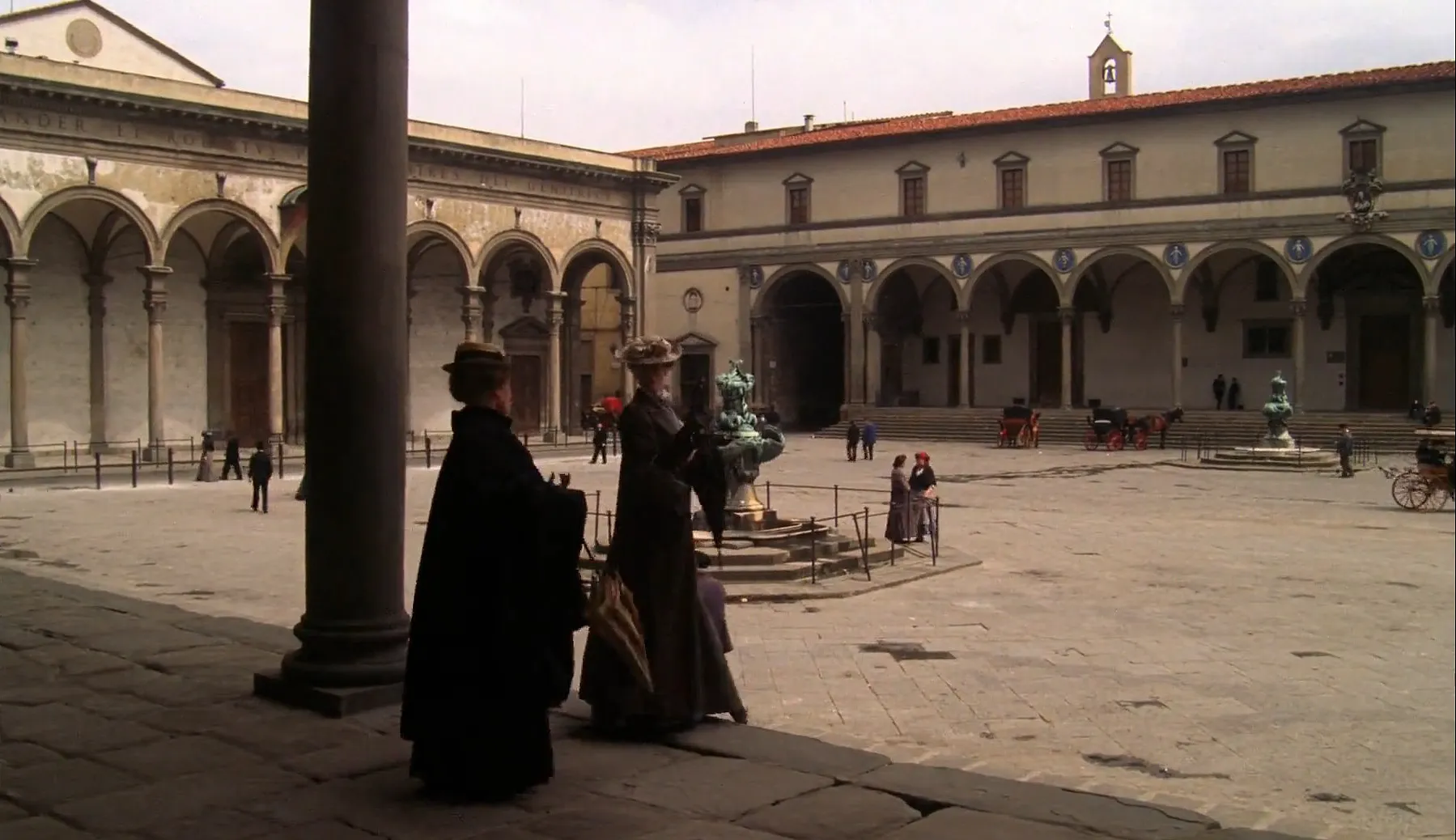
Andrea della Robbia put the adjacent piazza on the tourist map— before tourists as we know them even existed —with his 1487 majolica reliefs of putti in swaddling clothes on the facade of Brunelleschi's Ospedale degli Innocenti.
Then Ismail Merchant and James Ivory pushed it over the top in their softly focused treatment of E.M. Forster's Room With a View.

"For one ravishing moment Italy appeared. She stood in the Square of the Annunziata and saw in the living terra-cotta those divine babies whom no cheap reproduction can ever stale. There they stood, with their shining limbs bursting from the garments of charity, and their strong white arms extended against circlets of heaven." (E.M. Forster, Room With a View, Chapter II)
Only devout locals and visiting art historians usually set foot inside one of the most evocative spaces in the city.
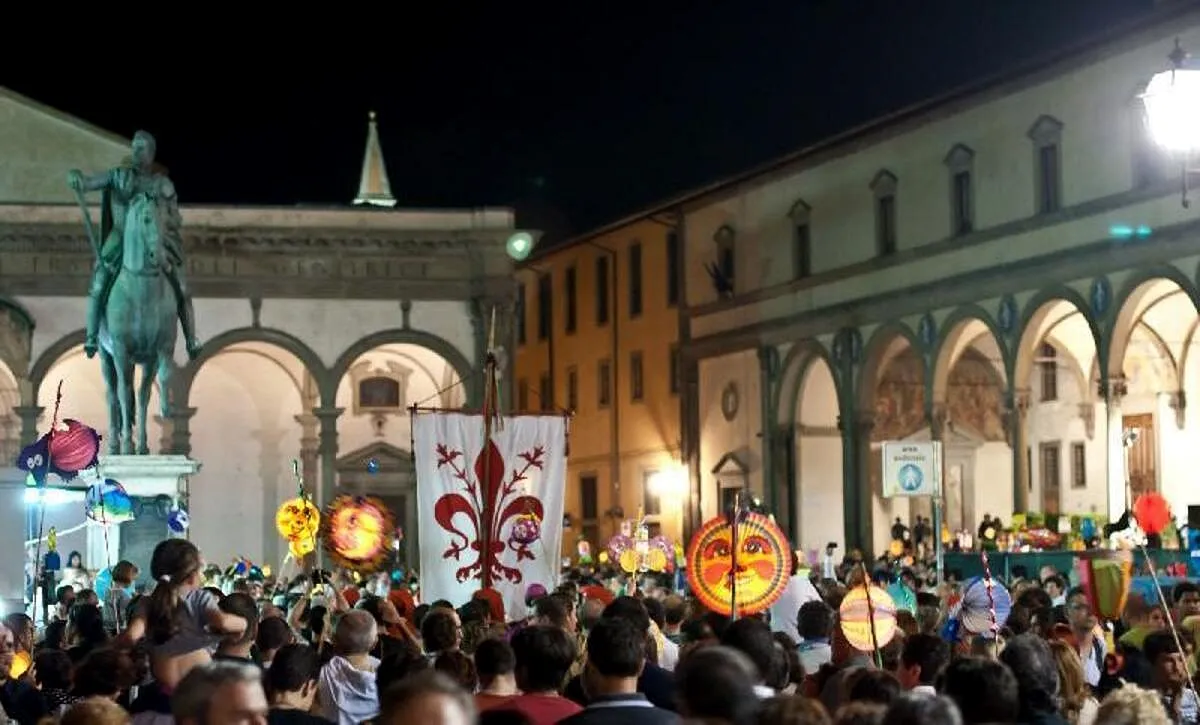
Even for Florentines, the piazza figures more prominently than the church, as the setting for lively public festivities.
If you happen by on the evening of 7 September, you can dive into the Festa della Rificolona —a puzzling oddity for anyone who lives more than a few dozen miles away.
Even the term rificolona has no generally-accepted etymology. (For whatever it is worth, I have long proposed a connection with fiaccola, a good old word meaning torch.)
A rificolona is a paper lantern with a candle inside, carried by children in rag-tag processions from various quarters of he city.
According to the current best guess, the custom originated with vendors from the countryside who came to town for the Feast of the Birth of the Virgin on the very next day (8 September), bearing lights of a more utilitarian sort.
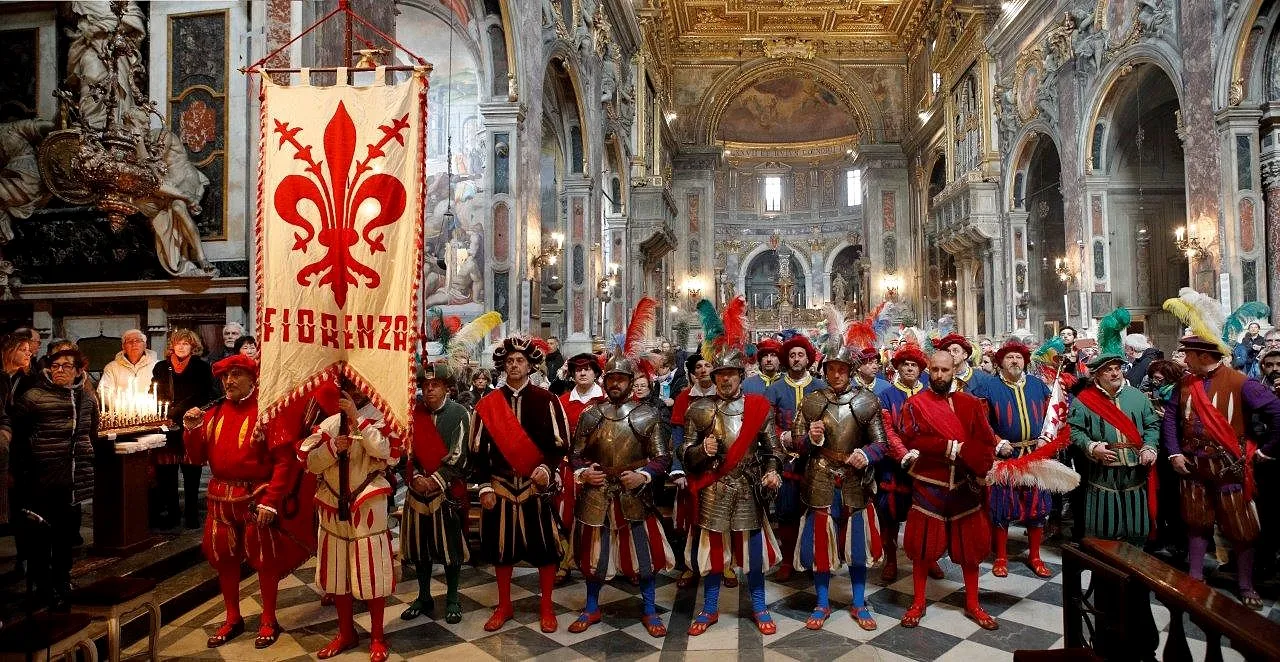
Then there is 25 March, the Feast of the Annunciation to the Virgin, popularly known as the Florentine New Year (Capodanno Fiorentino).
That was the day when the year changed in the local calendar —until 1750, when post-Medici Tuscany decided to join the rest of Western Europe on the First of January.
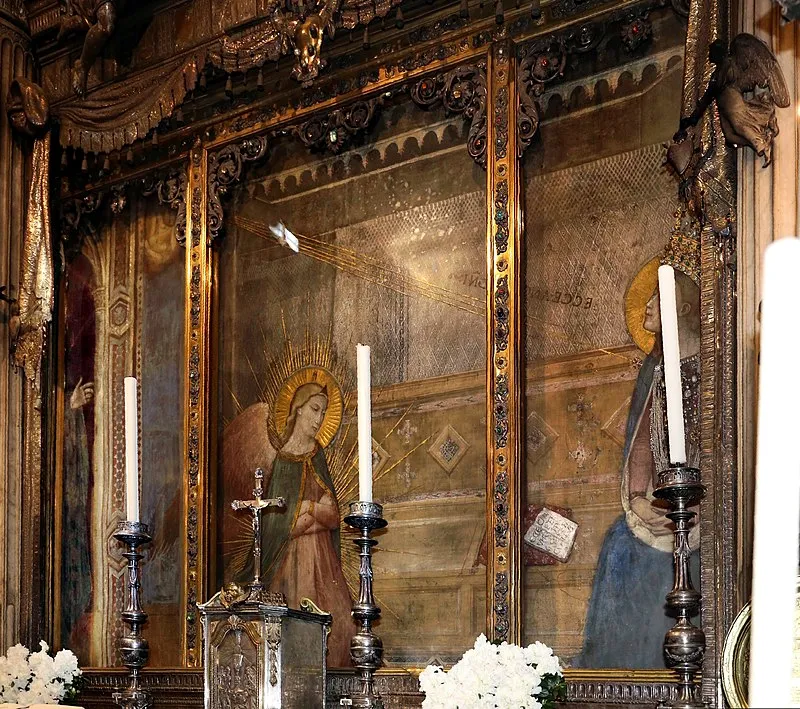
The basilica hosts the most intensely venerated religious object in the city.
According to an ancient tale, a devout monk of the resident Servite Order was painting a fresco of the Holy Annunciation back in the Fourteenth Century.
He left the face of the Virgin to very last, but then fell asleep. An angel appeared to complete the task.
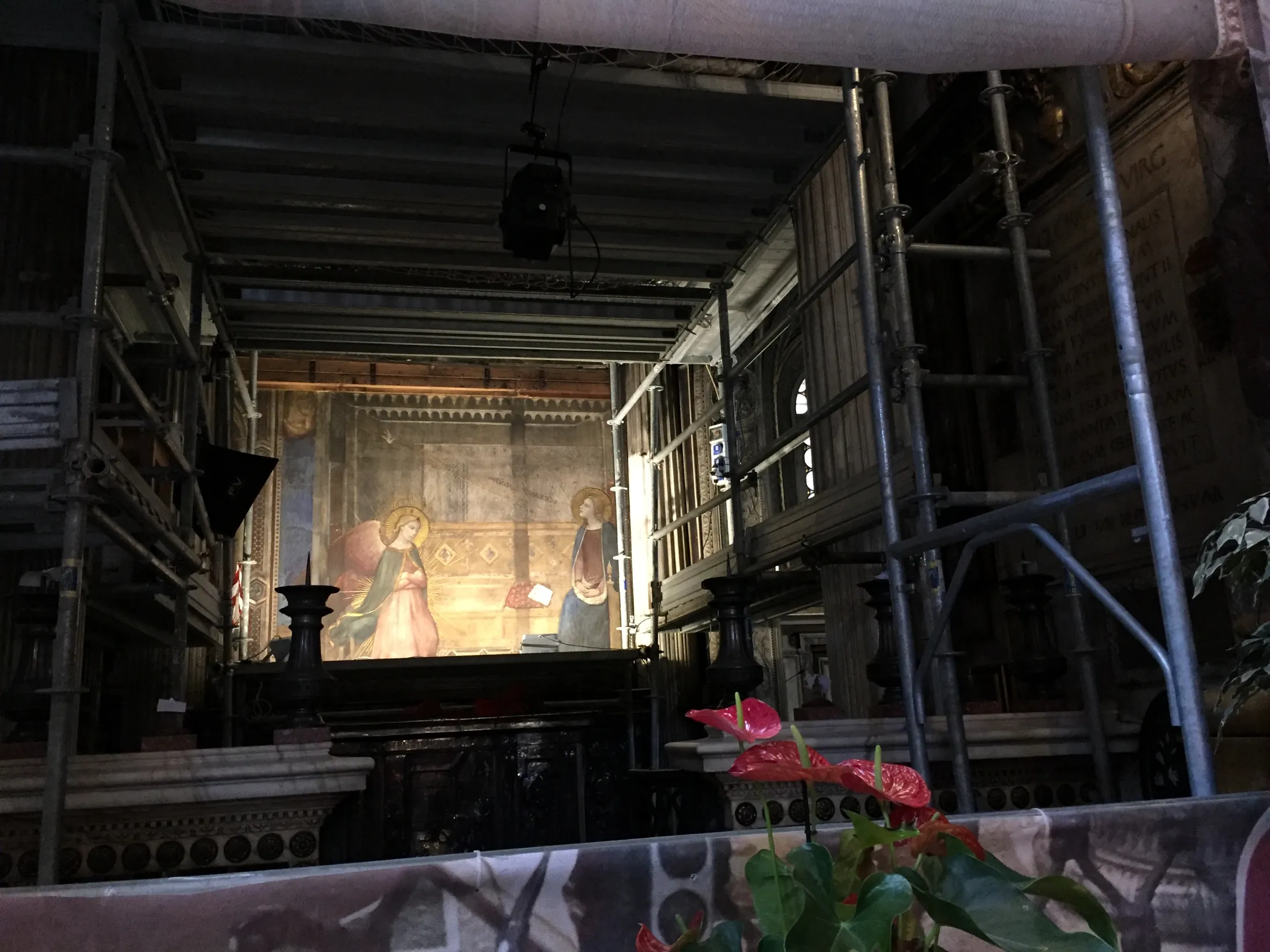
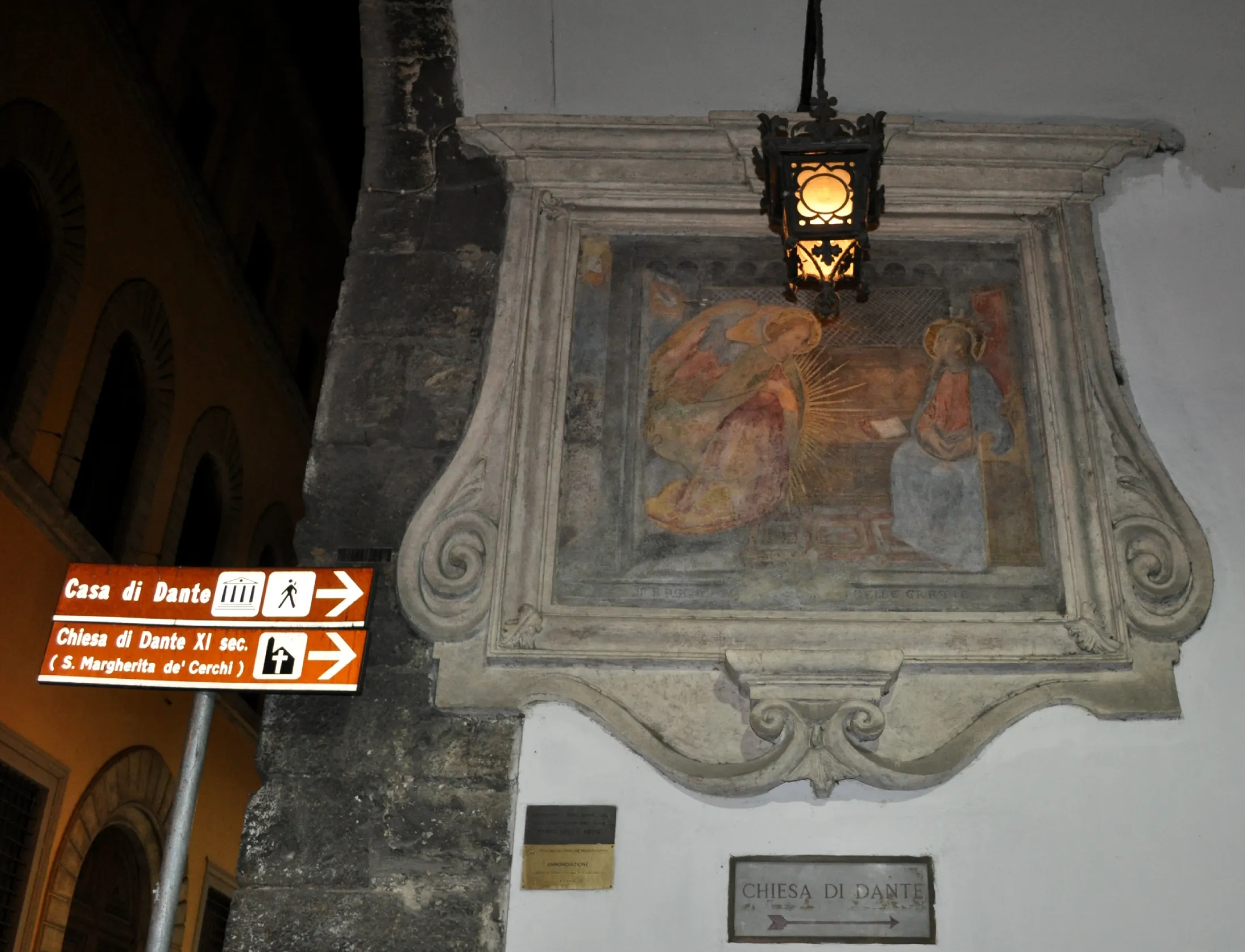
We see replicas, old and new, all over town in every possible medium. But there is no substitute for the original.
So the Basilica was quick to reopen —but only fleetingly, before the second wave of the pandemic and the resulting shutdown in November.
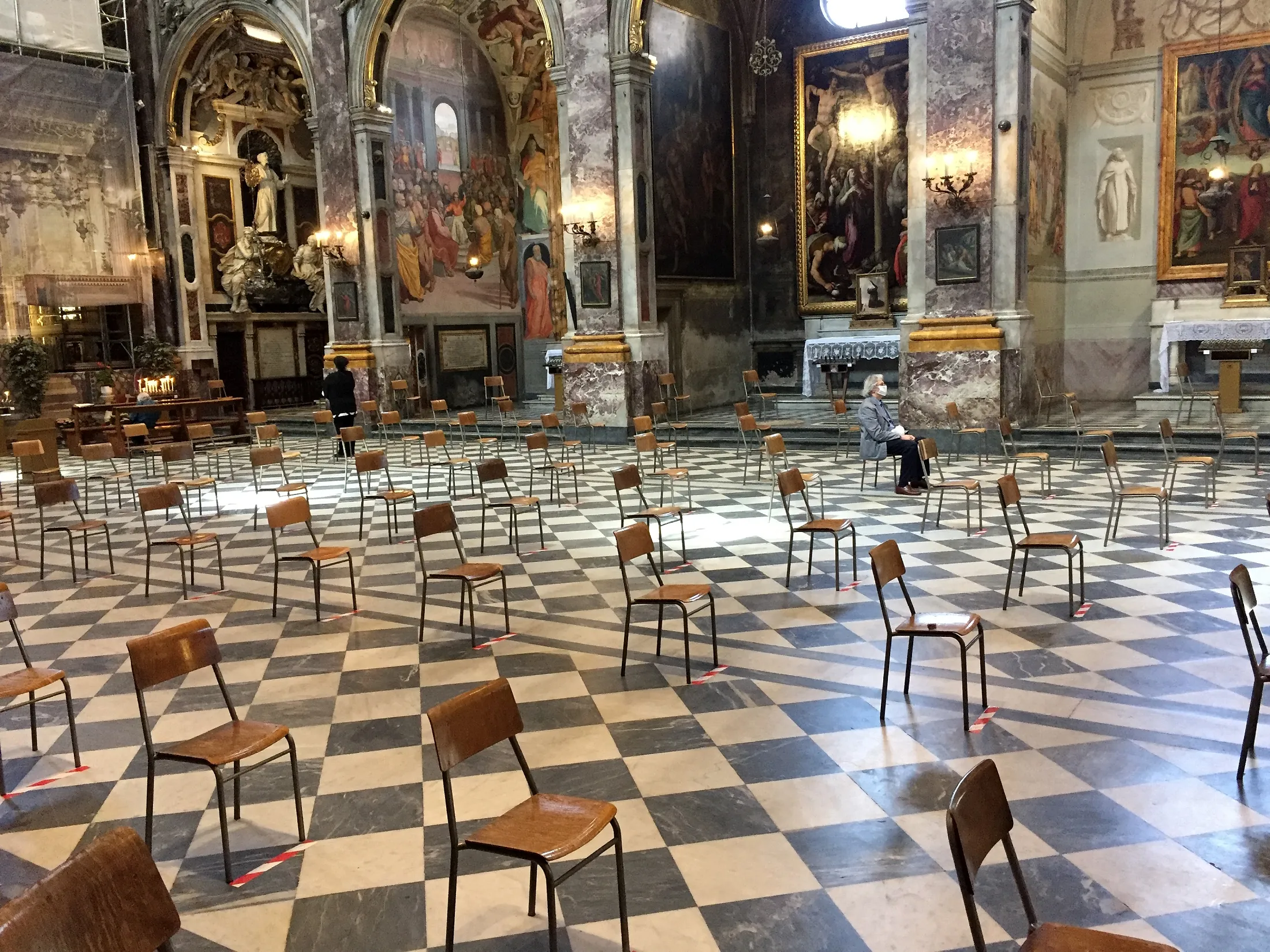
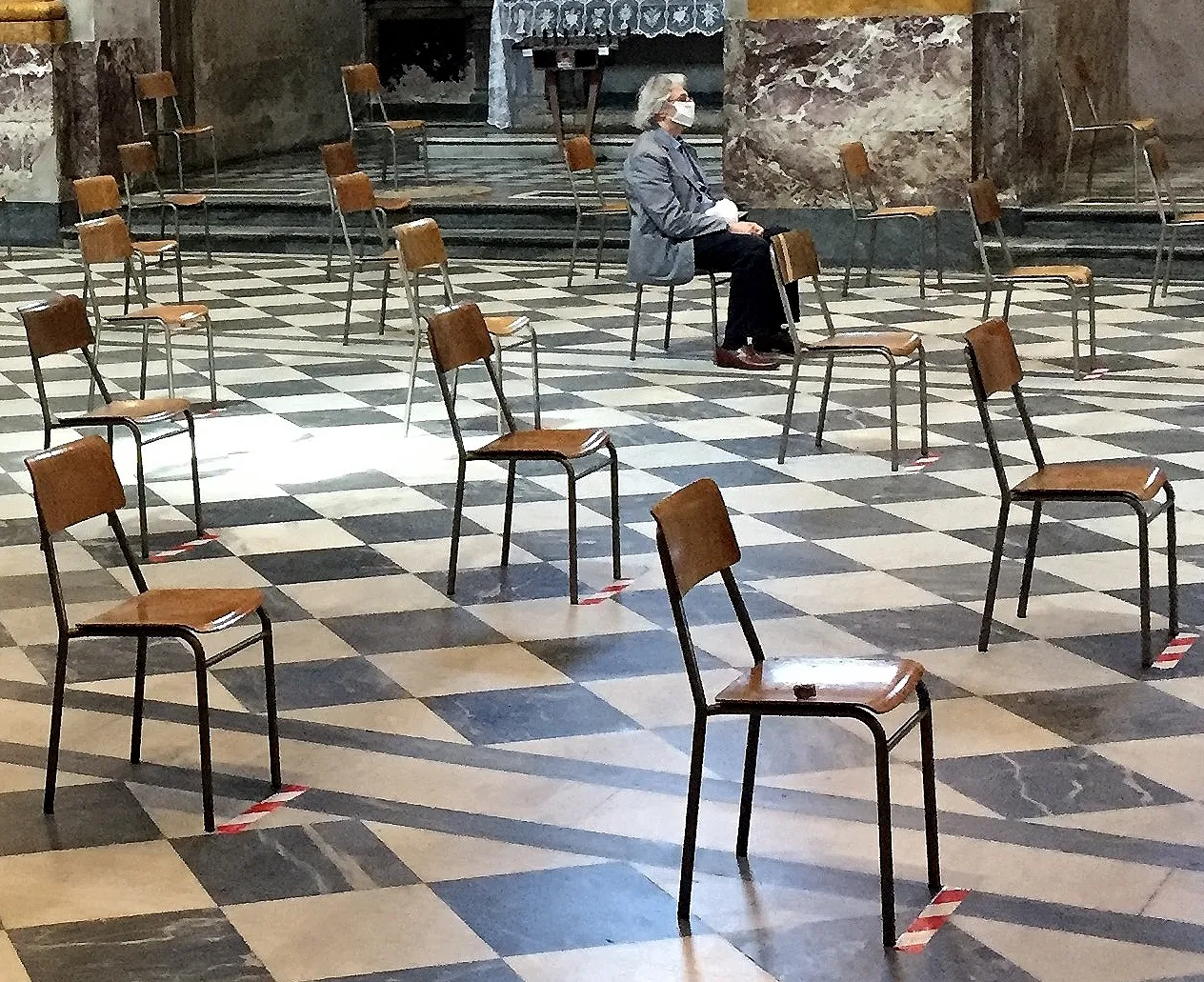
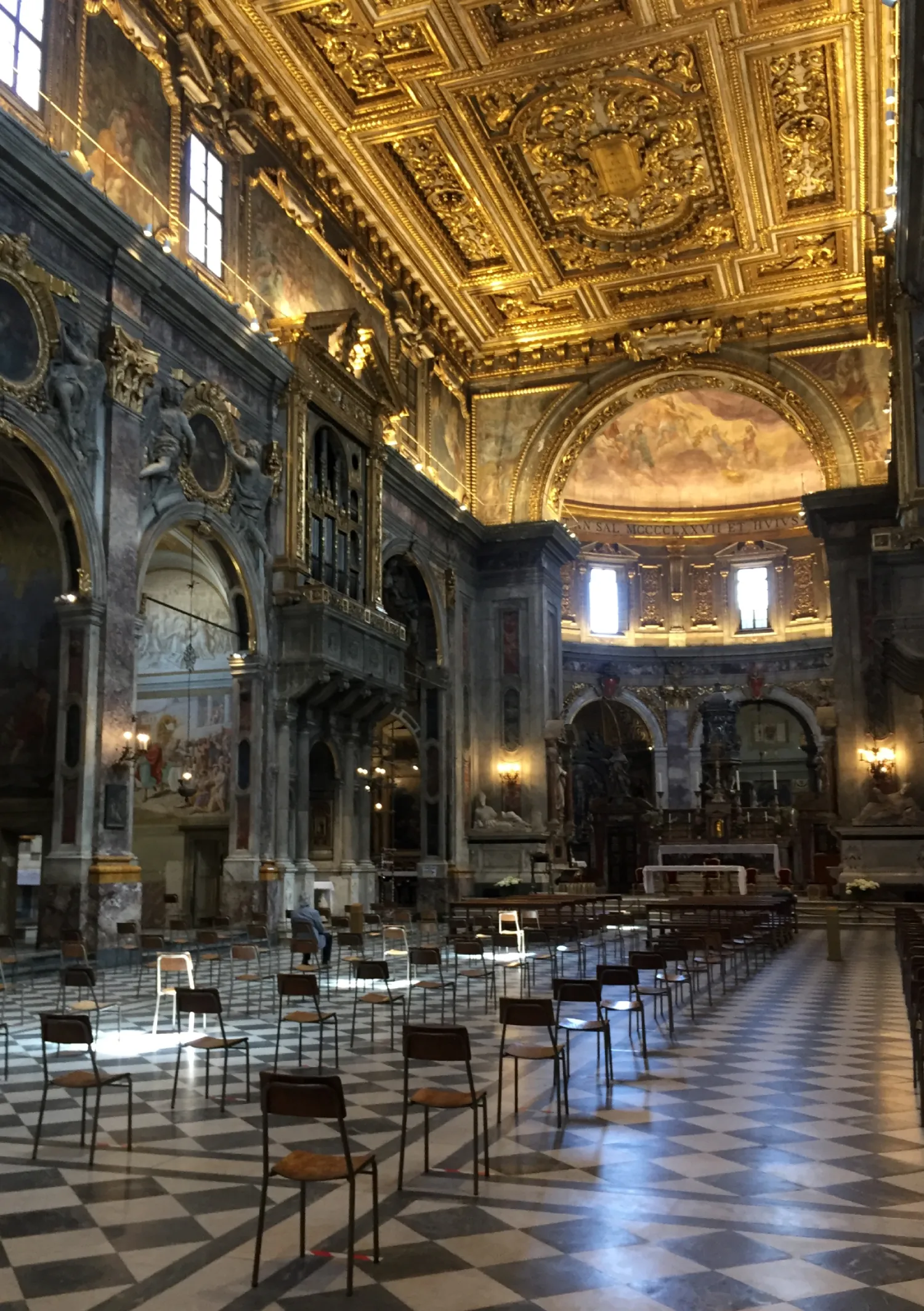
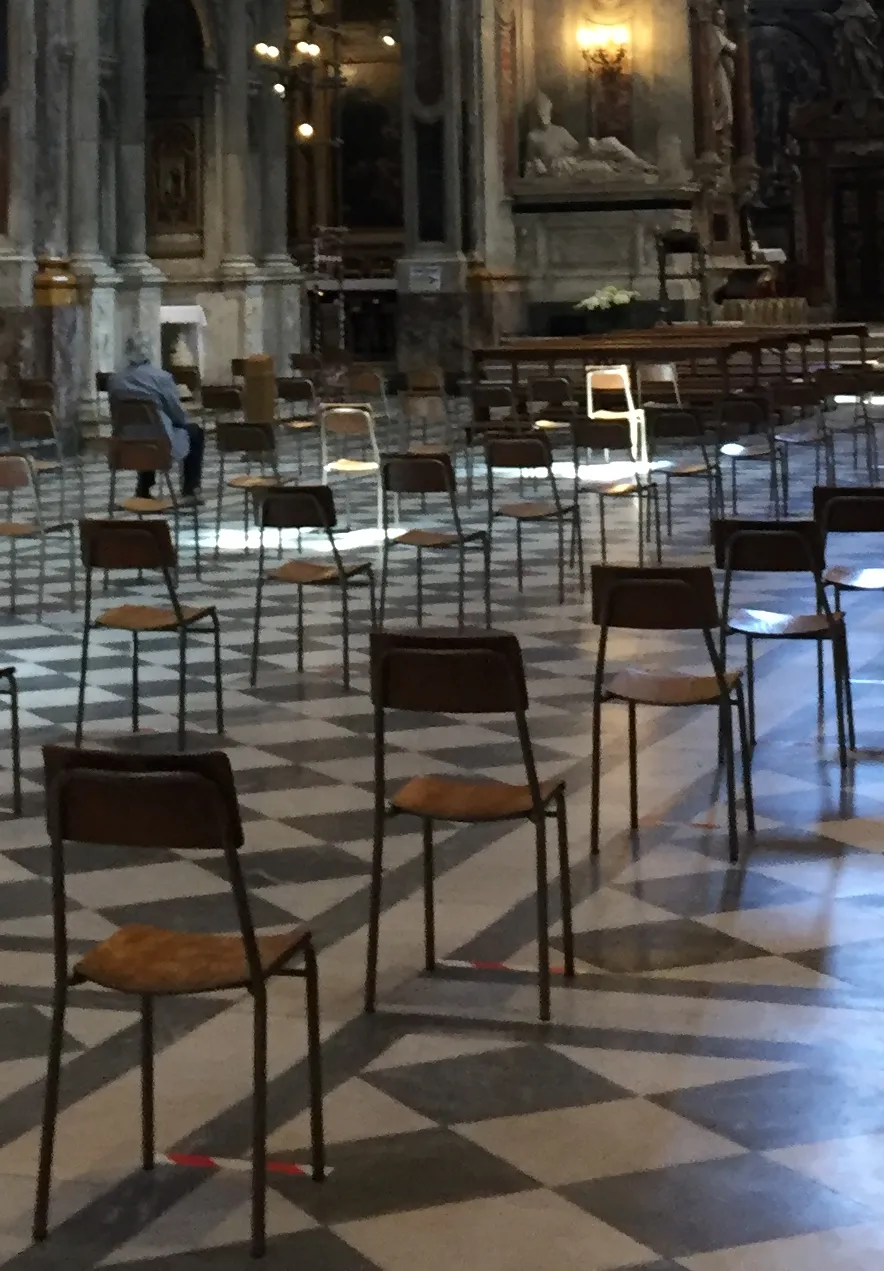
In that brief time, the Servites seized a rare opportunity to make a fine art of social distancing.

MEANWHILE IN ROME...
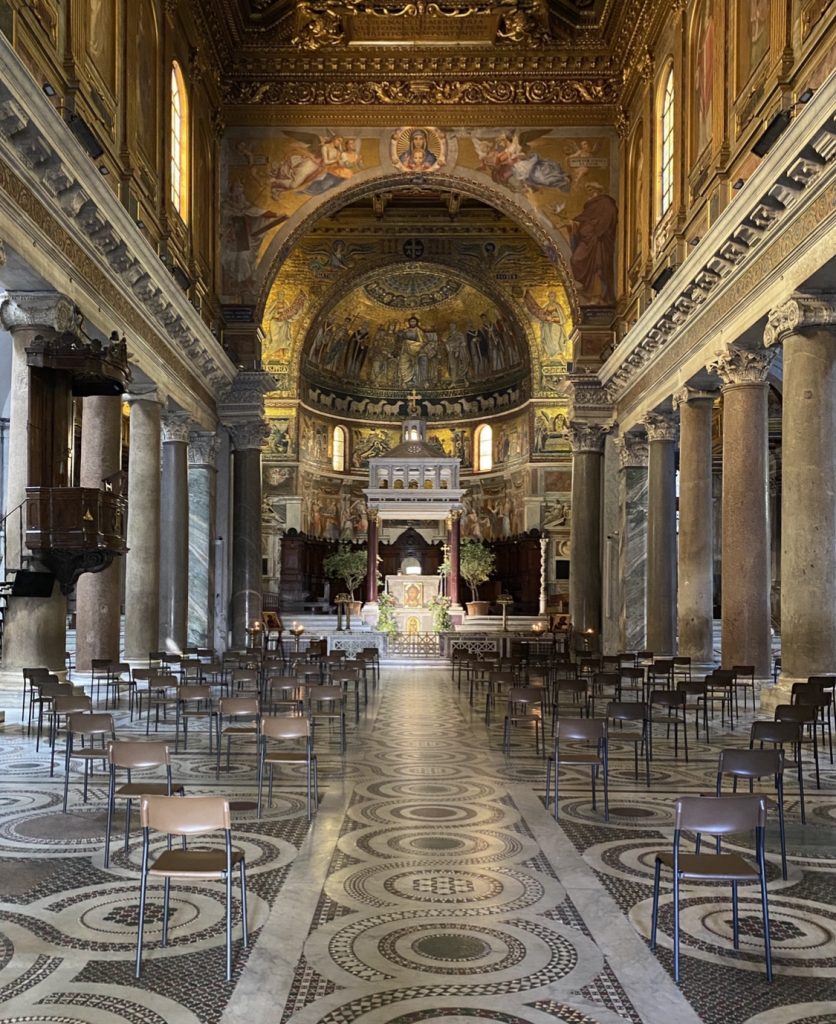
I happened upon this Pandemic Chair Art in the Roman church of Santa Maria in Trastevere —in a post dated July 13, 2020 on Agnes Crawford's fascinating website Understanding Rome.
Agnes chronicled the pandemic in the Eternal City far more thoroughly and methodically than I did up in Florence —but inevitably, we shared many parallel experiences.
Much as I hate cultural generalizations, I find it hard to imagine my Florentines —habitually rectilinear —socially distancing themselves in flamboyantly diagonal rows.
Related posts
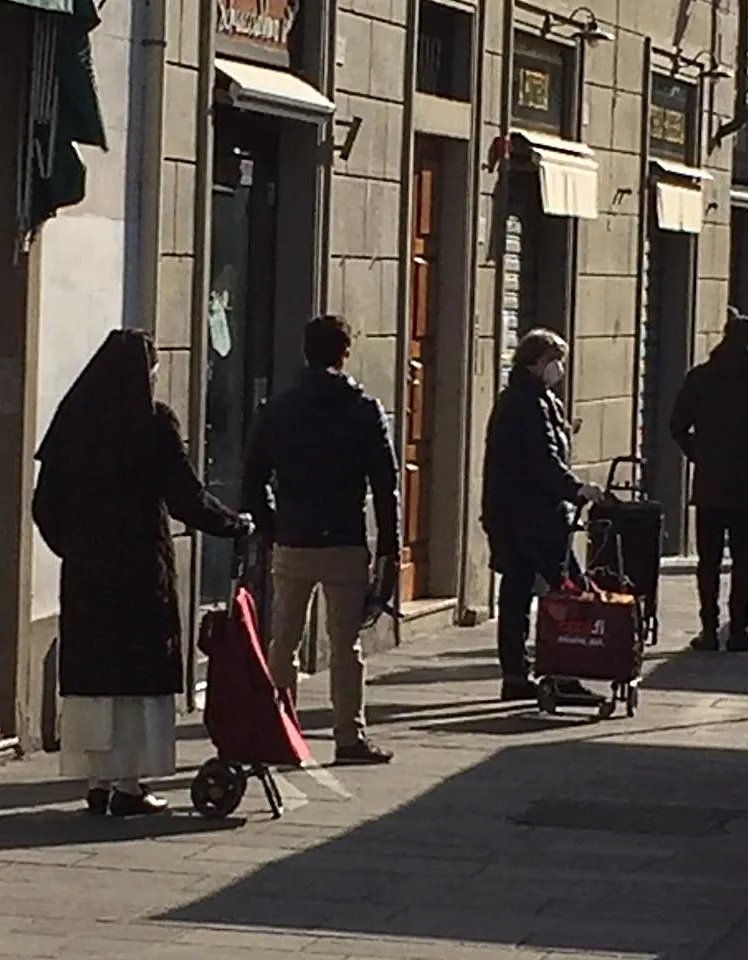
GROCERY SHOPPING (AND MORE) IN PANDEMIC FLORENCE
Italians normally hate waiting in line, but there was nothing normal about the COVID lockdown.
Supermarket queues (socially distanced, of course) coiled for block after block around every neighborhood.
From my kitchen window, I could see the local COOP, barely a hundred yards away. But going there was another story...
And then the food...that was another story too.
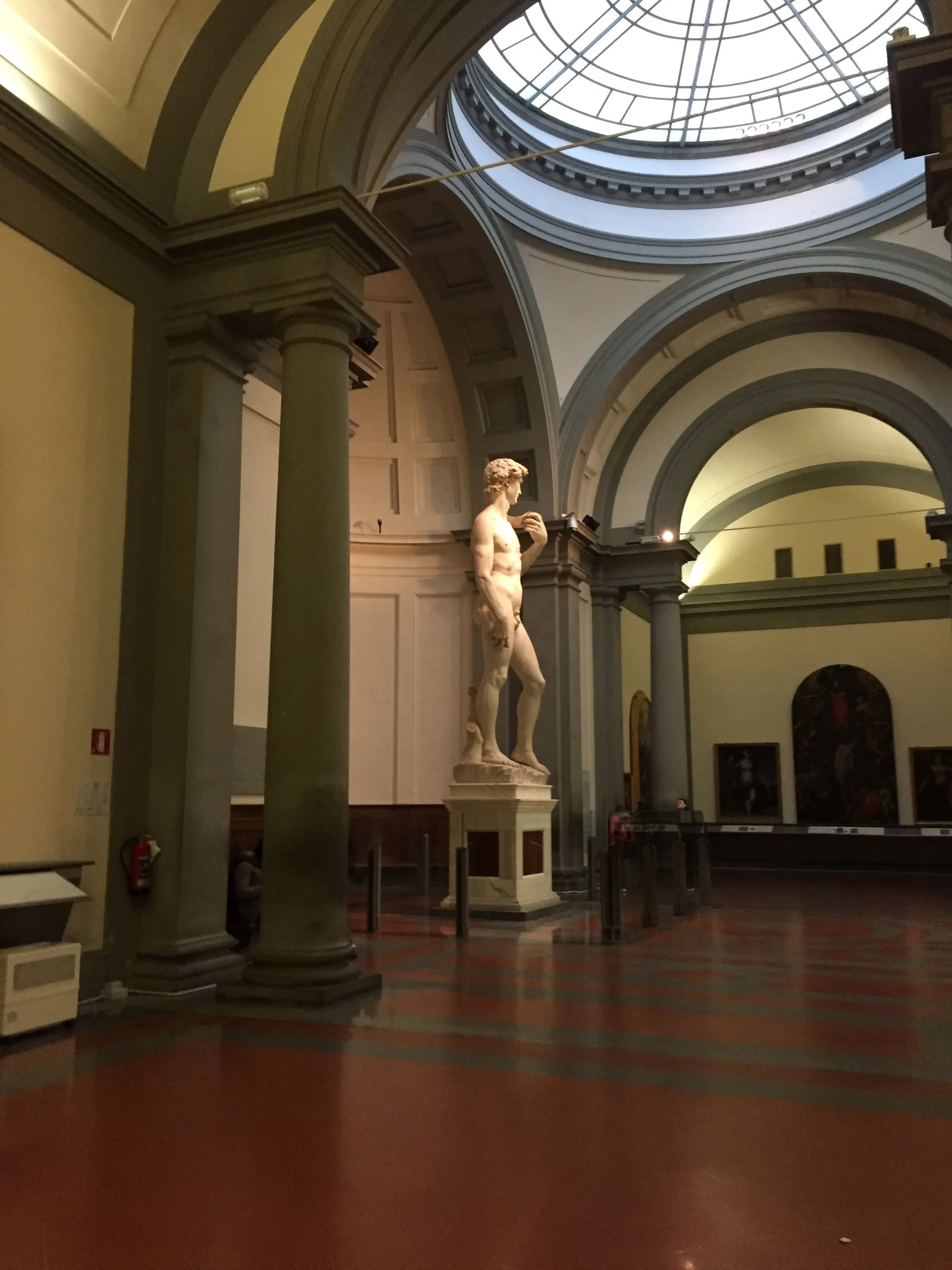
MICHELANGELO'S DAVID: 0 Degrees of Separation
Michelangelo’s David! The original is in Florence’s Accademia Gallery but copies…and copies of copies…and copies of copies of copies…beset us at every turn.
Let’s count the degrees of separation—from here back to the original.
***
Thank you, COVID?!
Michelangelo's David, plus space and silence and no tourists.
Zero degrees of separation to count!
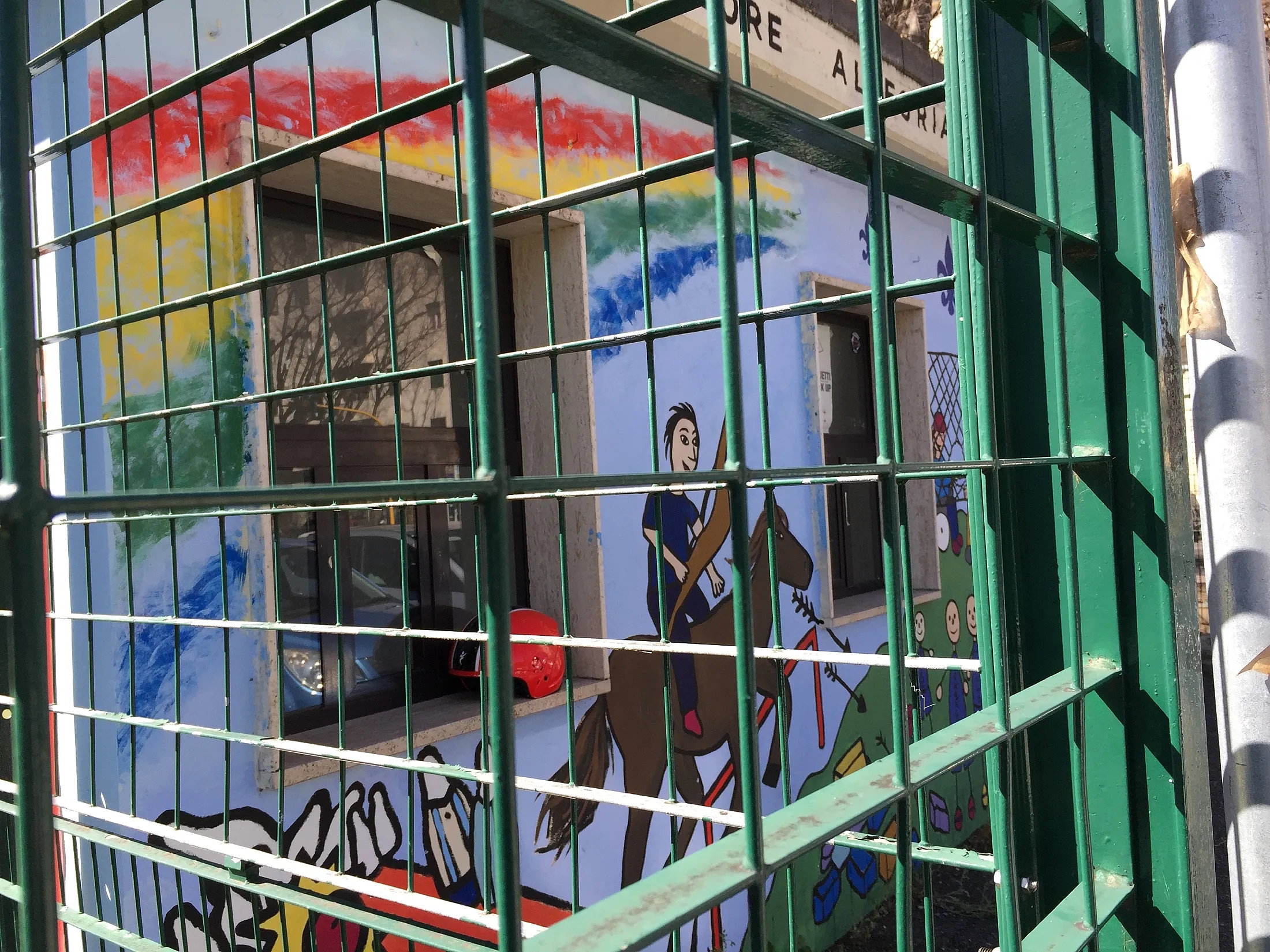
THE APOCALYPSE COMES TO CAMPO DI MARTE: Florentine Street Art in the Time of COVID
Nothing was normal during the Pandemic.
Every horseman heralded the End of Days and rainbows took on a desperate life of their own.
Especially in the realm of children's art, which is often the most revealing of all.
Lorem ipsum dolor sit amet, consectetur adipiscing elit. Suspendisse varius enim in eros elementum tristique. Duis cursus, mi quis viverra ornare, eros dolor interdum nulla, ut commodo diam libero vitae erat. Aenean faucibus nibh et justo cursus id rutrum lorem imperdiet. Nunc ut sem vitae risus tristique posuere.