MUSSOLINI: THE WILD MAN OF EUROPE - Part 1
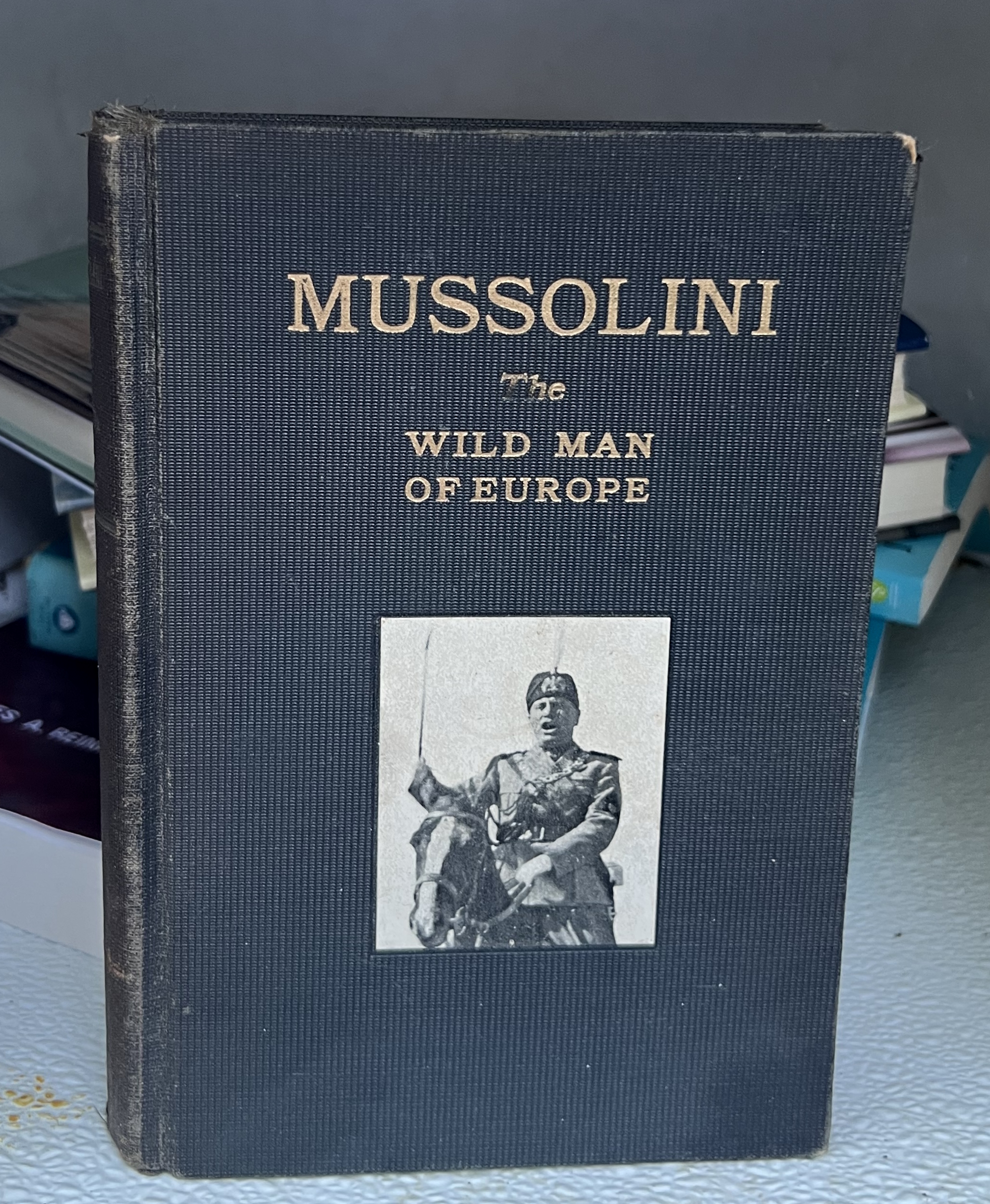
CONTENTS:
(1) ODE TO THE LITTLE LIBRARY
(2) THE WILD MAN OF EUROPE
(3) FREEMASONS, KLANSMEN AND OTHERS

"Little Free Library. Take a Book! Share a Book!"
THE STORY CONTNUES:
MUSSOLINI: THE WILD MAN OF EUROPE - Part 2
MUSSOLINI: THE WILD MAN OF EUROPE - Part 3
(1) ODE TO THE "LITTLE LIBRARY"
After decades abroad, one of the great joys of life back in the United States is the proliferation of Little Libraries —chockful of fun things to read, all for free and in English too!
I love having the fates guide my reading, tossing me into literary byways I barely knew existed.

Queuing around the block for a booksigning by Michelle Obama (November 18, 2019)
Still, I live only a few blocks from Politics and Prose, in the raised-consciousness bubble of Ward 3 (Upper Northwest Washington DC).
So, my discoveries —while endlessly intriguing— often run through predictable local channels.

"Former first lady Michelle Obama holds hands with Kaitlyn Saunders, 8, next to her mother Katrice Saunders, of Washington, after the 8-year-old told Obama how inspired she is by her and how she is a competitive figure skater, as they buy signed copies of Obama's book, "Becoming," Monday Nov. 18, 2019, at Politics and Prose Bookstore in Washington."
This is Washington after all, a strangely unquantifiable place.
It is perpetually at the center of the world's attention, superpower capital and all that.
Meanwhile, it remains an oddly shapeless town, craving a unique sense of place that might or might not exist.
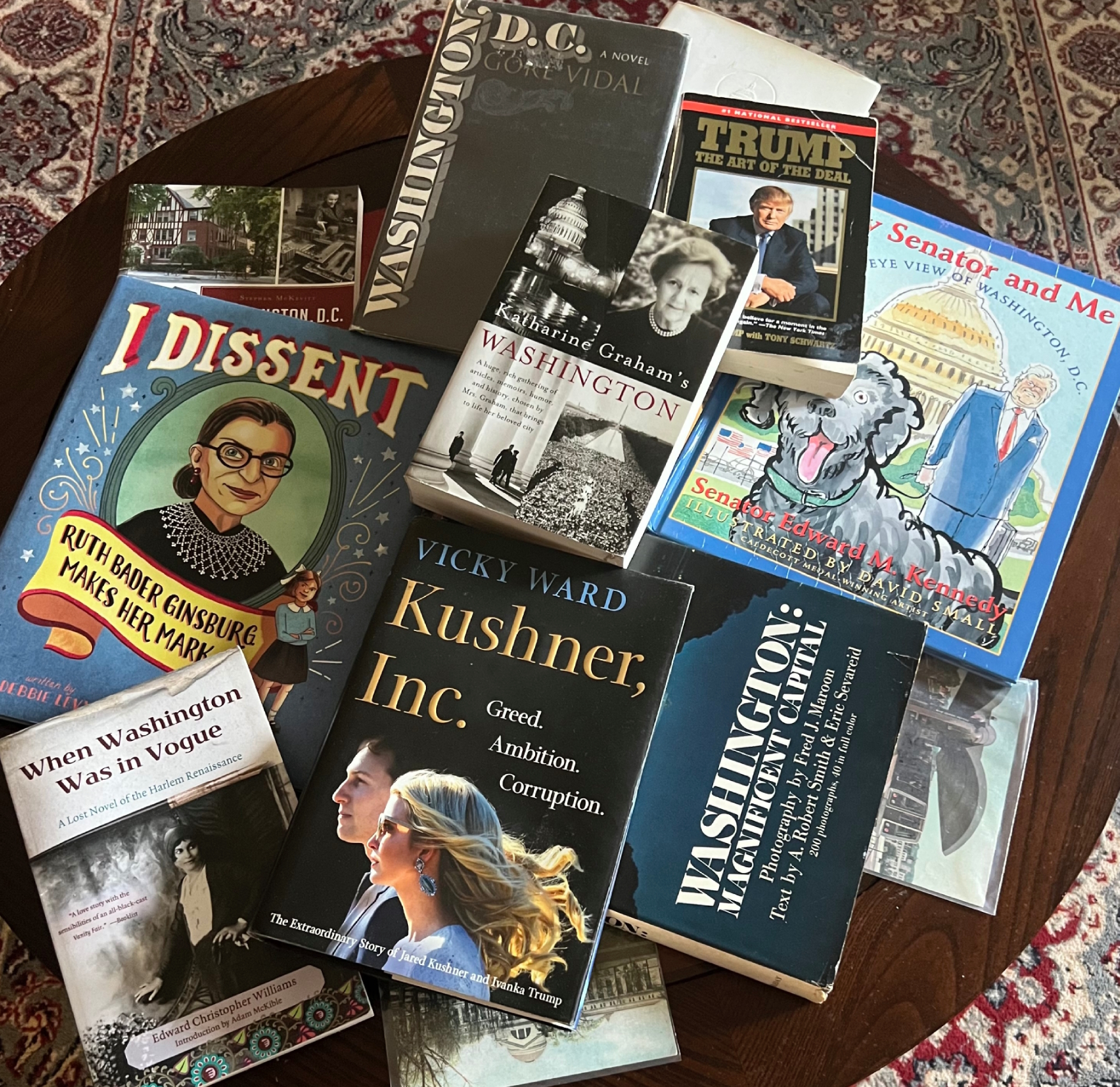
Miscellaneous Washingtoniana arrayed on my coffee table.
God knows, they try!
I could easily fill my living room— floor-to ceiling— with eager Washingtoniana from Little Libraries within a one-mile radius of my home.

Yet more Washingtoniana arrayed on my coffee table.

The District of Columbia is where "cute" goes to die.
There are serious historical studies, for sure, and shrewdly observed novels —but far fewer of the latter than you might expect.
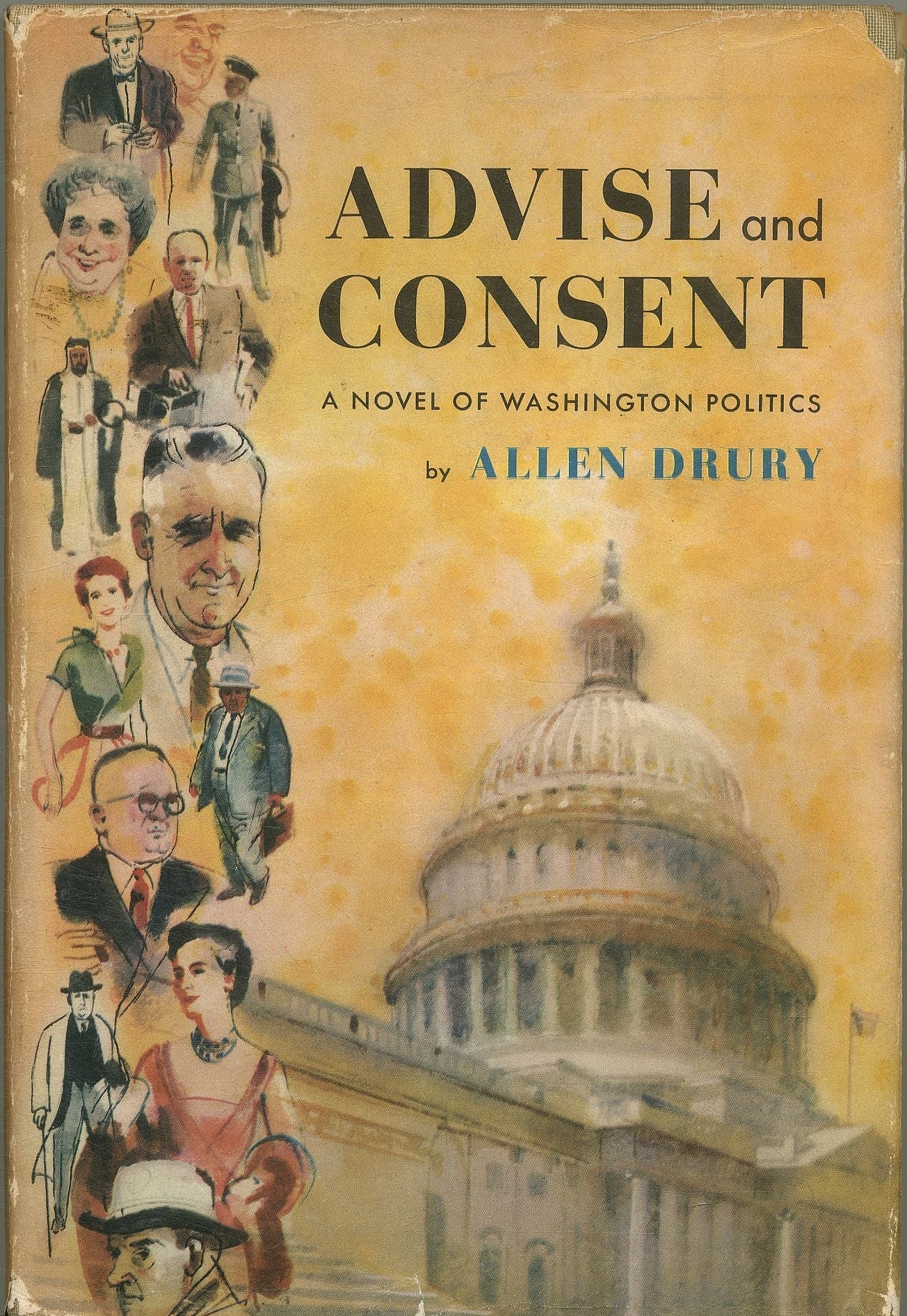
Not a Little Library book... First editions of Allen Drury's Advise and Consent (1959) —the ultimate DC political novel— are worth hundreds.
But above all, Little Libraries overflow with bright-eyed feel-think from the talking heads of yesteryear (often concocted on their way out the door).
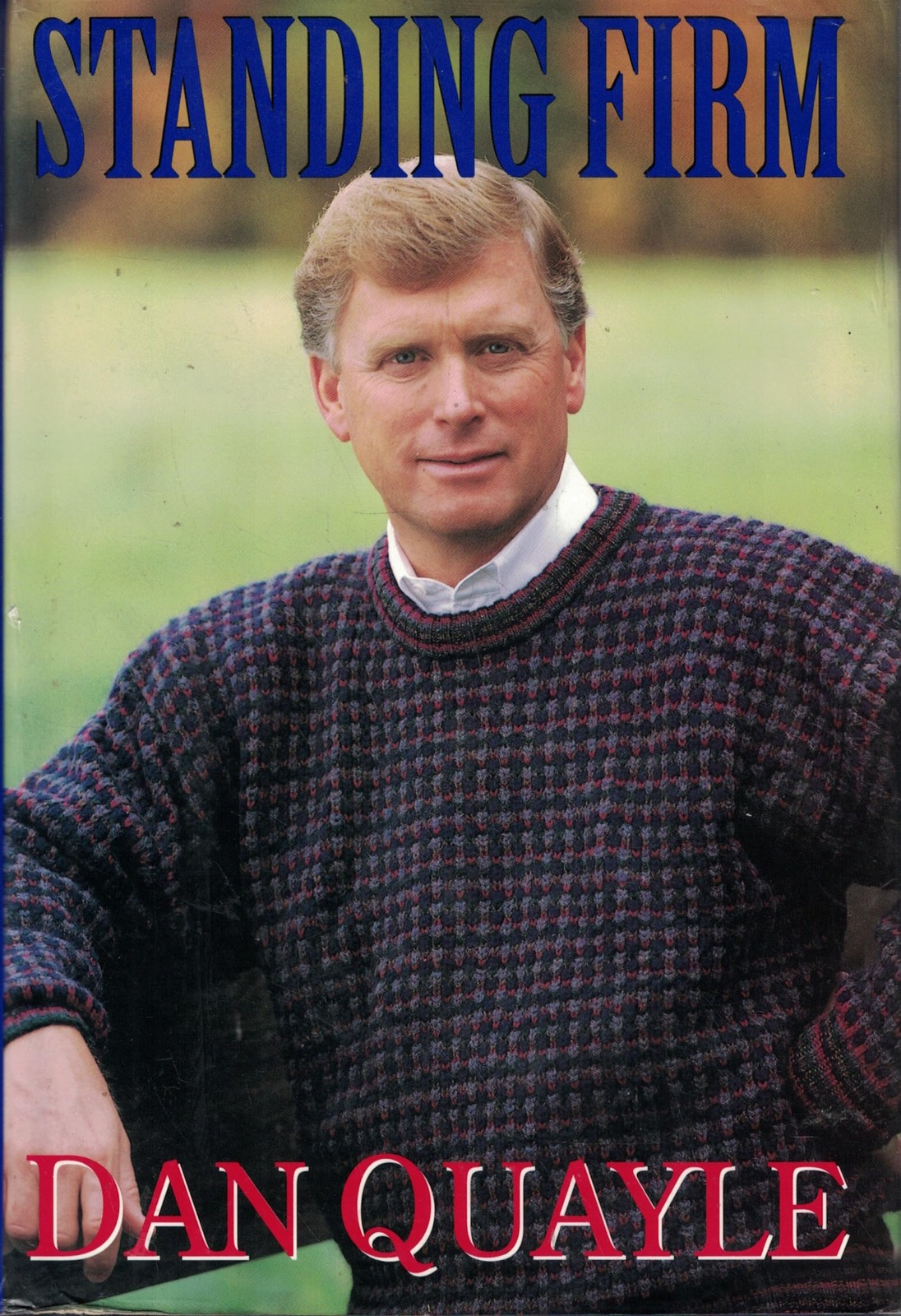
Also "inside glimpse" picture books from every presidential administration, now looking more or less alike.
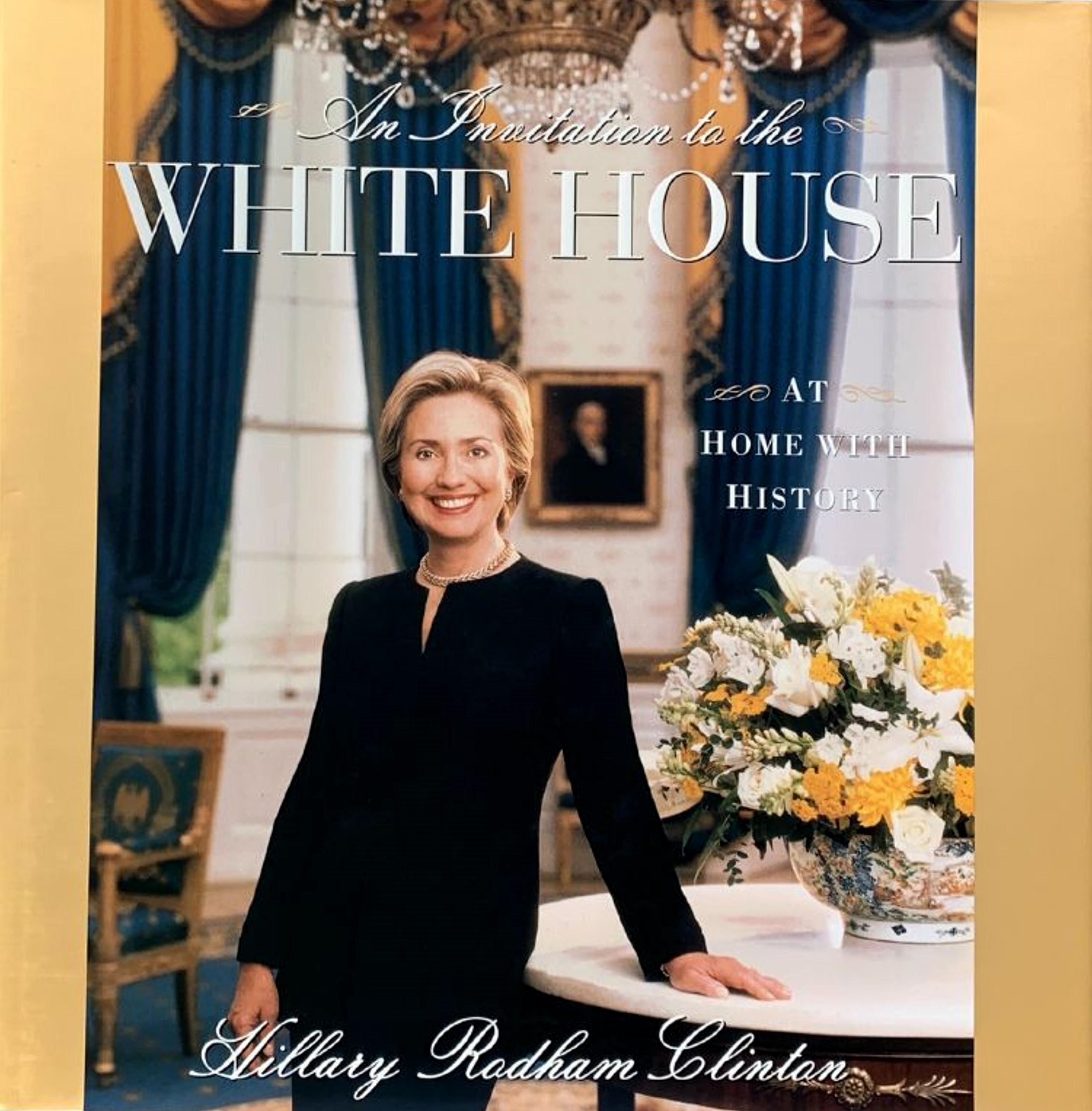
In gold-bordered coffee-table format.
Then— perhaps most intriguing —we have a steady stream of "collectibles" with the shelf life of unrefrigerated crème fraîche.

Wacky Washington Cut-Ups from 1996. Where are they now? Mostly still around.
You can't imagine how much DC whimsy I scoop out of Little Libraries and then —coming to my senses —offload in others before returning home.
At times, however, I wish that I had held on to the Bill 'n Hillary Bobbleheads, the Road to the White House Board Game and and a few of those recurrring sets of DC Politicards.
(2) THE WILD MAN OF EUROPE
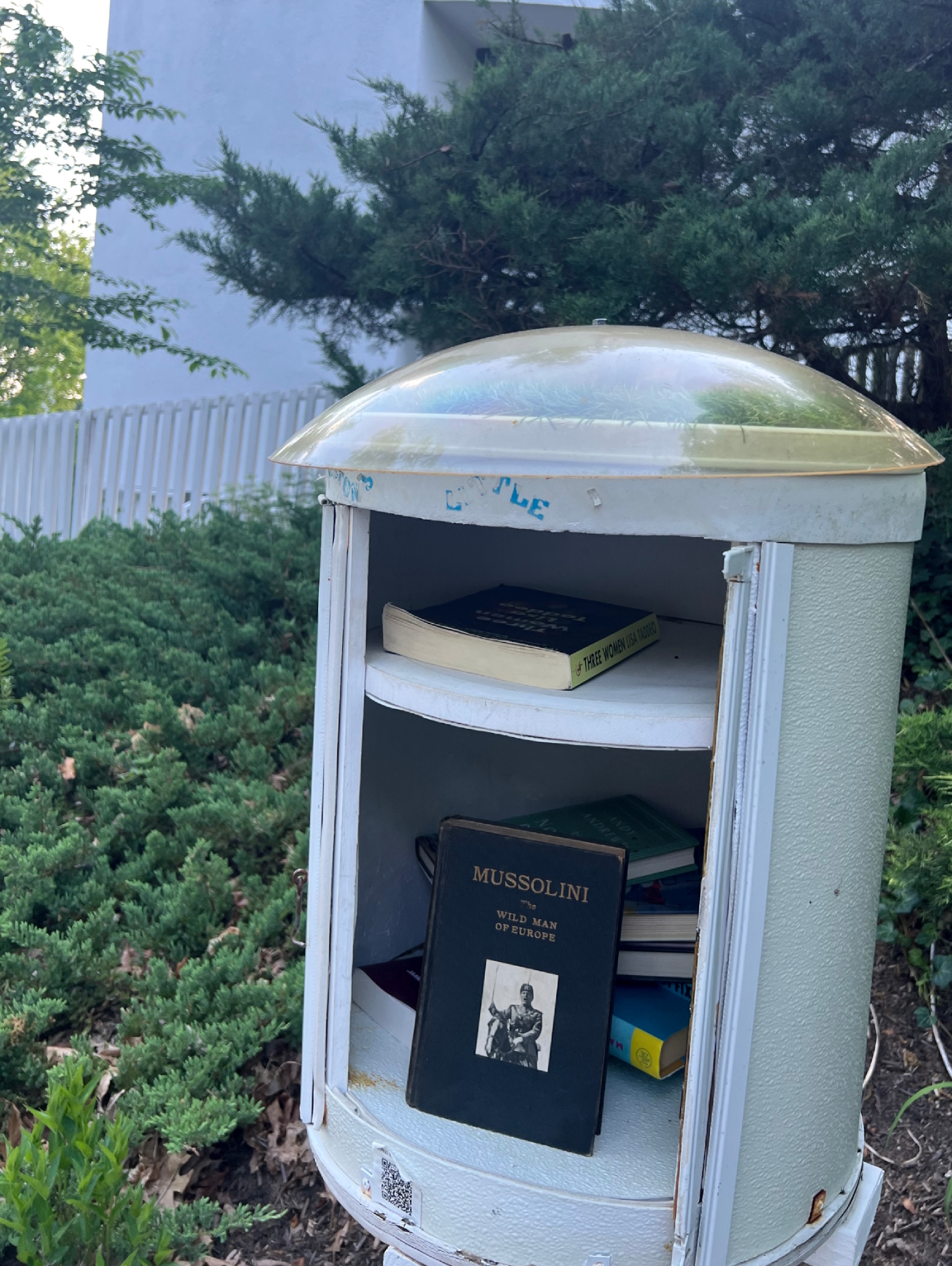
Washington's Little Libraries can be endearingly silly.
But sometimes—in their randomness —they crack open the past and make us rethink what we know.

Like it or not, this qualifies as Washingtoniana too.

As noted, John Bond was also the author of "In The Pillory" (see below).
The Fellowship Forum and the Independent Publishing Company were joined at the hip in the Nation's Capital and exerted massive influence in their day.
But first, let's take a look at Wild Man.
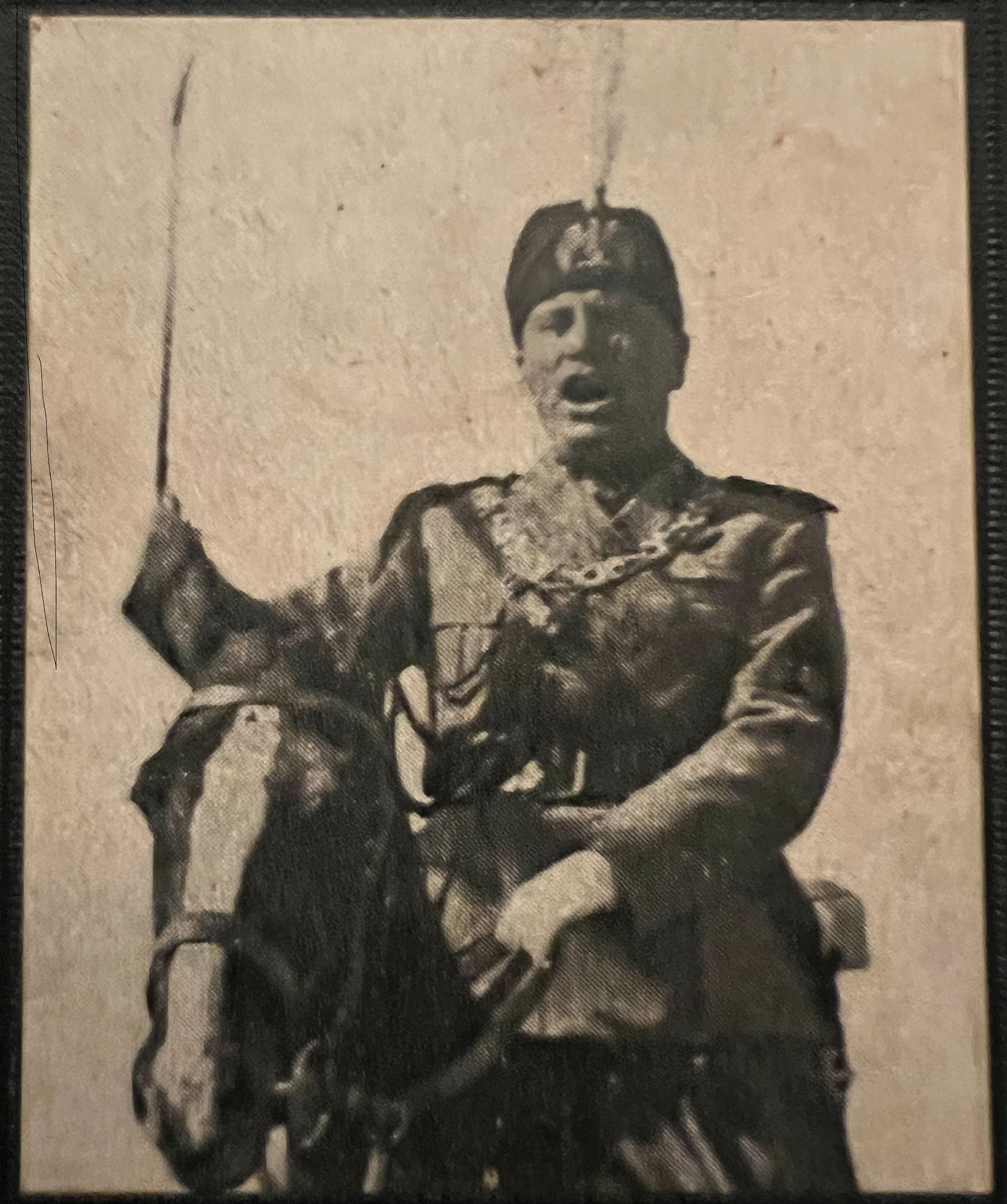
Bond was not a born wordsmith, piling up shapeless paragraphs where single sentences would do.
Meanwhile, he compensated— almost obsessively —with vehement headings from hither and yon.

Vanity and violence... Unpleasant Traits... The Old Ego Remains...
Bond— it seems —had "Marvelous Mussolini" stuck in his craw, right out of the gate.
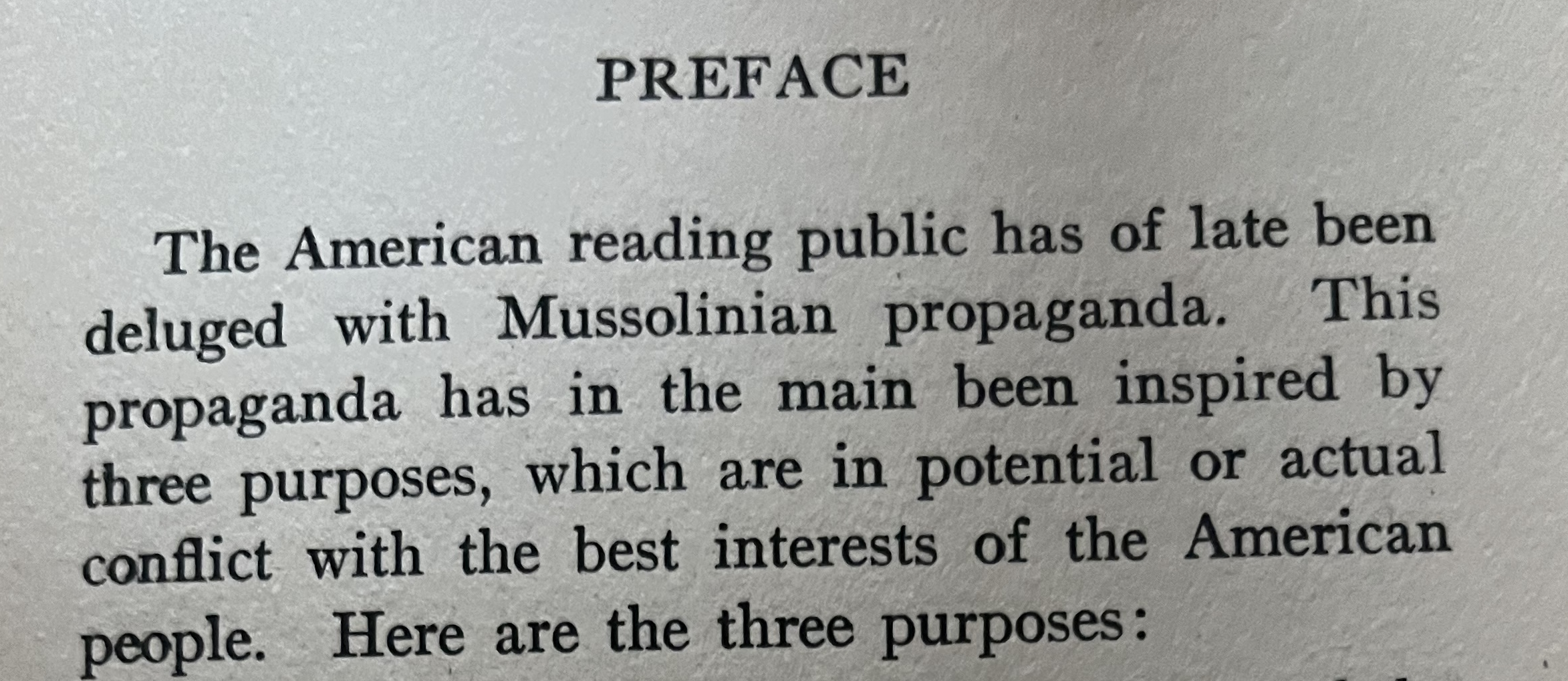
"The American reading public has of late been deluged with Mussolini propaganda. This propaganda has in the main been inspired by three purposes, which are in potential or actual conflict with the best interests of the American people."
The Duce's media assault on American values is clearly working.
But what motivates this "Superman" anyway?
The author discerns three principal motives.

"FIRST— The promotion of hyphenism and the perpetuation of alienism, seeking to preserve these weeds far beyond their natural span of life."
"Hyphenism"? "Italian-American" would be a prime example, it seems.
"Alienism"? A word of his own devising— from "alien" meaning "foreign" —signalling less than total commitment to the American Way of Life.
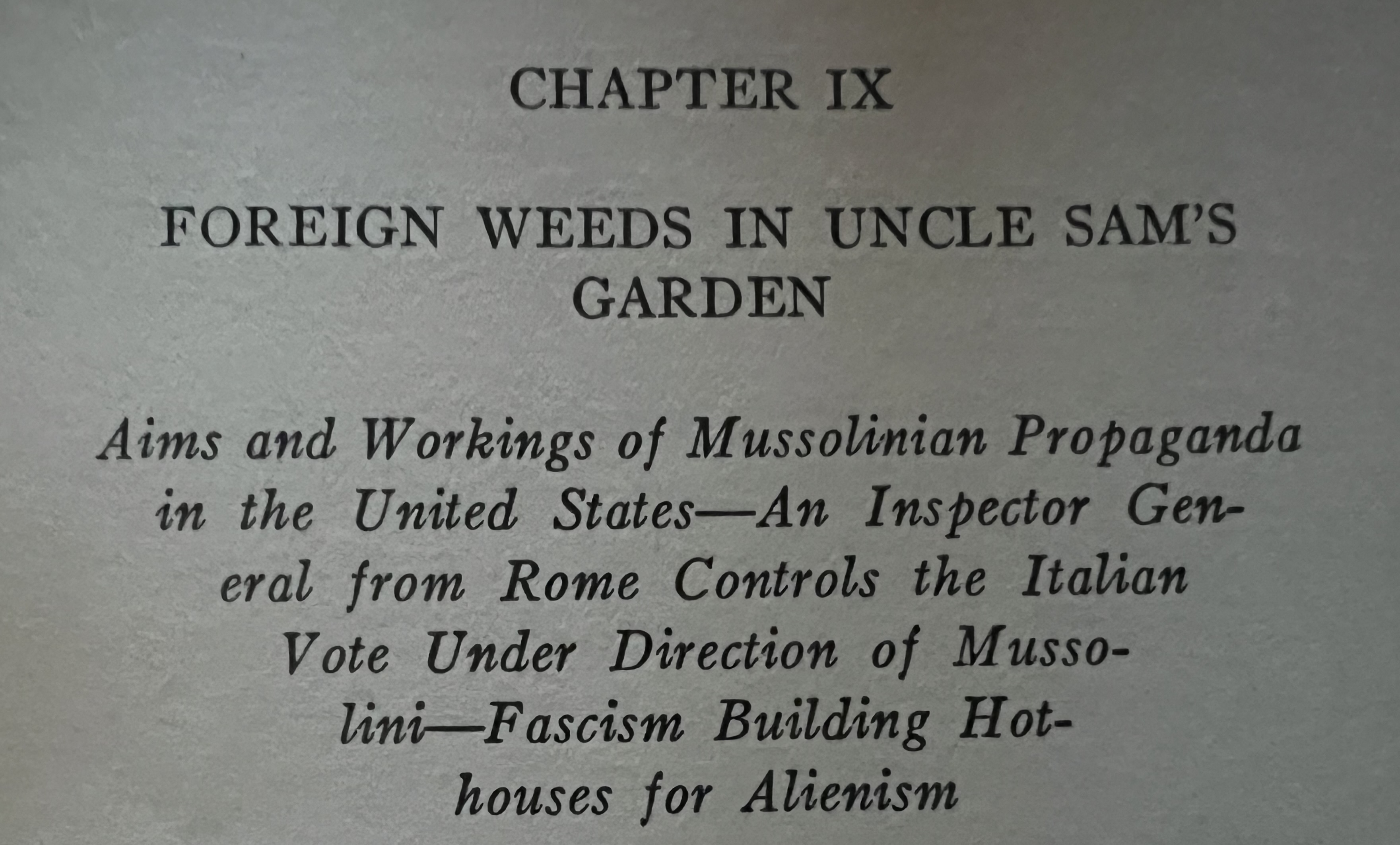
"FOREIGN WEEDS IN UNCLE SAM'S GARDEN: Aims and Working of Mussolinian Propaganda in the United States— An Inspector General from Rome Controls the Italian Vote Under Direction of Mussolini— Fascism Building Hothouses for Alienism"
"Weeds" and "hothouses"? The metaphors come thick and fast.
Bond exposes a dire conspiracy at home and abroad, masterminded by the Duce himself.
Subverting the "Italian Vote" —otherwise "Italian-American" —is a chief goal.

"SECOND—The promotion of loans to Italian industries and Italian municipalities regardless oftheir real merits."
In the economic sphere, Mussolini commands the resources of his Corporate State, channeling them wherever he pleases.

"THIRD— The influencing of public opinion in the United States in favor of Mussolini's foreign policy of disturbance and aggrandizement."
Thus he manipulates American public opinion —in pursuit of his global ambitions.
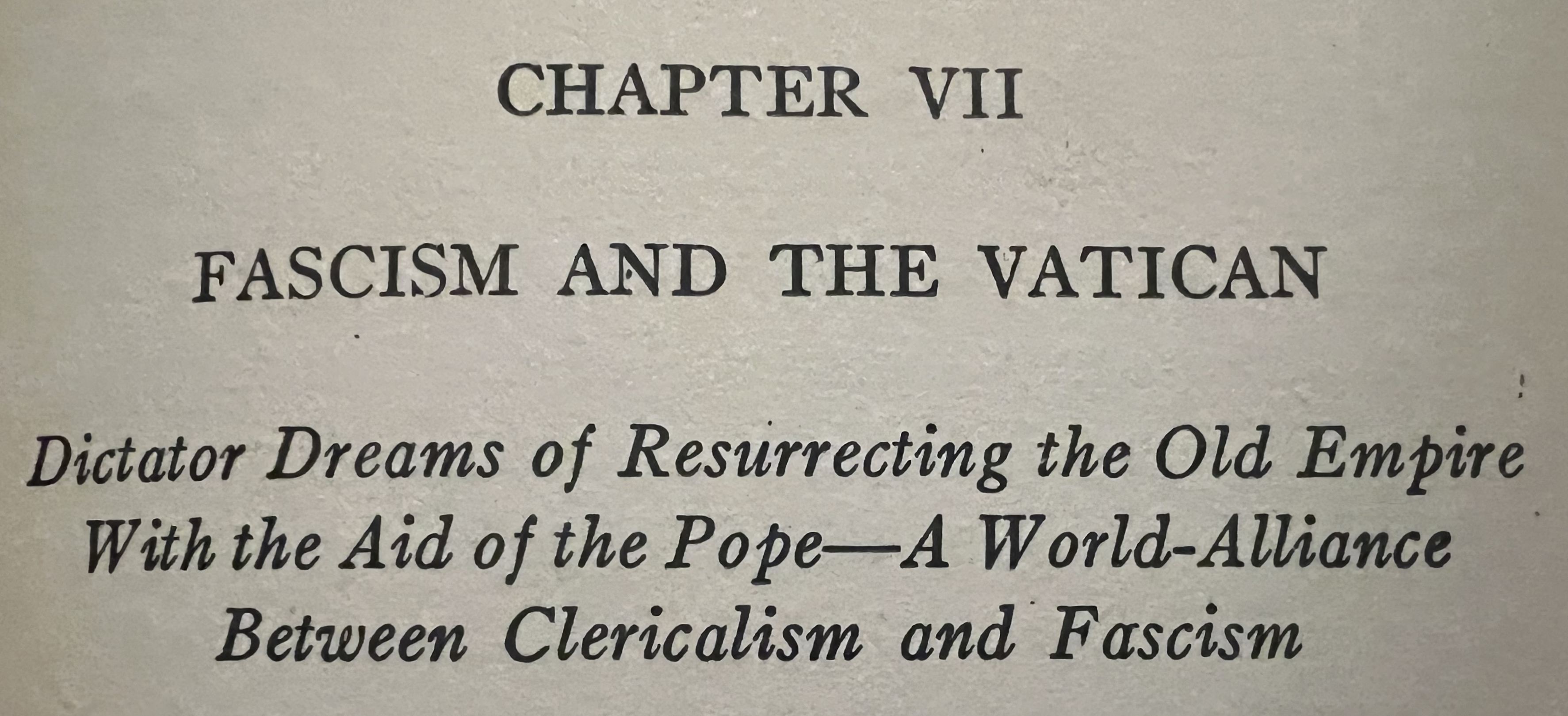
"FASCISM AND THE VATICAN: Dictator Dreams of Resurrecting the Old Empire With the Aid of the Pope —a World-Alliance Between Clericalism and Facsism"
What is Dictator Mussolini's endgame— according to John Bond?
Nothing less than a Clerical-Fascist Empire jointly ruled by the Duce and the Pope.
(3) FREEMASONS, KLANSMEN AND OTHERS
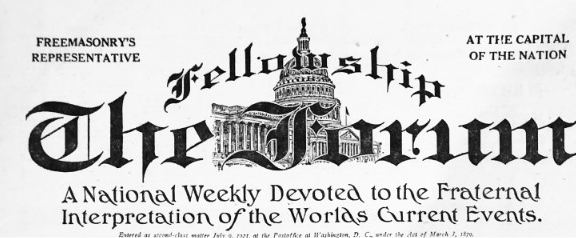
"The Fellowship Forum: Freemasonry's Representative at the Capital of the Nation"
Heady stuff! But who was John Bond writing for?
Based in Rome, he operated as the "European Correspondent of The Fellowship Forum".
This was "A National Weekly Devoted to the Fraternal Interpretation of the World's Current Events".
The Fellowship Forum was printed by The Independent Publishing Company, both headquartered in Washington DC.
The Independent also issued several of Bond's books, including Mussolini: The Wild Man of Europe.
The journal, the publisher and the author all shared a "Fraternal" point of view— meaning what exactly?
The New York Times went straight to the point in the summer of 1927, while assessing The Forum's request for a radio broadcasting licence .


"THE FELLOWSHIP FORUM EXPECTS RADIO LICENSE / Publication Proceeds with Plans for Station Although Facing Long Wait for Permit."
Reporting from Washington on June 29, 1927, The New York Times goes straight to the point:
"The Fellowship Forum, alleged Ku Klux Klan publication, devoted in large part to attacks on the Roman Catholic Church, is going ahead with its plans to build a broadcasting station despite the notice served by the Radio Commission that it could not get a license to operate at this time."
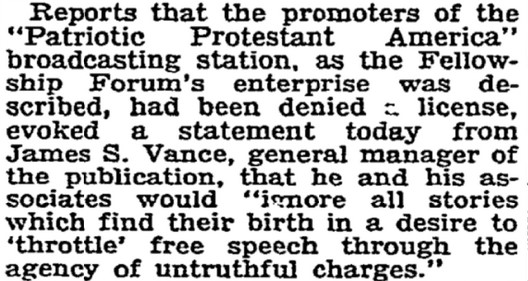
"Reports that the promoters of the 'Patriotic Protestant America' broadacasting station, as the Fellow Forum's enterprise was described, had been denied a license, evoked a statement today from James S. Vance, general manager of the publication, that he and his associates would 'ignore all stories which find their birth in a desire to "throttle" free speech through the agency of untruthful charges.'"
James S. Vance, the paper's general manager, fired back when the Forum's plan for a "Patriotic Protestant America" broadcasting station stalled out.
"Stories" were circulating about the Forum.... Were they "untruthful" like Vance claimed?
Whatever Vance and his crew were saying and doing, they had moved beyond simple words into the murky realm of coded messaging.

"A National Voice for Protestant Fraternal America", The Fellowship Forum was published from 1921 to 1937.
In "100% American" circles (to use a favorite catchphrase of the time), "Protestant" meant "Non-Catholic" and usually "Anti-Catholic" as well.
"Fraternal" was another favored term of art, evoking friends and neighbors in thousands of predominantly White Protestant lodges across America (Odd Fellows, Elks, Moose, Knights of Pythias and whatever else).
The Forum reported on a wide swathe of these organizations while privileging Freemasonry and the Klan.
In practice, there was a recurring overlap between those two —and when you hear "Militant Freemasonry", "Ku Klux Klan" is strongly implied.
(For the complex and often fraught relationship of Freemasonry, Militant Freemasonry and the Klan in those years, see Adam Kendall's impressive and well-sourced survey, "The Ku Klux Klan, Freemasonry and the American Fraternal Press", Ars Quatuor Coronatorum, vol. 134, 2021).
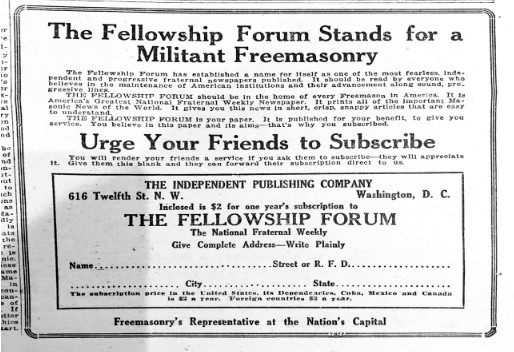
"The Fellowship Forum Stands for a Militant Freemasonry"
The Fellowship Forum— "Freemasonry's Representative at the Nation's Capital" —was founded in Washington DC in 1921.
By 1927, this "National Voice for Protestant Fraternal America" had attained a circulation of over a million.
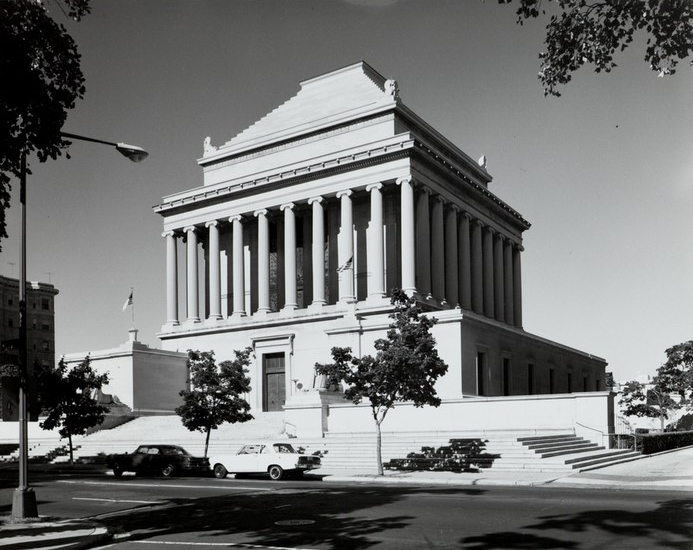
Freemasonry has a long history in the Washington area with many powerful adherents, going back to George Washington himself.
This Fraternal Order developed a network of influential connections across Protestant America (with some Jewish involvement as well).
The Masons did not need to exclude Catholics, since the Church got there first. As a secret society, Freemasonry was deemed incompatible with the Roman faith and membership triggered instant excommunication.

Klansmen march hand-in-hand, on Pennsylvania Avenue in 1925, showing their might in view of the Capitol.
In 1915, the Ku Klux Klan was refounded —after its suppression in 1870, following a horrifying run of lynchings and other violence.
In the course of the 1920s, the organization was restyled, with an eye to broad public acceptibility. By mid-decade, the Klan attracted some 2.5 to 4 million members and played a leading role in political, social and business life.
The culmination came on August 8, 1925 and September 13, 1926, when tens of thousands of robed and hooded knights paraded through the Nation's capital, claiming their place in the American mainstream.

"Dear Representative of the Fellowship Forum"
James S. Vance, the Forum's General Manager, combined America First boosterism with cash pay-outs to subscription agents:
"There is always work for loyal Americans to do because America’s enemies are at work every minute of the day. We must arouse the sleeping Protestants throughout the country and get them properly informed. Interview every Protestant in your territory and solicit his subscription. They will learn the truth by reading The Fellowship Forum ....How about the BONUS?—do you want it? If so show some speed!"
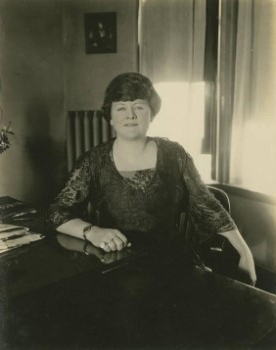
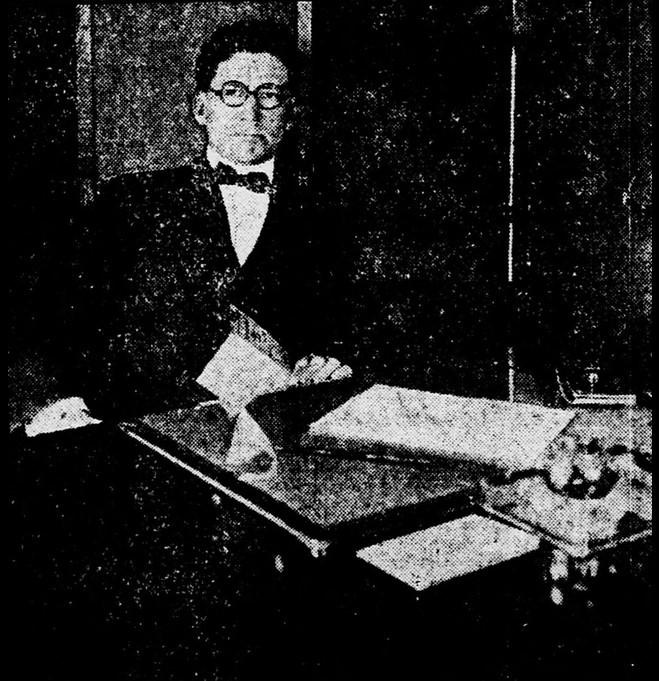
Mary Elizabeth Tyler and Edward Young Clarke, White Supremacist Entrepreneurs.
When it came to relentless huckstering, Vance wasn't doing this alone.
The Fellowship Forum's bold expansion was managed by The Southern Publicity Association, the Atlanta-based advertising and fundraising agency that also programmed the rise of the Second Ku Klux Klan.
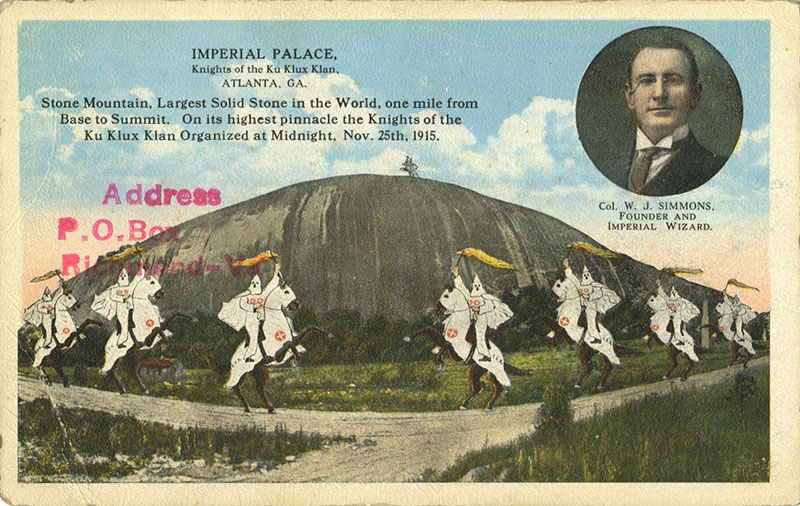
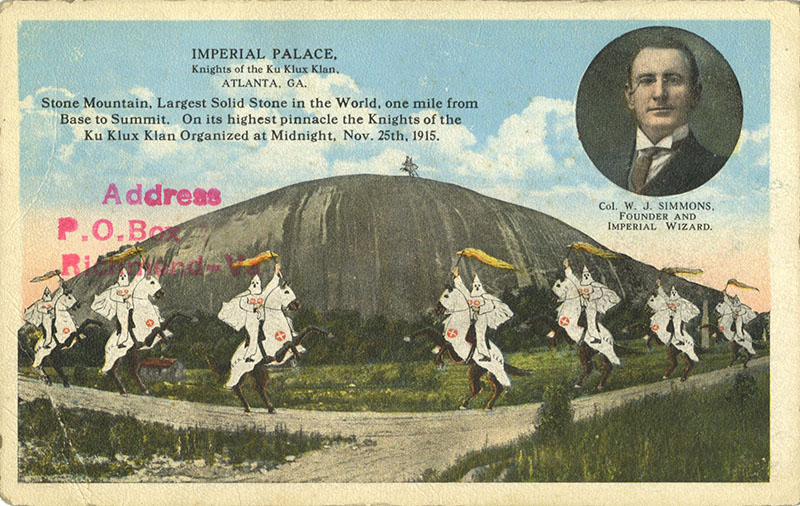
The Creation Myth of the new Ku Klux Klan in concise form.
On November 25 , 1915, William Joseph Simmons (a Protestant preacher) led 16 stalwart "Knights" to the summit of nearby Stone Mountain.
Robed, hooded and masked, they reconsecrated the Ku Klux Klan, amidst neo-chivalric antics not seen for decades.
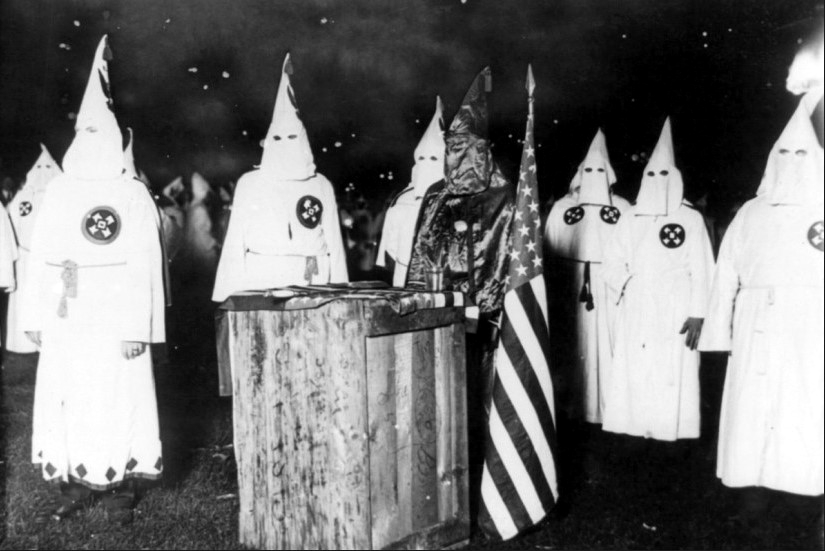
Imperial Kleagle Edward Young Clarke (in black, to the left of the flag) was the ranking Klansman at this rally.
We don't know for a fact that Edward Young Clarke was on top of Stone Mountain with Simmons on that fateful night in 1915 —but if not, he wasn't far off.
From 1915 to 1922, Clarke served at Imperial Wizard Simmons' side, as Imperial Wizard Pro Tempore (Chief Deputy) and Imperial Kleagle (Head of Recruiting).
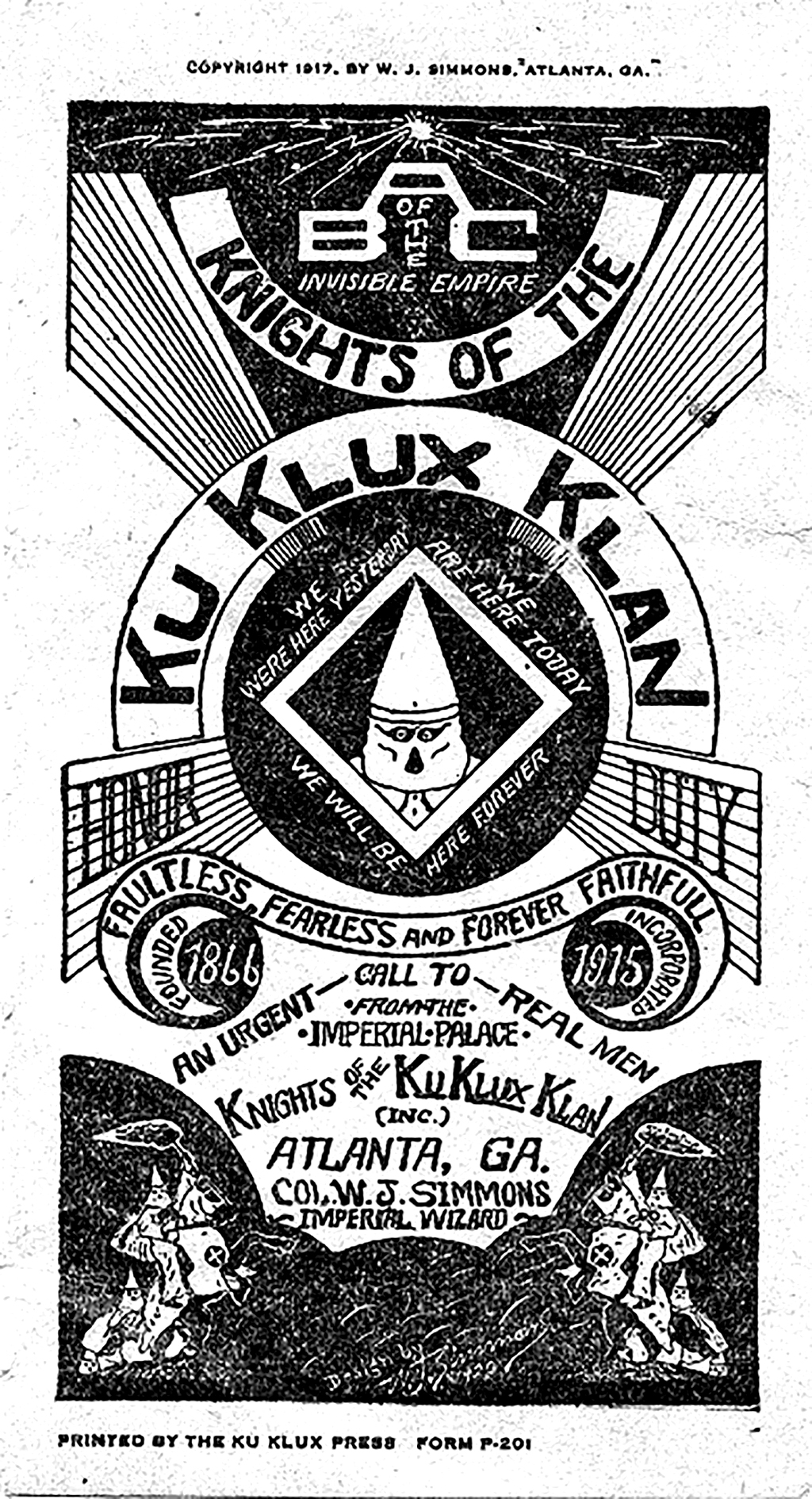
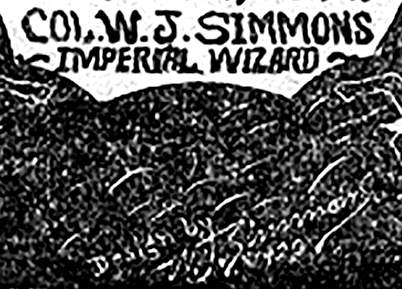
Crude and forceful in style, this programmatic image was designed by W.J. Simmons himself (as signed at the bottom).
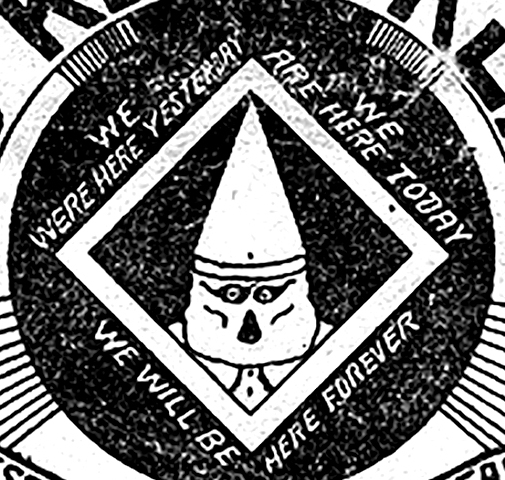
"We were here yesterday, We are here today, We will be here forever."
At the outset, Simmons doubled-down on his Invisible Empire's connection with the past, flourishing every symbol and motto he could find.
America, however, was looking ahead —in the full flush of White Protestant Fraternalism and entering the age of modern advertising.
"An Urgent Call to Real Men"? That was cutting out half the population... The WKKK (Women of the Ku Klu Klan) would be founded in 1923.
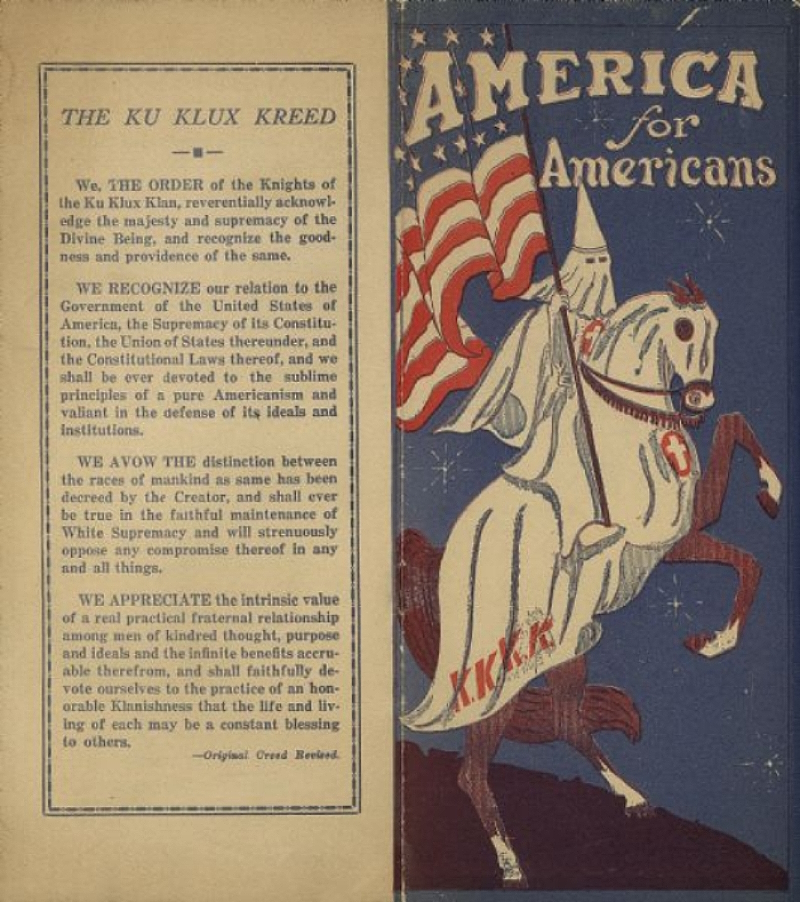
"Faithful maintenance of White Supremacy" is the core message of the "Klu Klux Kreed". The first "K" on the robe presumably signifies "Knight".
By 1920, Clarke and Tyler founded The Southern Publicity Association.
In June of that year, they stipulated a contract with Grand Wizard Simmons (whose previous recruitment efforts had been scattershot at best).
Clarke was already their inside man as Imperial Kleagle —the Klan's chief strategist and enrollment officer.
Their task was to restructure the KKK as a centralized membership organization. In return, Clarke and Tyler would pocket a share of the fees.
In June of 1921, the Fellowship Forum began publication— helping normalize Klannish activity in a wide sector of American Society.
(Eventually, the Association's accounts would include the Anti-Saloon League, the Armenian Relief Fund and the American Red Cross, as well as the Klan and the Fellowship Forum.)
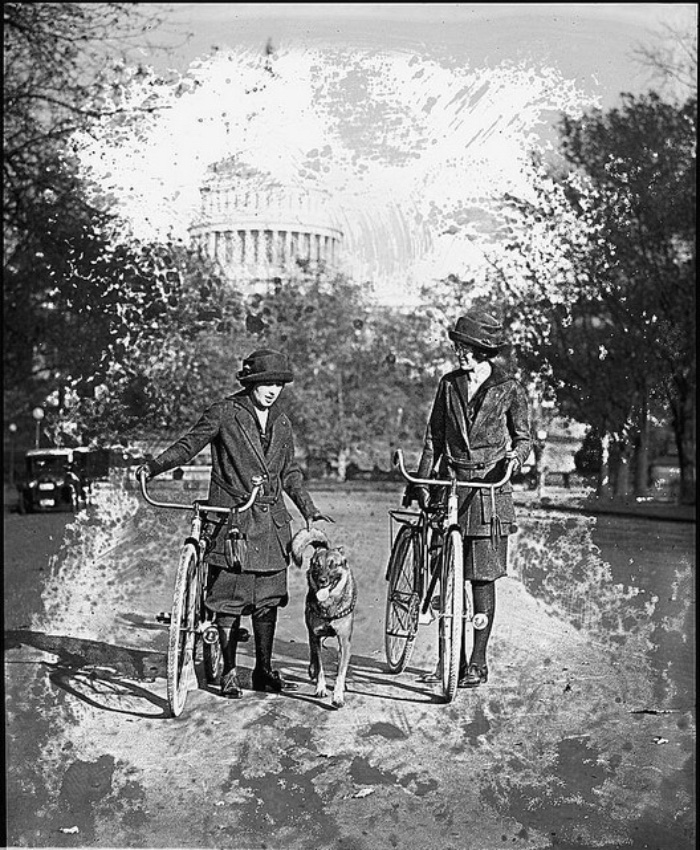
This intriguing image was staged in Washington DC, in sight of the Capitol, on November 1, 1921. We see two conspicuously liberated women (by the standards of their day) with their plus-fours, their bicycles and their dog.
Why are we featuring this here? The photo records one of The Fellowship Forum's earliest publicity campaigns —only four months after the appearance of their first issue on June 24, 1921.
Perhaps not irrelevantly, this was also a year and three months after women achieved the right to vote on August 18, 1920.
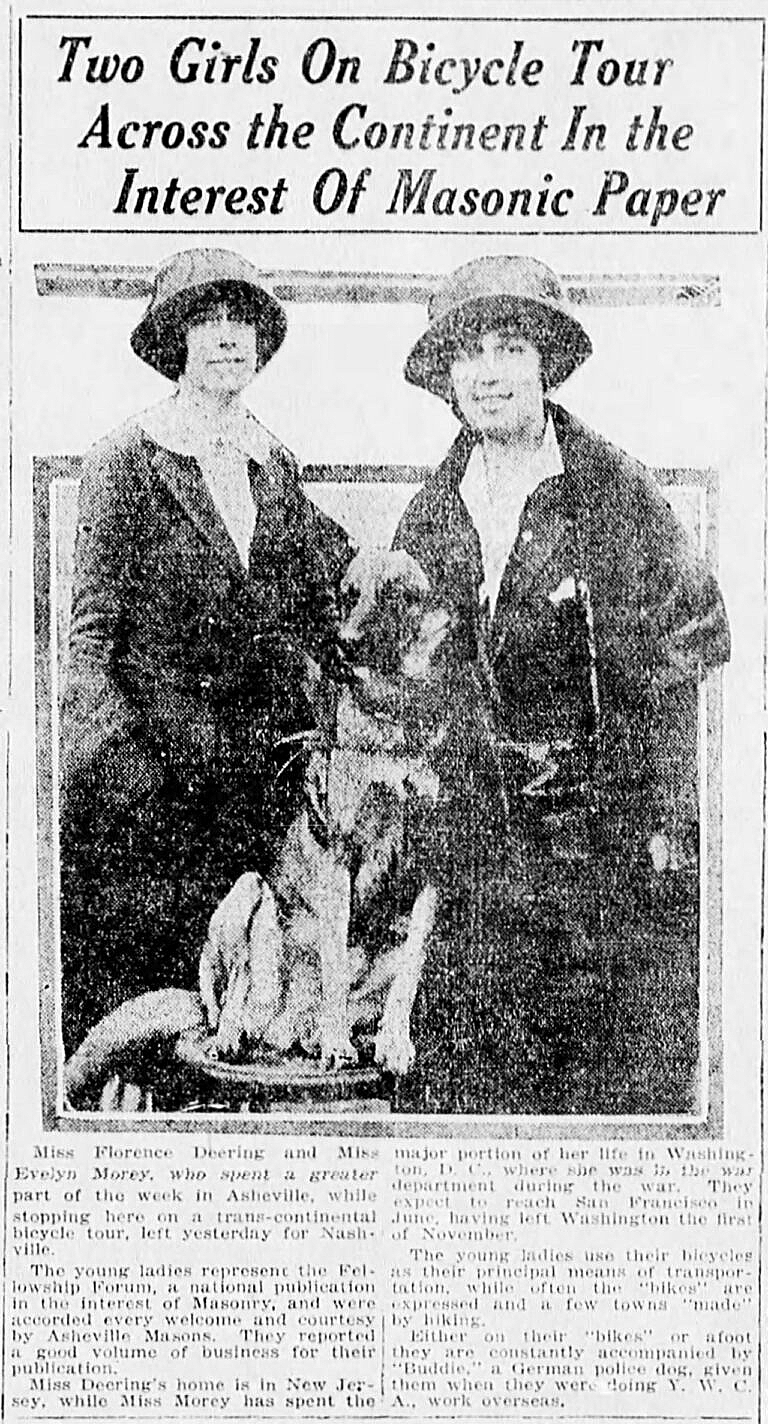
"Two Girls on Bicycle Tour Across the Continent in the Interest Of Masonic Newspaper"
This was the softest possible approach to Protestant Fraternity (and now Sorority), much favored in these years— sending Florence Deering and Evelyn Morey, two youngish Christian ladies, on a cross-country bicycle trip from Washington DC to San Francisco.
They were "accompanied by 'Buddie', a German police dog, given them when they were doing YWCA work overseas."
"The young ladies represent the Fellowship Forum, a national publication in the interest of Masonry, and were accorded every welcome and courtesy by Asheville Masons. They reported a good volume of business for their publication."
Florence and Evelyn were routed through the heart of Klan Country in the South, but in this article we hear only of "Masonry" and not even the "Militant" kind. Now —a hundred years later—we can merely wonder about their conversations on the ground
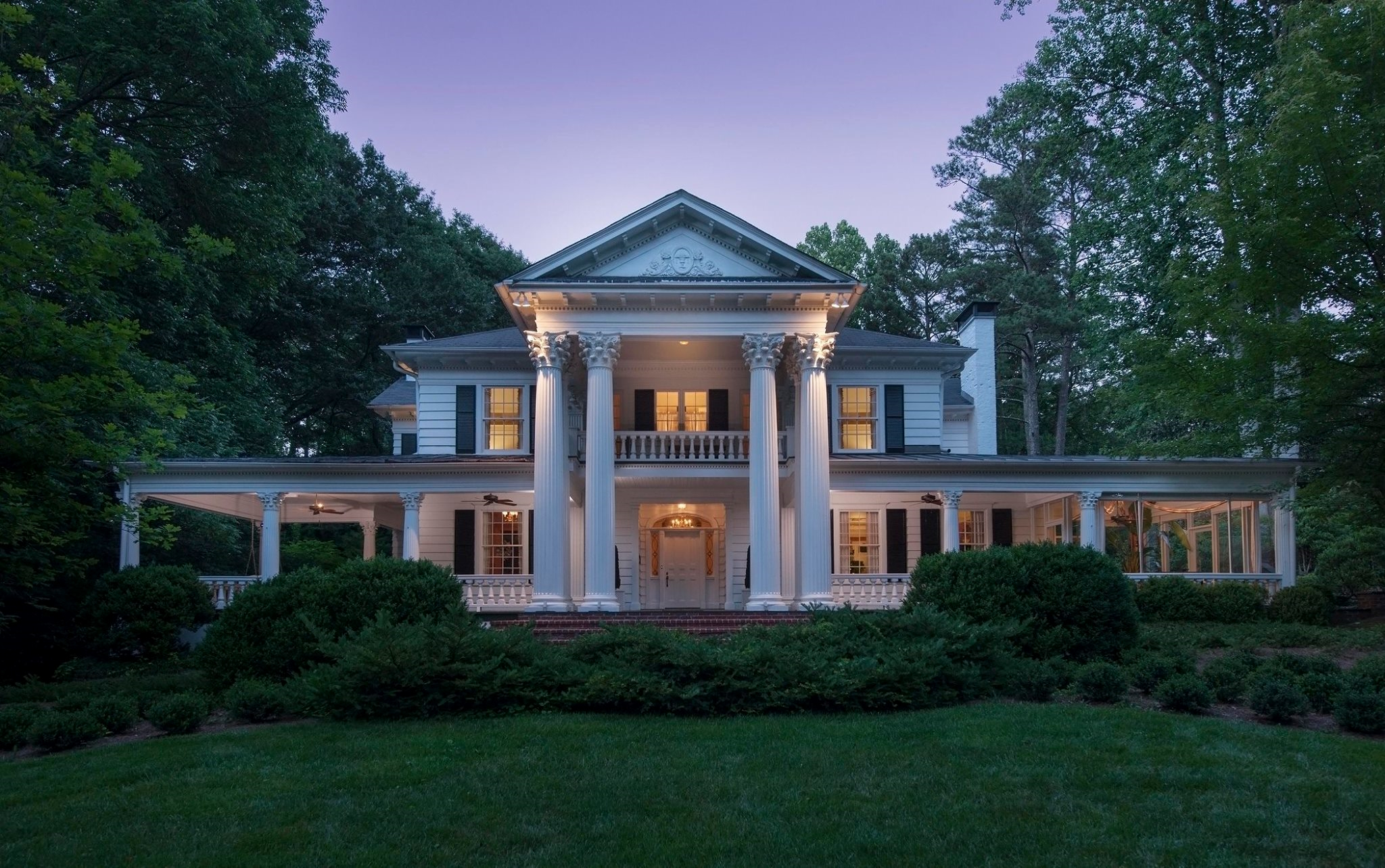
The Klan built —or at least paid for— this this Old Plantation fantasy in the Atlanta neighborhood of Buckhead. It was created for Mary Elizabeth Tyler in 1921, while she was pulling in huge sums from KKK members.
What was in this for Edward Young Clarke and Mary Elizabeth Tyler (apart from maybe saving White Protestant America)?
Power, influence and a vast amount of money.
According to their 1920 agreement with Simmons, they claimed $8 from every $10 initiation fee (with the other $2 going to Simmons).
Meanwhile, it was up to Clarke and Tyler to finance the membership drive, with hefty finders' fees going to hundreds of Kleagles (recruiters, not Imperial) across the country. (In fact, we are looking at a classic pyramid scheme.)
By the end of 1921, the KKK had already attracted more than 700,000 members (as estimated, since it was a secret society with its records closely held).
Clarke and Tyler should have netted some $1,750,000 from initiation fees alone in 1921 (worth some $32,000,000 today).
Meanwhile, the two Southern Publicity Association partners added another layer of profit to their business plan, manufacturing and selling robes, hoods and other Klan regalia —setting themselves up as sole authorized suppliers.

"CHARGES KLAN HEAD IS TAKING TRIBUTE / Wade Declares Clarke and Mrs.Tyler Have become rich on 'Ill-Gotten Gains' / SAYS THEY CONTROL FUNDS / Former Kligrapp Asserts Clarke Takes Advantage of Imperial Wizard's 'Drunken Condition'"
Then the crash came...
Clarke and Tyler were an irregular couple with a lively public history of sexual transgession, including an arrest on morality charges —now showcased in their lavish new home.
Then their financial machinations emerged— arousing anger and presumably envy within the organization.
In 1922, the Klan fired Louis D. Wade as Kligrapp (branch secretary) and filed an injunction to stop him defaming Clarke and Tyler. That left Wade no choice but to break open the full story.

“Defendant charges that Clarke and Mrs. Tyler are using the Klan for their personal aggrandizement and, being in control of its funds, have become suddenly enormously wealthy from ill-gotten gains collected from the ranks of Ku Klux men. Clarke has gained complete control over the Chief Executive Officer (William Joseph Simmons), and has either kept him drunk or has taken advantage of his drunken condition and procured for himself the office of Imperial Wizard pro tem, which allows him to exercise supreme control over the entire organization.”
We can hardly improve on Wade's own sworn deposition (above): Clarke (Imperial Wizard Pro Tempore, Imperial Kleagle and Imperial Klaliff, all at once) preyed on the drunken condition of Simmons (Imperial Wizard), allowing Clarke and Tyler to "suddenly become enormously wealthy from ill-gotten gains collected from the ranks of Ku Klux men."
Simmons, Clarke and Tyler were all eventually sidelined within the organization, but the Klan forged ahead —building on their innovations for a few more years at least.
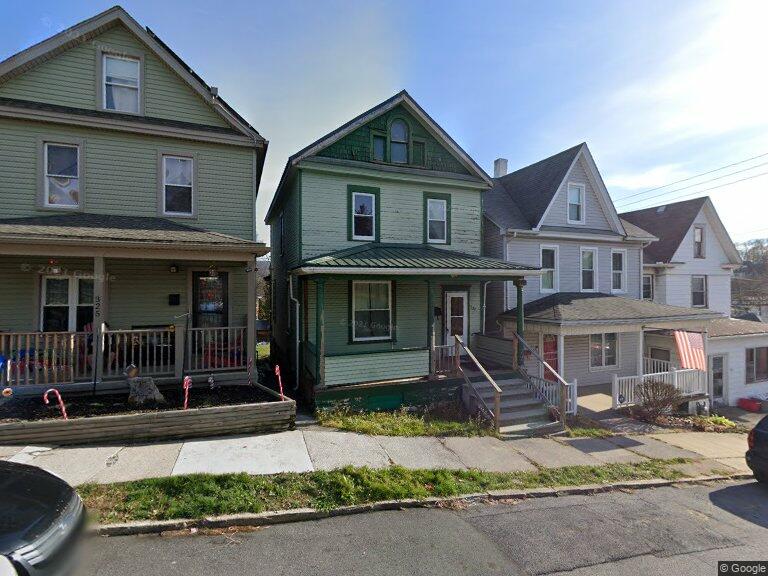
In 1923, the now rather neglected greenish structure in the middle was home to prospective Klan member C.D. Myton.
According to a National Bureau of Economic Research working paper, new Klan members were expected to spend $23.30— right up front— including the $10 initiation fee, a $6.50 robe, a $5 membership fee and a so-called "imperial tax" of $1.80. That represented approximately $430 in 2026 money.
Then came recurring annual charges... Klansmen tended to be better educated and more financially stable than average Americans, generally able to meet such expenses.
Still, $23.30 was serious cash for a respectable lower middle-class guy like railway clerk C.D. Myton. He might have earned $37 a week while living in a modest but comfortable 3 bedroom, 1 bath house on a hill in Altoona, PA.
Myton began the membership process in 1923 but evidently stopped short of joining.

This complex was leveled in 1924 to begin construction of the vast new Italianate Cathedral of the Blessed Sacrament.
Altoona was a small but thriving city in those years, with 60,331 inhabitants according to the 1920 census, rising to 82,054 in 1930.
A major railway center, in Altoona the Pennsylvania Railroad Company employed some 15,000— including C.D. Myton— mostly in its vast workshop complex.
Altoona boasted the largest Klan organization in the area, with some 2,800 members. Meanwhile, approximately 200 other Klan groups were dispersed throughout Western Pennsylvania, mustering at least 140,000.
In that part of the world, the Klan fixated on the Catholic menace. Altoona had an estimated 40 to 50 Protestant churches in those years, embracing a dozen or so denominations.
It also had its own Roman bishop, 7 Catholic parishes and 42 parochial schools with over 11,000 students.
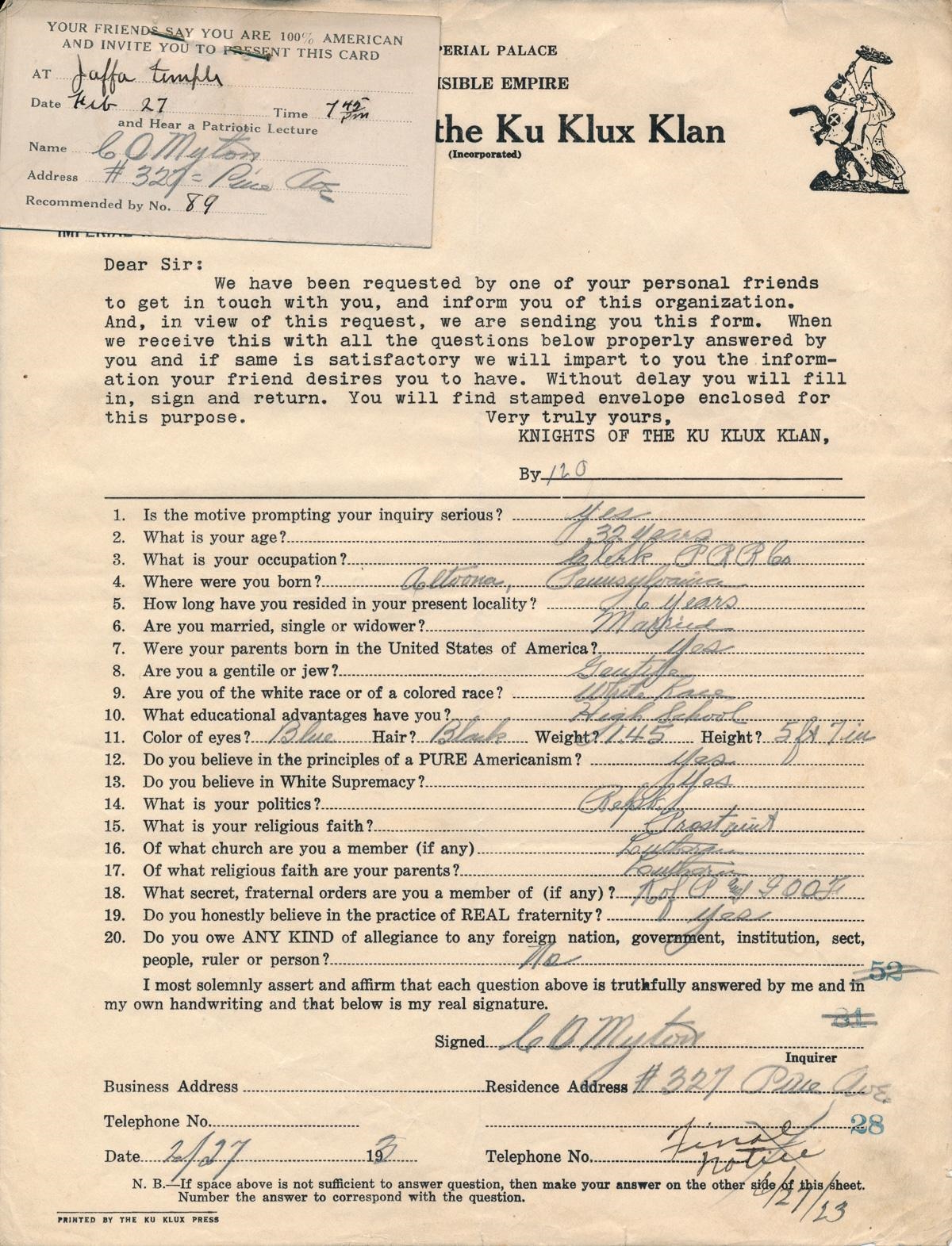
"Your friends say you are 100% American and invited you to present this card"—which is the ticket of admission to a "patriotic lecture" at the Jaffa Temple (a Masonic Shrine). The "friend" in question was evidently the cryptic "89" (who might have had a finder's fee in play).
Myton evidently attended on February 2, 1923 and presented the application —which he presumably aced, since it wasn't mined with trick questions.
Were your parents born in the United States of America? (Yes)
Are you a gentile or jew? (Gentile)
Are you of the white race or of a colored race? (White Race)
Of what church are you a member? (Lutheran)
Do you believe in White Supremacy? (Yes)
Do you believe in the principles of a PURE Americanism? (Yes)
Do you honestly believe in the practice of REAL fraternity? (Yes)
We also learn that Myton is 32 years-old, married, high-school educated, a clerk for the Pennsylvania Railroad Company, a Republican and a Knight of Pythias.
And No, he does not "owe ANY KIND of allegiance to any foreign nation, government, sect, institution, people, ruler or person".
in Altoona PA in 1923, the "Catholic Church" and the "Pope of Rome" were surely at the top of the list —but "sect" and "people" left plenty of space for Jews too.
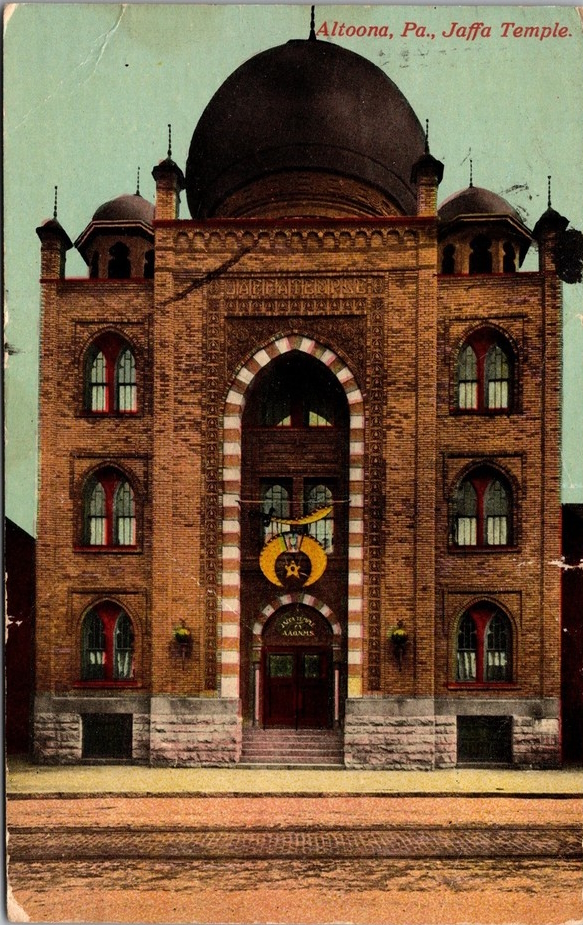
This Masonic Shrine in Altoona PA served as a nexus of Klan recruitment in the 1920s.
Related posts
MUSSOLINI: THE WILD MAN OF EUROPE - Part 2
In a "Little Library" in Washington DC, I happened upon "Mussolini: The Wild Man of Europe"— John Bond's eccentric exposé of Benito Mussolini, printed in the Nation's Capital in 1929.
In my first post, "Wild Man, Part 1", Bond helped reveal the inner workings of the Ku Klux Klan in Washington DC, Atlanta GA and Altoona PA.
Here in "Wild Man, Part 2", we take Bond's book to Fascist Italy and view the Duce through the outraged author's eyes.
In "Wild Man", Part 3", we bring Bond back to Philo-Fascist America. There we see the Duce lauded by Italian Americans, by Hollywood celebrities and by the mainstream press.
Who was John Bond? A "Militant Freemason", a virulent anti-Catholic and an anti-Mussolini conspiracy theorist.
How about his message? Bond was strange and obsessed but he wasn't always wrong.
MUSSOLINI: THE WILD MAN OF EUROPE - Part 3
In a "Little Library" in Washington DC, I happened upon "Mussolini: The Wild Man of Europe"— John Bond's eccentric exposé of Benito Mussolini, printed in the Nation's Capital in 1929.
In my first post, "Wild Man, Part 1", Bond helped reveal the inner workings of the Ku Klux Klan in Washington DC, Atlanta GA and Altoona PA.
In "Wild Man, Part 2", we took Bond's book to Fascist Italy and viewed the Duce through the outraged author's eyes.
Here in "Wild Man", Part 3", we bring Bond back to Philo-Fascist America. There we see the Duce lauded by Italian Americans, by Hollywood celebrities and by the mainstream press.
Who was John Bond? A "Militant Freemason", a virulent anti-Catholic and an anti-Mussolini conspiracy theorist.
How about his message? Bond was strange and obsessed but he wasn't always wrong.
WORK IN PROGRESS

GUGLIELMO MARCONI: Science, Fascism, Antisemitism and What Else?
History has given a free pass to Guglielmo Marconi, who was both a scientific genius and a Fascist ideologue.
There are two stories to tell—first in Italy and then in America.
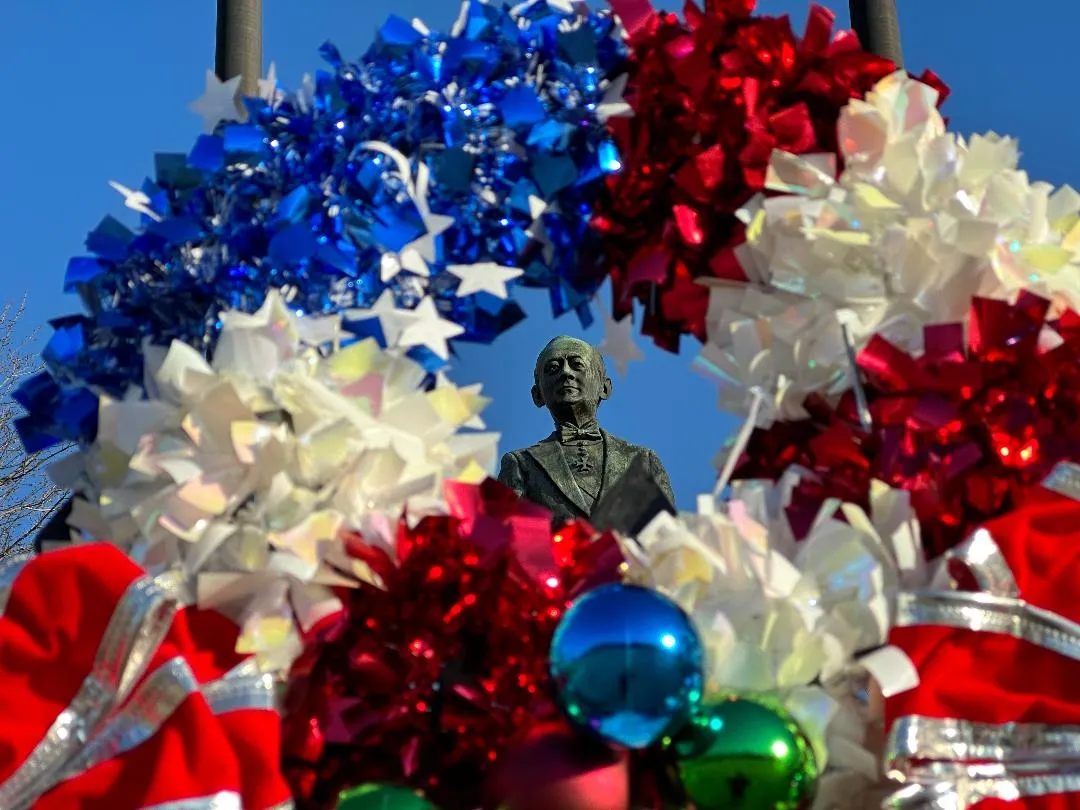
COLUMBUS, MARCONI AND BALBO: Italian Heroes Collide with American Reality
In 1930s America, Guglielmo Marconi, the inventor of the radiotelegraph and Italo Balbo, the aeronautical "Second Columbus" led a brilliantly orchestrated public relations campaign on behalf of Benito Mussolini's regime.
Fascist Italy commanded a dazzling array of scientific, technological and cultural resources. It channeled them all— astounding the American public at Chicago's Century of Progress Exposition in 1933-34.
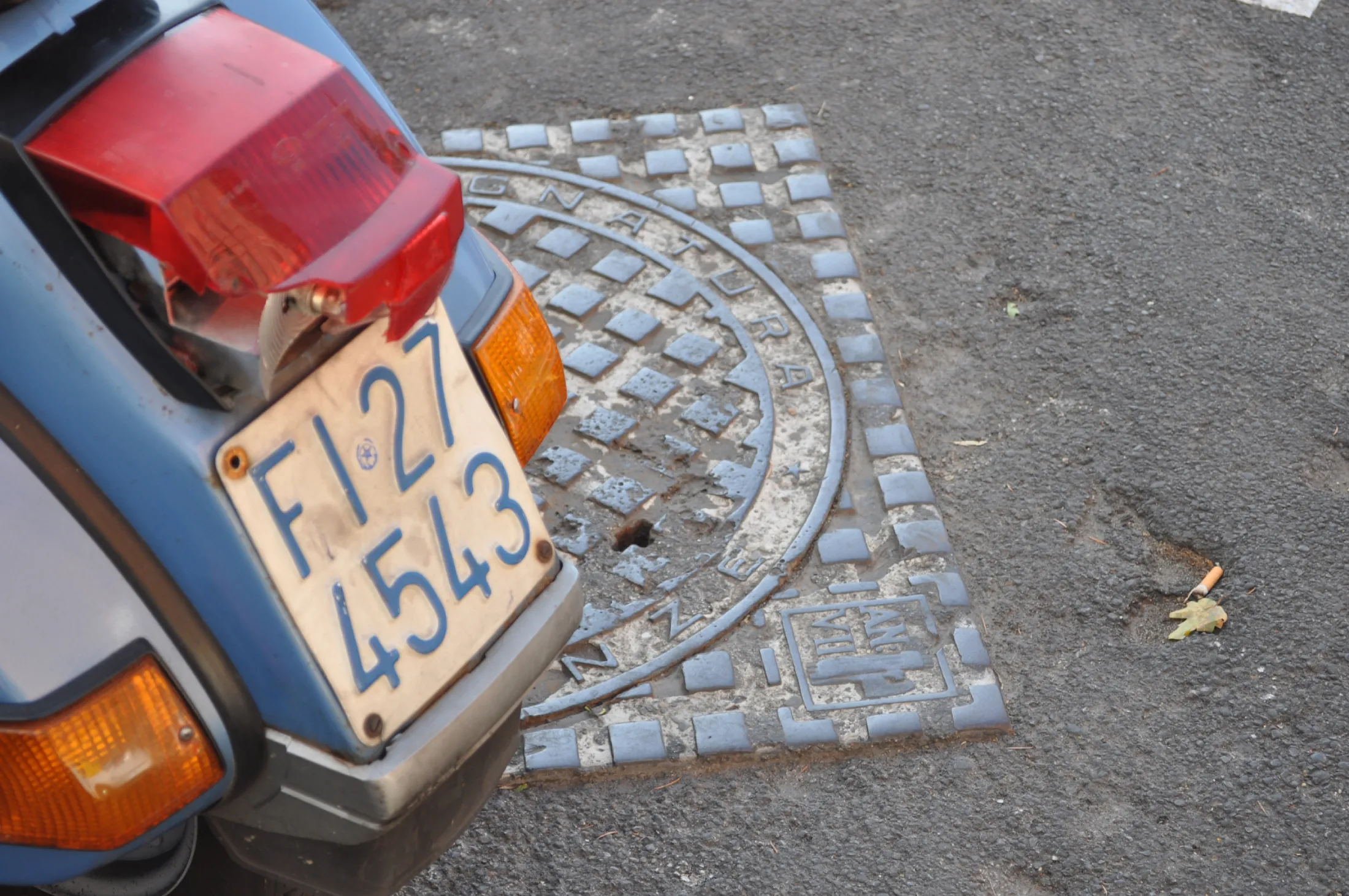
ANNO FASCISTA = FASCIST YEAR: Florence’s Mussolini-era sewer caps
Benito Mussolini had a rare knack for signs and symbols. Throughout Italy, they still follow us wherever we go.
What about Florence's ubiquitous "Anno Fascista = Fascist Year" sewer caps?
Thereby hangs many a tale...
E.42: Mussolini's Fascist Theme Park on the Outskirts of Rome
What if the Duce threw a World's Fair and no one came?
That is basically the story of the E.U.R. (Esposizione Universale Roma 1942)—one of the Eternal City's strangest and most intriguing districts.
Lorem ipsum dolor sit amet, consectetur adipiscing elit. Suspendisse varius enim in eros elementum tristique. Duis cursus, mi quis viverra ornare, eros dolor interdum nulla, ut commodo diam libero vitae erat. Aenean faucibus nibh et justo cursus id rutrum lorem imperdiet. Nunc ut sem vitae risus tristique posuere.