MORE MEDICI?! Family Myth and a Contested Legacy in Modern Florence
I can show you thousands of eloquent photos of the Medici and their world.
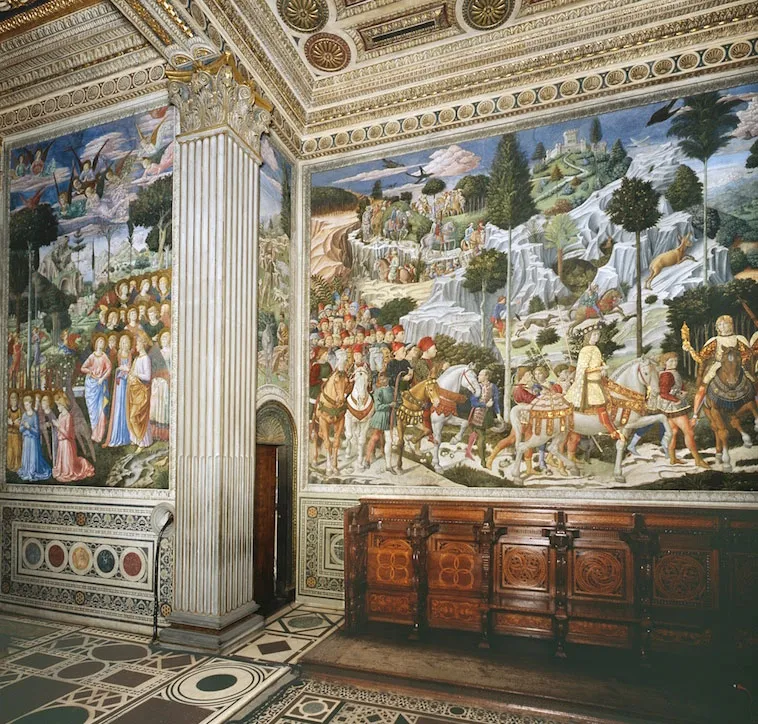
Benozzo Gozzoli painted the Cavalcade of the Magi (circa 1459) in the chapel of the chief Medici residence, creating a wonderous world of dynastic myth.
We can watch these one-time rulers of Florence wend their gallant way through fairy tale landscapes…


An odd but impressively fish-eyed view of the Apotheosis of the Medici Family, frescoed on the gallery ceiling in the former Palazzo Medici by Luca Giordano in 1683-85.
We can admire them as they disport on clouds, doing whatever mythic dynasties do…
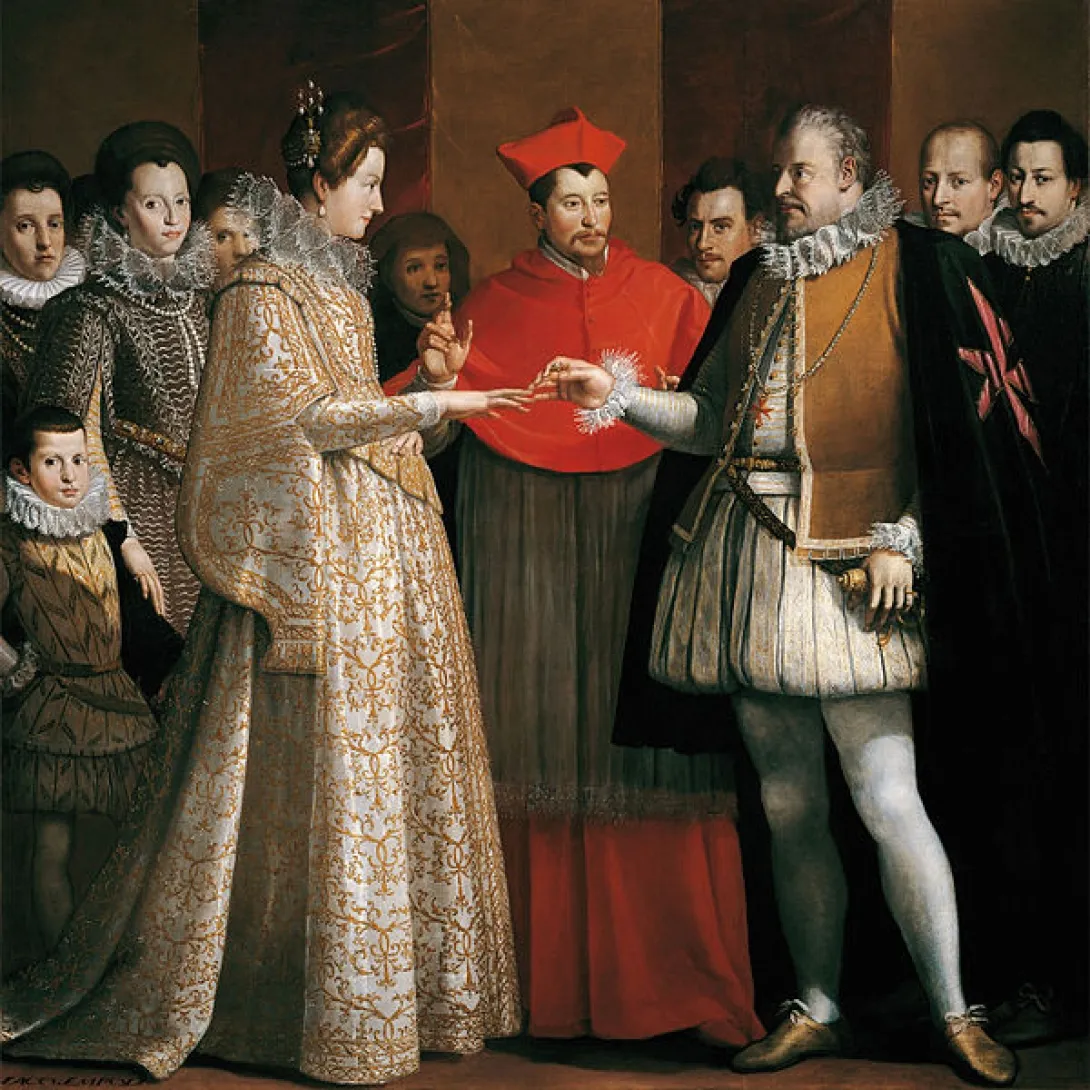

In Florence Cathedral on 5 October 1600, Maria de'Medici (future Queen of France) married King Henri IV (represented by her uncle Grand Duke Ferdinando I de' Medici).
We can witness their flawless performance in splendid court ceremonies...
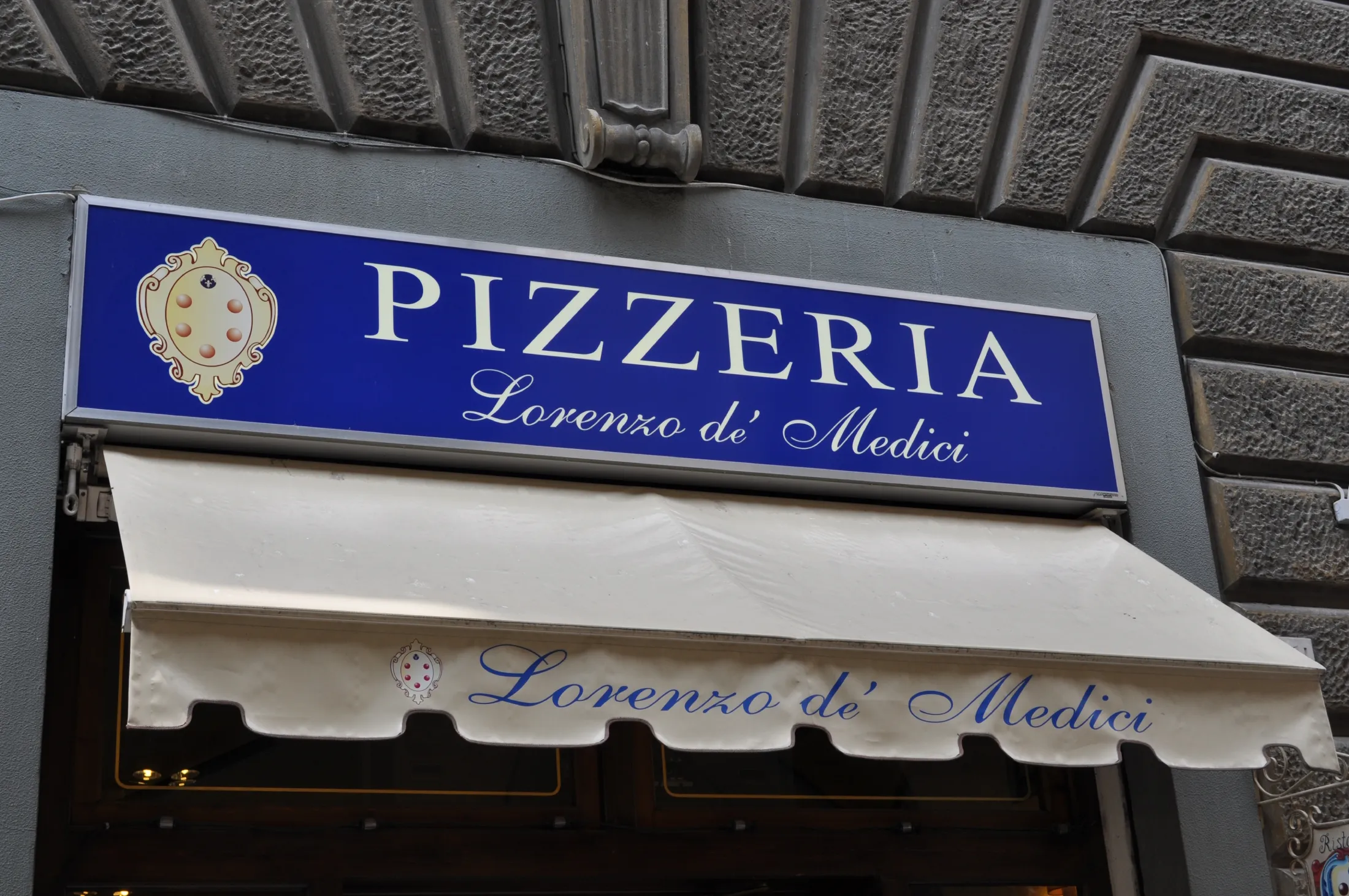
Did Lorenzo the Magnificent ever eat a pizza? He fled to Naples in 1479 in the wake of the Pazzi Conspiracy, so anything is possible. Tomatoes, however, were yet to arrive from the still undiscovered New World.
But now real life comes to today's Florence, where we have more than enough Medici kitsch to go around.
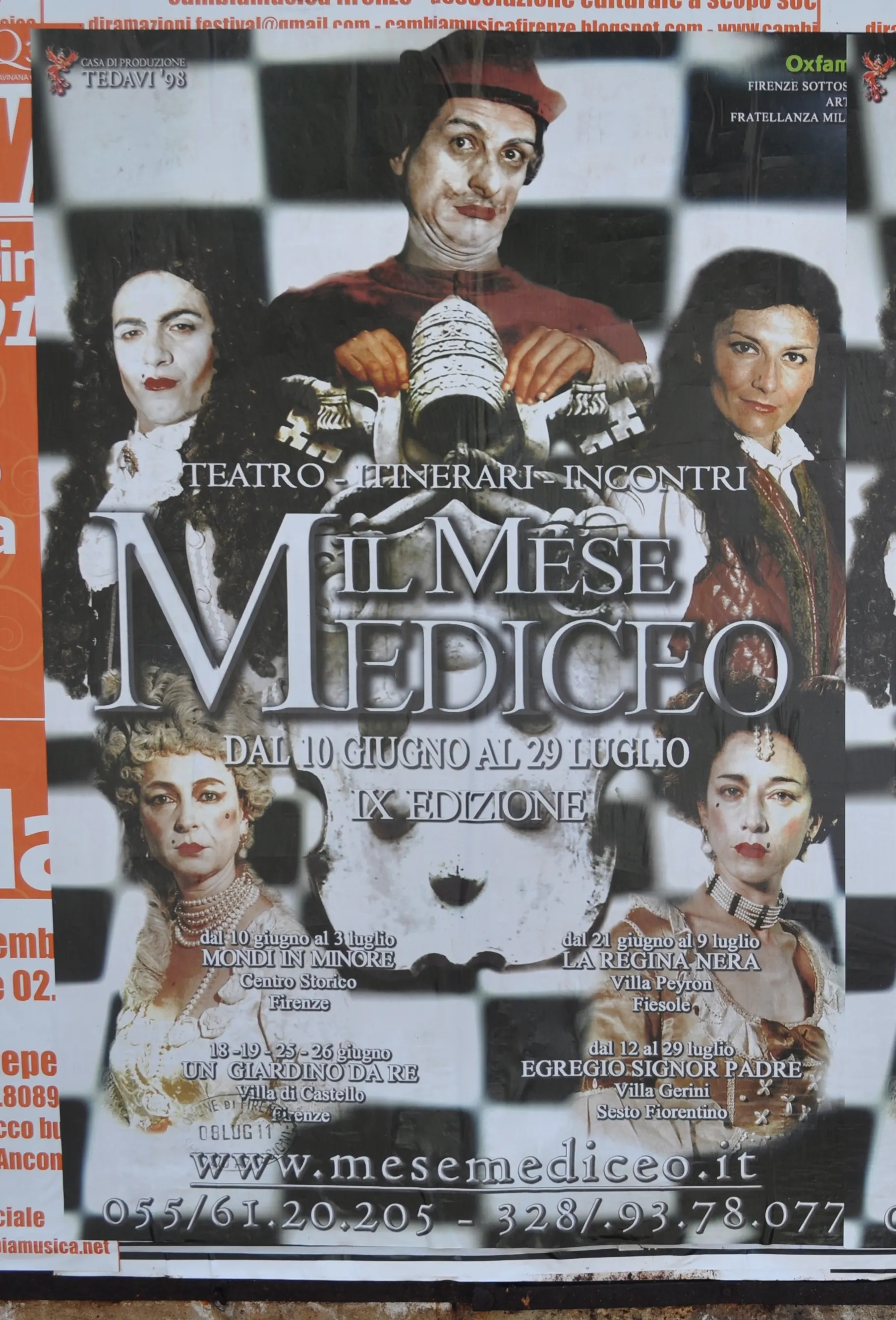
MESE MEDICEO = MEDICI MONTH: Avatars run wild...so join the fun! Be the Medici of your choice with no questions asked!
Who are these "Medici" today, three hundred years after their demise?
The creepy mime artist at the top of the above poster evidently stands in for a Medici Pope (Leo X or Clement VII).
The no less heavily (but more artfully) made-up gentleman in the long wig (circa 1700) might be the aesthetically inclined Grand Prince Ferdinando... unless it is someone else.
As for the three women (two bejeweled and showing a good deal of cleavage, the other a sporty type in maybe hunting dresss), your guess is as good as mine.
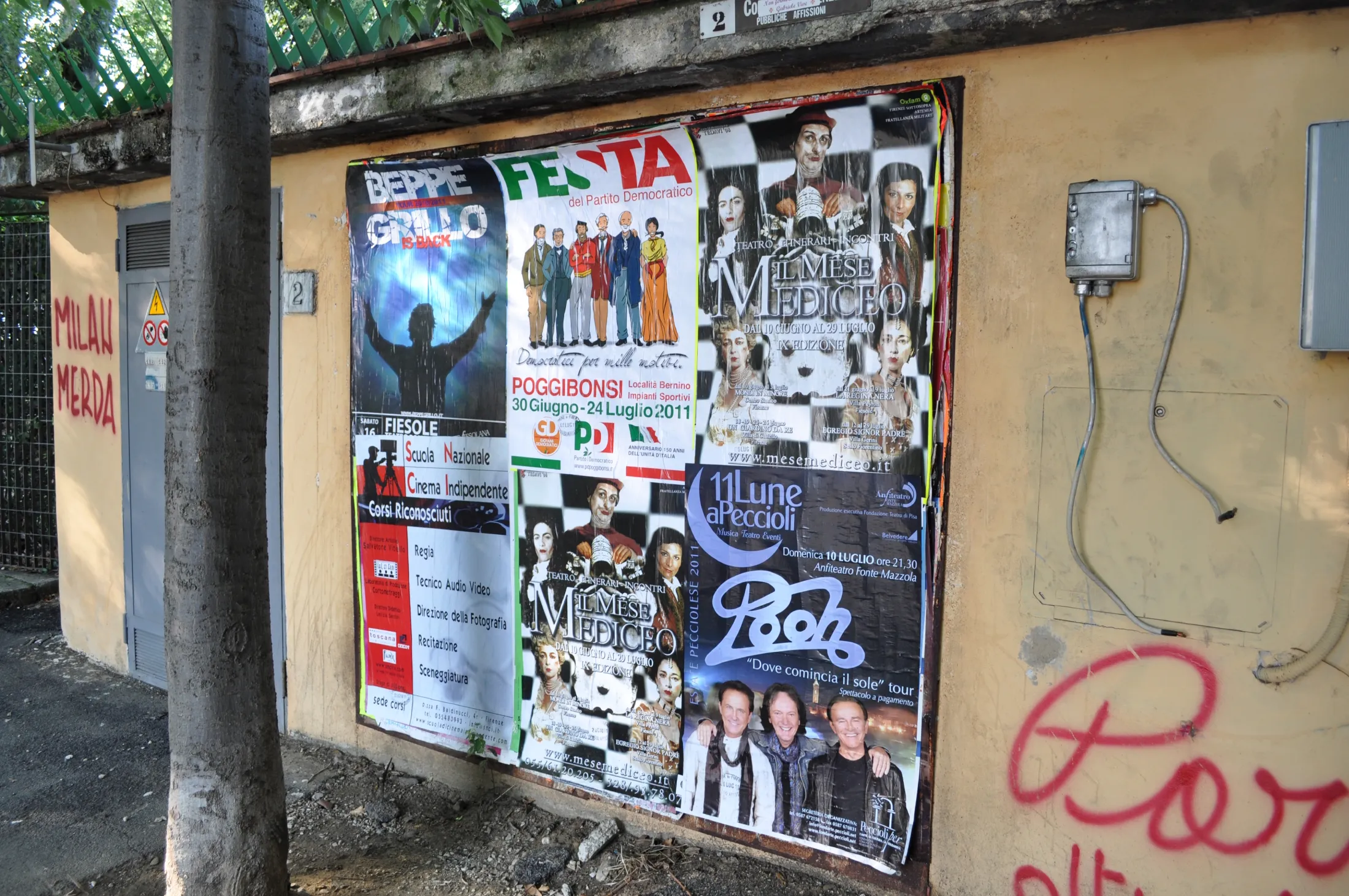
A Summer 2011 time capsule...or kaleidoscope: "Beppe Grillo is Back" (an acerbic comic, later iconoclastic poltician); the annual left-wing Festa dell'Unità in outlying Poggibonsi; a concert by Pooh (a disconcertingly long-lived musical group invented decades ago to promote a line of jeans); Medici Month twice (upper right and lower center).
In Florence, however, one point is clear:
The Medici are still in the mix— and it is this mix that matters most.
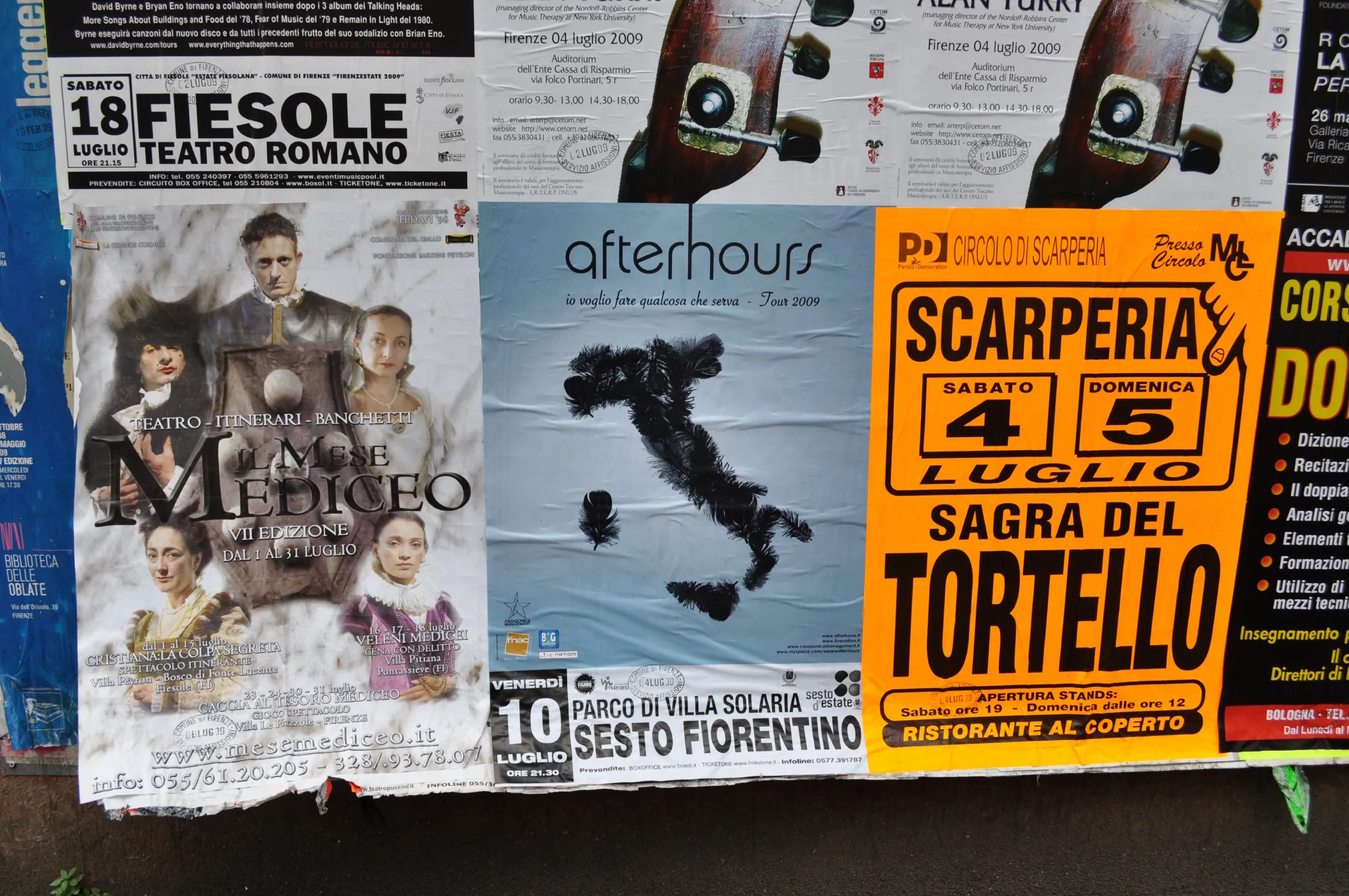
If you start peeling posters from a hoarding, you can usually find older ones beneath. In Florence, these often include the ghosts of Medici Months Past.
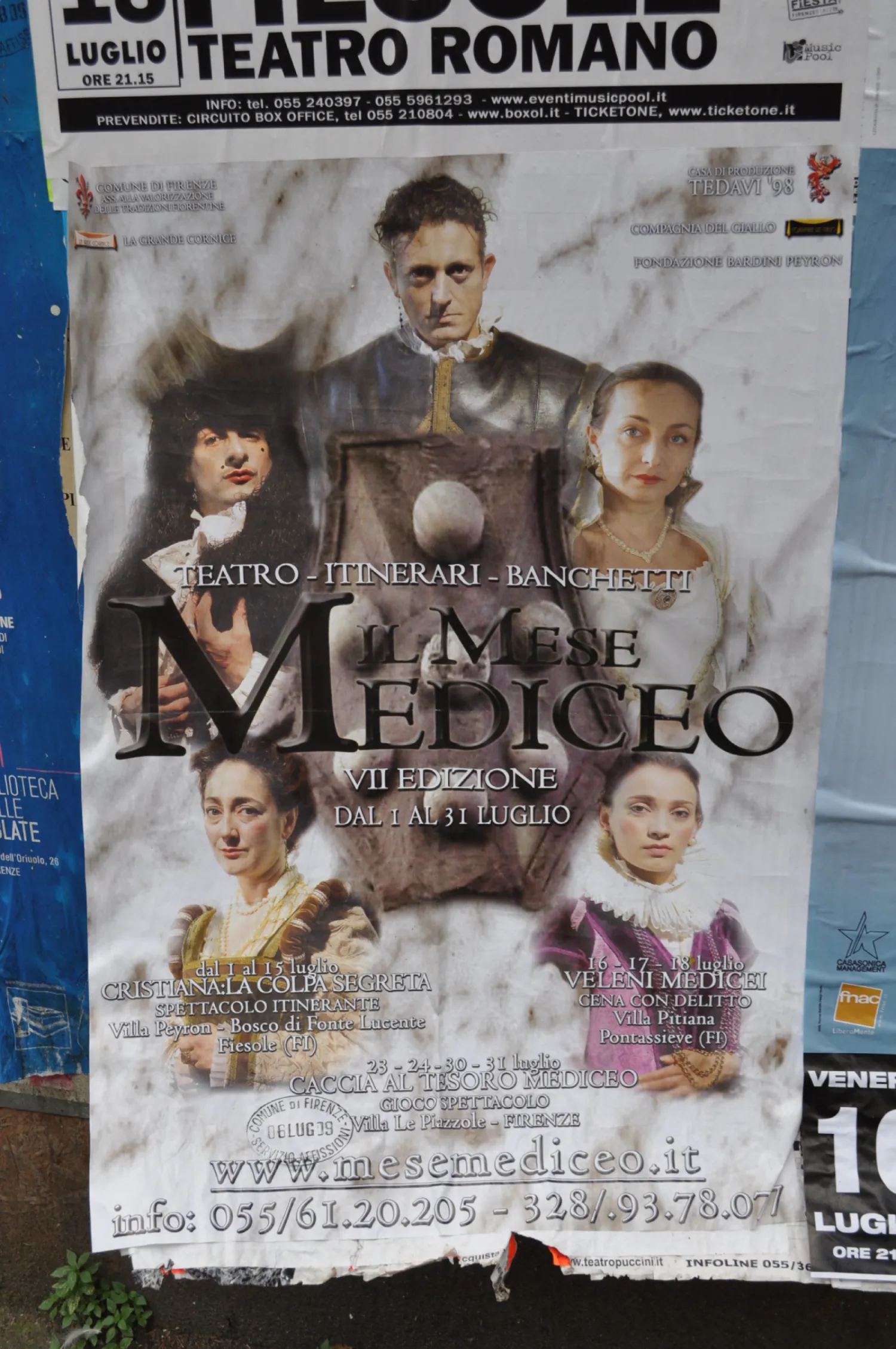
Medici Month 2009 featured a "Medici Treasure Hunt" and a dinner with a staged Renaissance poisoning.
But who are these aspiring Medici?
At the top of this poster, do we have the swashbuckling Giovanni delle Bande Nere (father of Grand Duke Cosimo I)?
Maybe we see the debauched Gian Gastone ( last Medici Grand Duke) at the upper left (unless it's Grand Prince Ferdinando again)?
Is that Eleonora de' Toldeo at the upper right (but in a 1950s evening dress)?
How about those two women below, in vaguely 16th / 17th century costumes? If we run a finger down the Medici family tree, we can pretty much take our pick. Giovanna d'Austria and Isabella de' Medici Orsini ...just maybe?
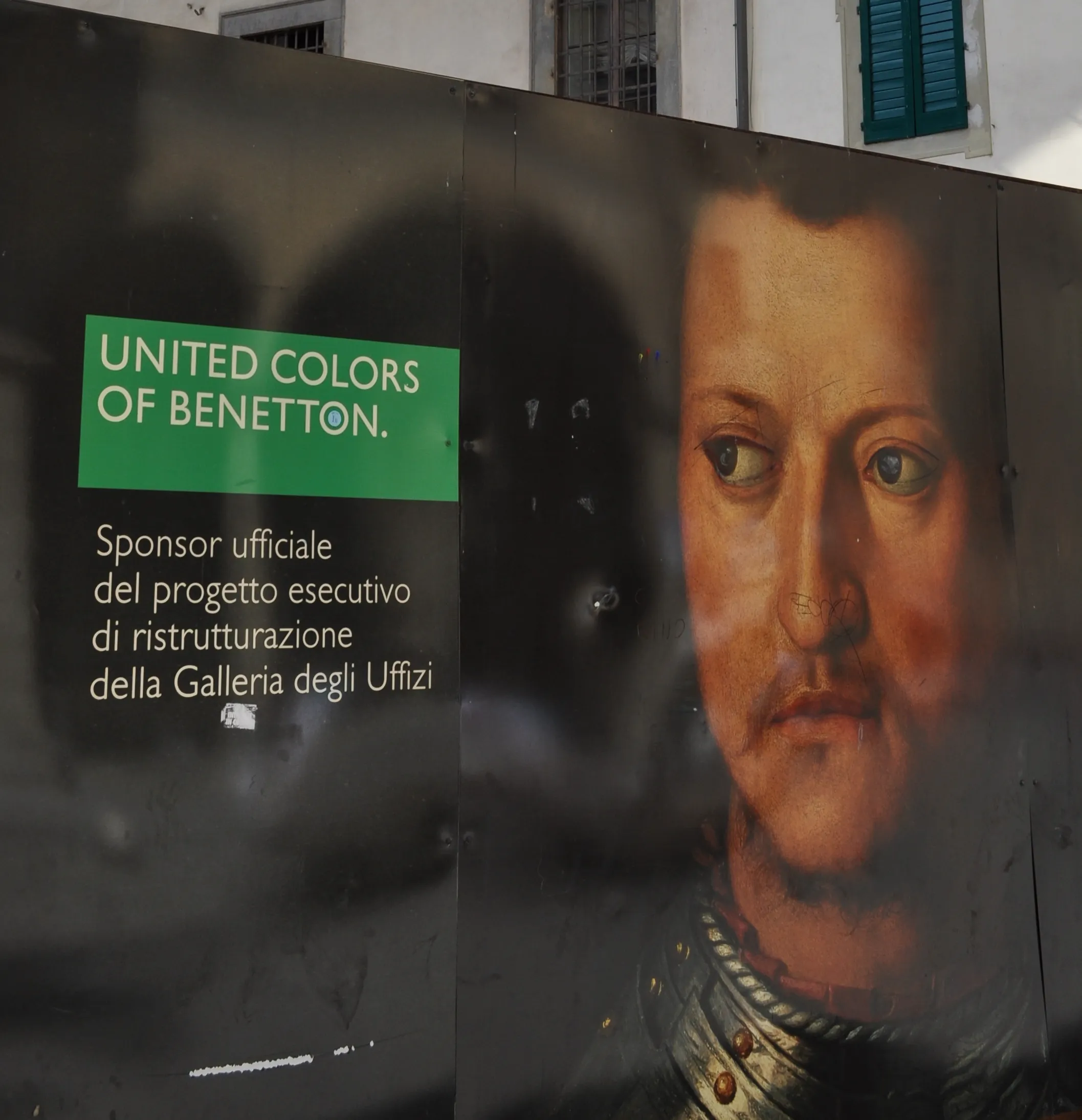
In 2009, Benetton was the official sponsor of the then renovation of the Uffizi Gallery (neither the first nor last). They enlisted a host of historic high-art Medici, including Cosimo I de'Medici by Agnolo Bronzino.
Sometimes the Medici likenesses are absolutely recognizable, especially when corporate sponsors are paying and only the real thing will do.
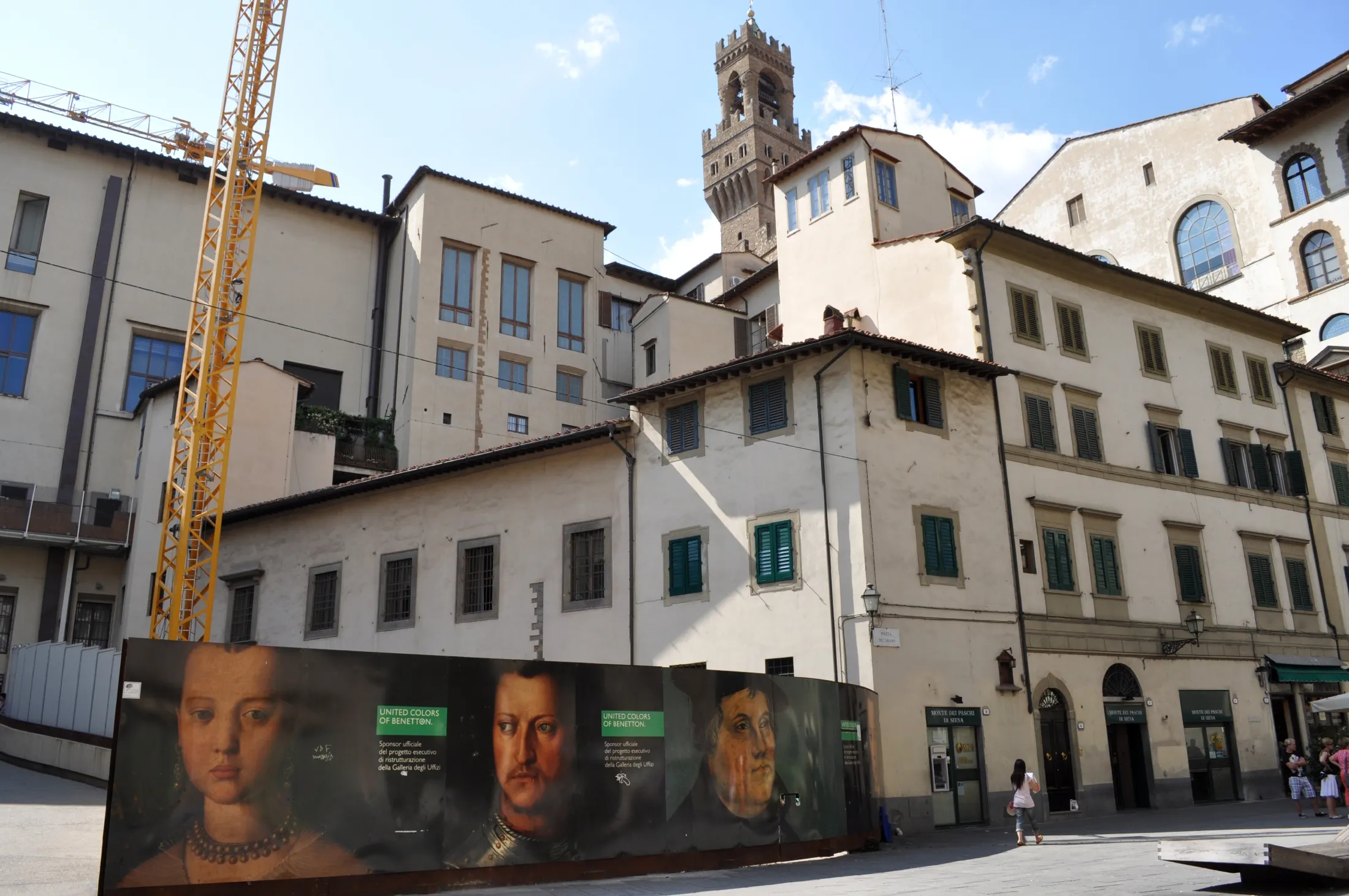
In the center of the hoarding, Cosimo I de' Medici (by Agnolo Bronzino), to the left his short-lived daughter Maria (also by Agnolo Bronzino), to the right (oddly enough) Martin Luther (by Lucas Cranach).
In Florence it is often difficult to tell what is back-stage and what is the big show. Take, for example, this stunning pile-up of historic architecture, including the tower of Palazzo Vecchio, rising over the Uffizi Gallery's rear exit. (Work is still in progress there in 2026).
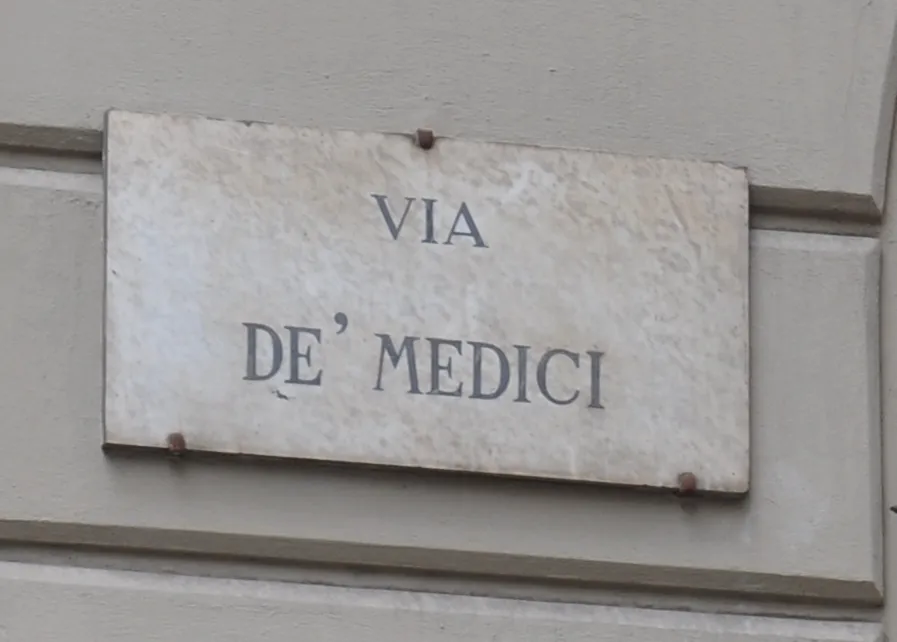
Even in the most solidly constructed cities, pieces move around, work is always ongoing and things are not necessarily what they seem.
Via de Medici, for example...
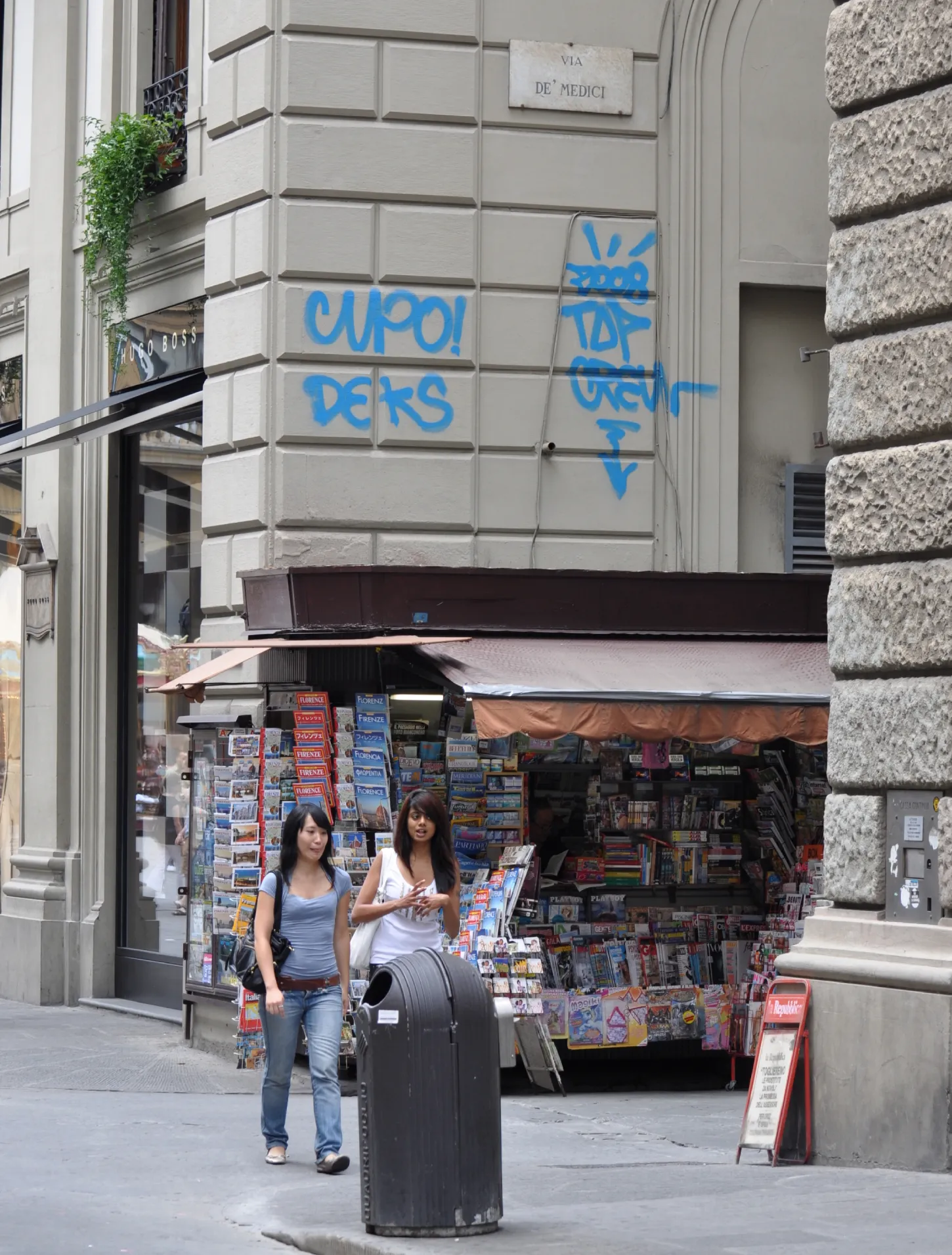
Via de' Medici... The Medici are gone, but so presumably are the CUPO! DEKS and the 2008 TOP CREW— no doubt awesome in their day.
In more or less this area, formerly on the edge of Florence's central market, rose the first tentative palace of that aspiring family, superceded by other grander residences.
Then in the late Nineteenth Century, the ancient core of the city was aggressively redeveloped, leaving only an incidental side-street with their imposing name.
Nighttime at another corner of the same street...
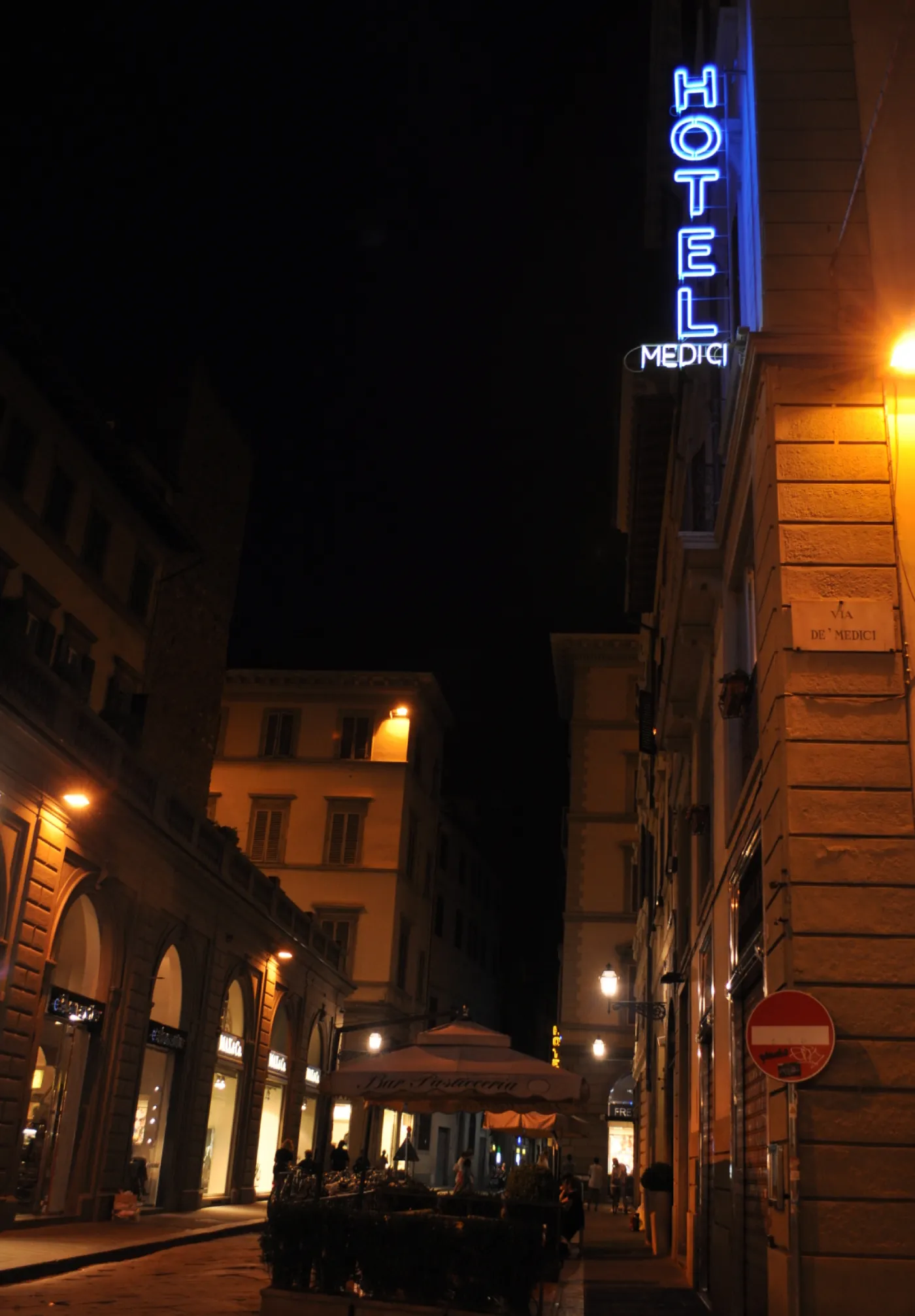
The Hotel Medici, with its eerie old-style neon sign...
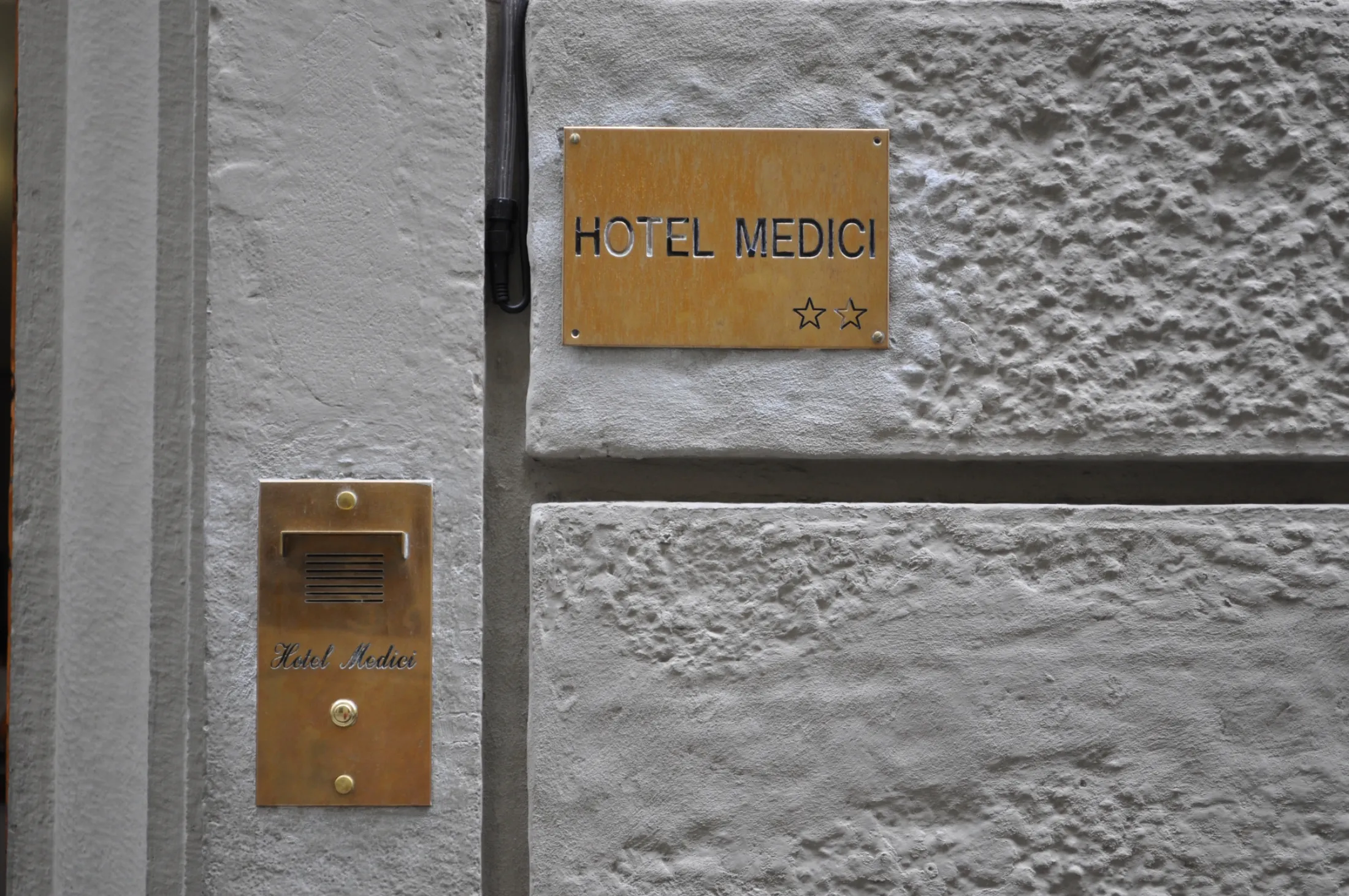
In spite of its noirish signage, I have heard that the Hotel Medici is a pleasant place to stay in the very center of town.
...but only two stars.

In 2009, the Pensione Maria Luisa de' Medici had a photographer next door featuring the latest Calcio Storico (football in Renaissance guise).
FOR FLORENCE'S RENOWNED "CALCIO STORICO", SEE:
CALCIO STORICO = HISTORIC FOOTBALL: Ritual, Rivalry and What Else?
Nearby yet seemingly farther down the food-chain was the one-starred Pensione Maria Luisa de' Medici.
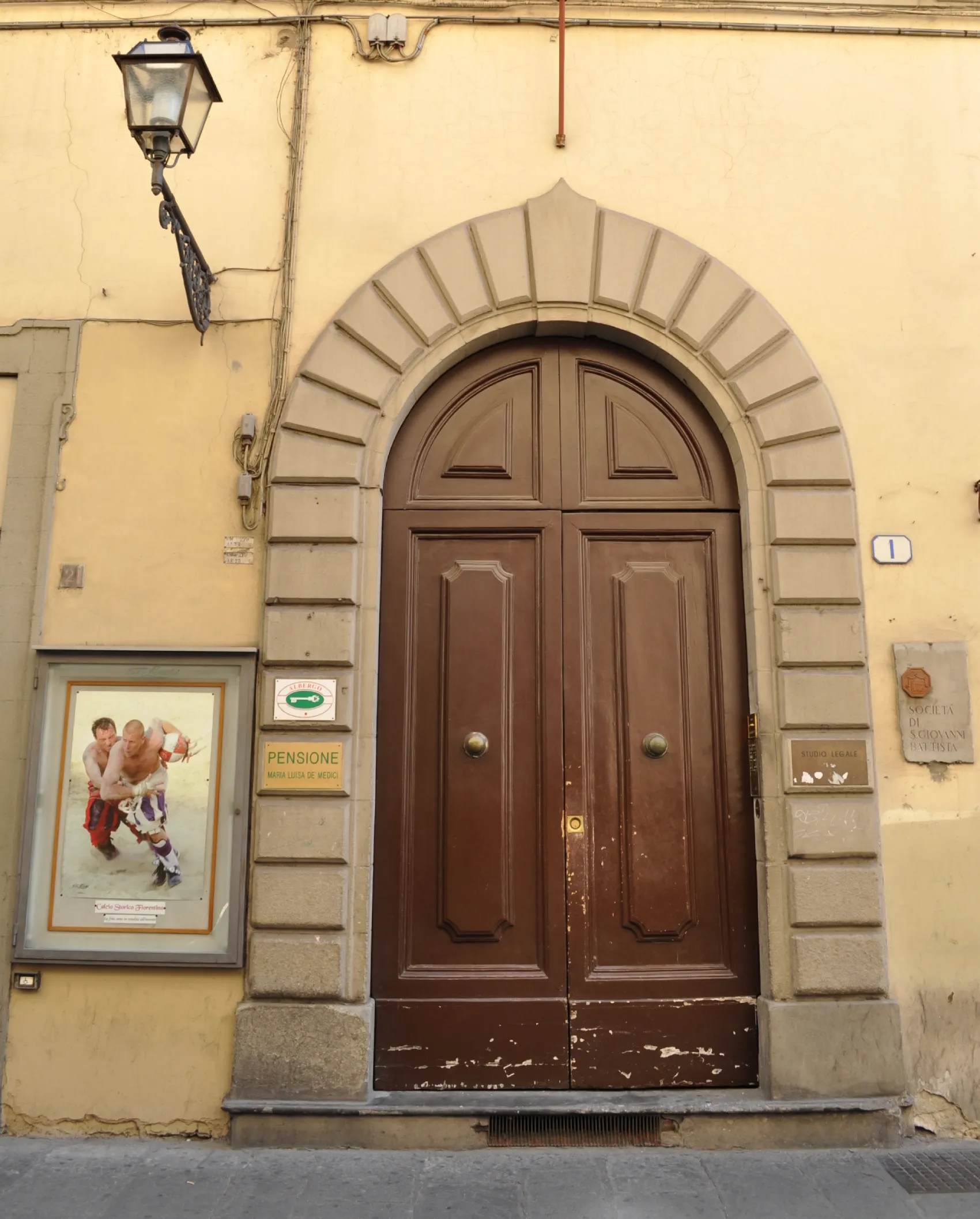
The Pensione Maria Luisa de'Medici was long prized by knowledgeable budget travelers for its 1950s vibe and quirky collection of mostly baroque art.
Now closed... As a female art collector, its Welsh proprietor Evelyn Morris felt a personal affinity with Maria Luisa (alternately Anna Maria Luisa), Last of the Medici.
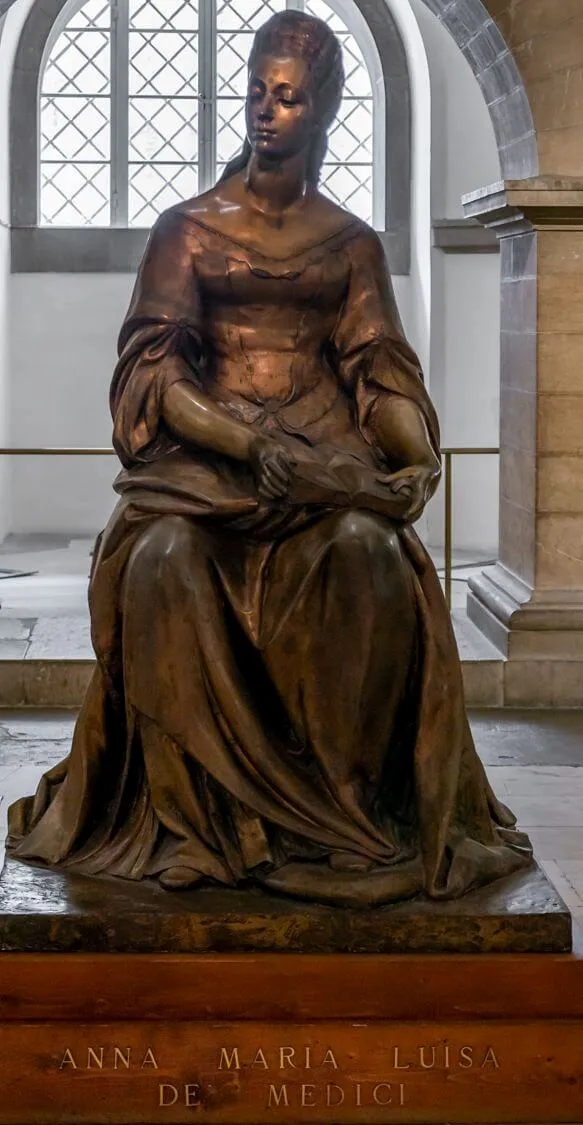
The Florence we know today —the ultimate "Art City"— owes more to her than any of her Medici predecessors.
Last of that line, she designated the former Medici Capital as her chief heir, safeguarding its massive accumulation of paintings, sculptures, books, scientific instruments and other treasures.
Thus the Galleria degli Uffizi, the various museums in Palazzo Pitti and so on, through a very long list.
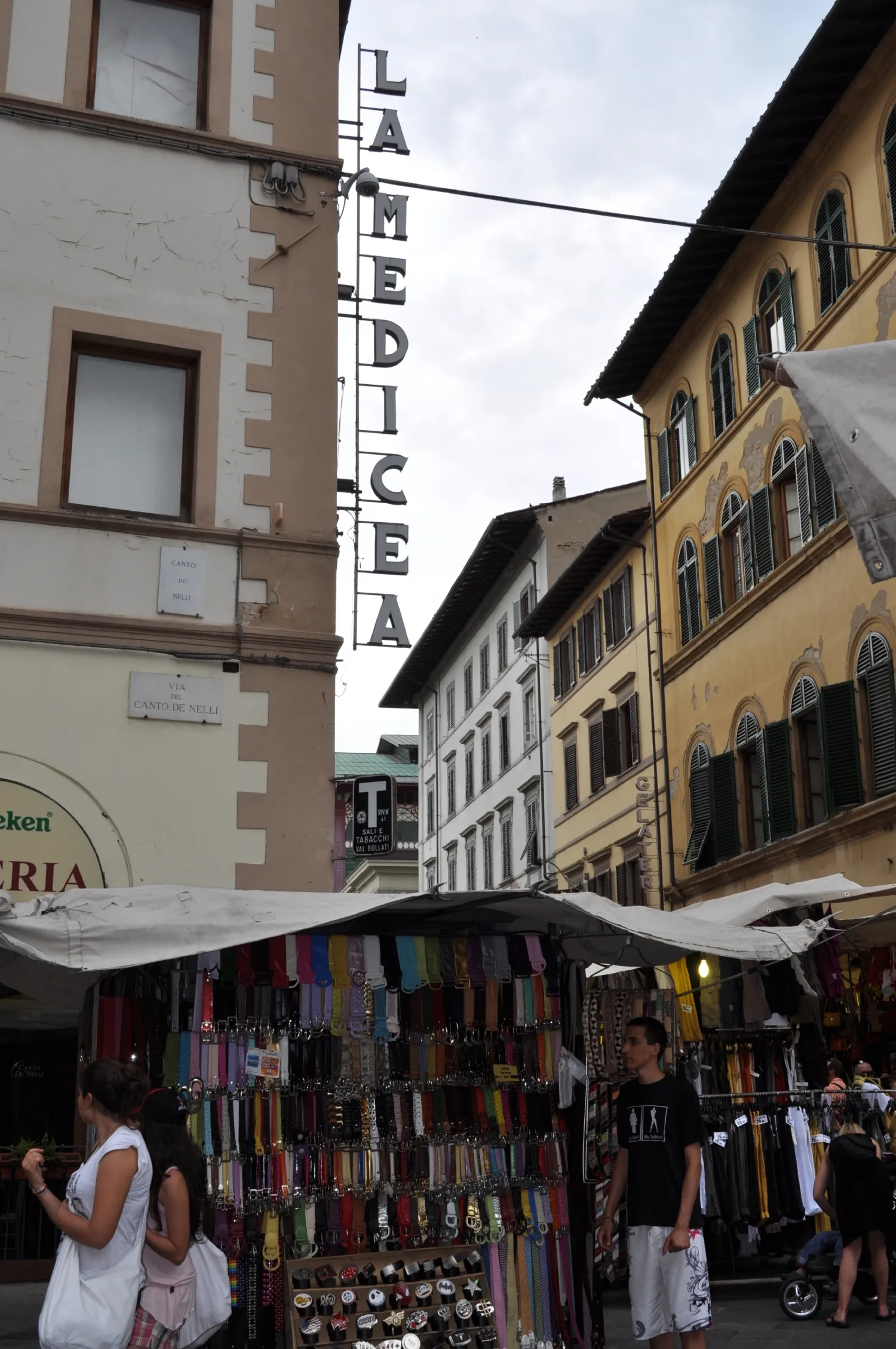
The last trace of the Merceria La Medicea in the heart of the San Lorenzo Market in 2009.
The Medici have been gone from Florence since 1743 —just short of three centuries, almost as long as they controlled the city.
So, what is there left to say?
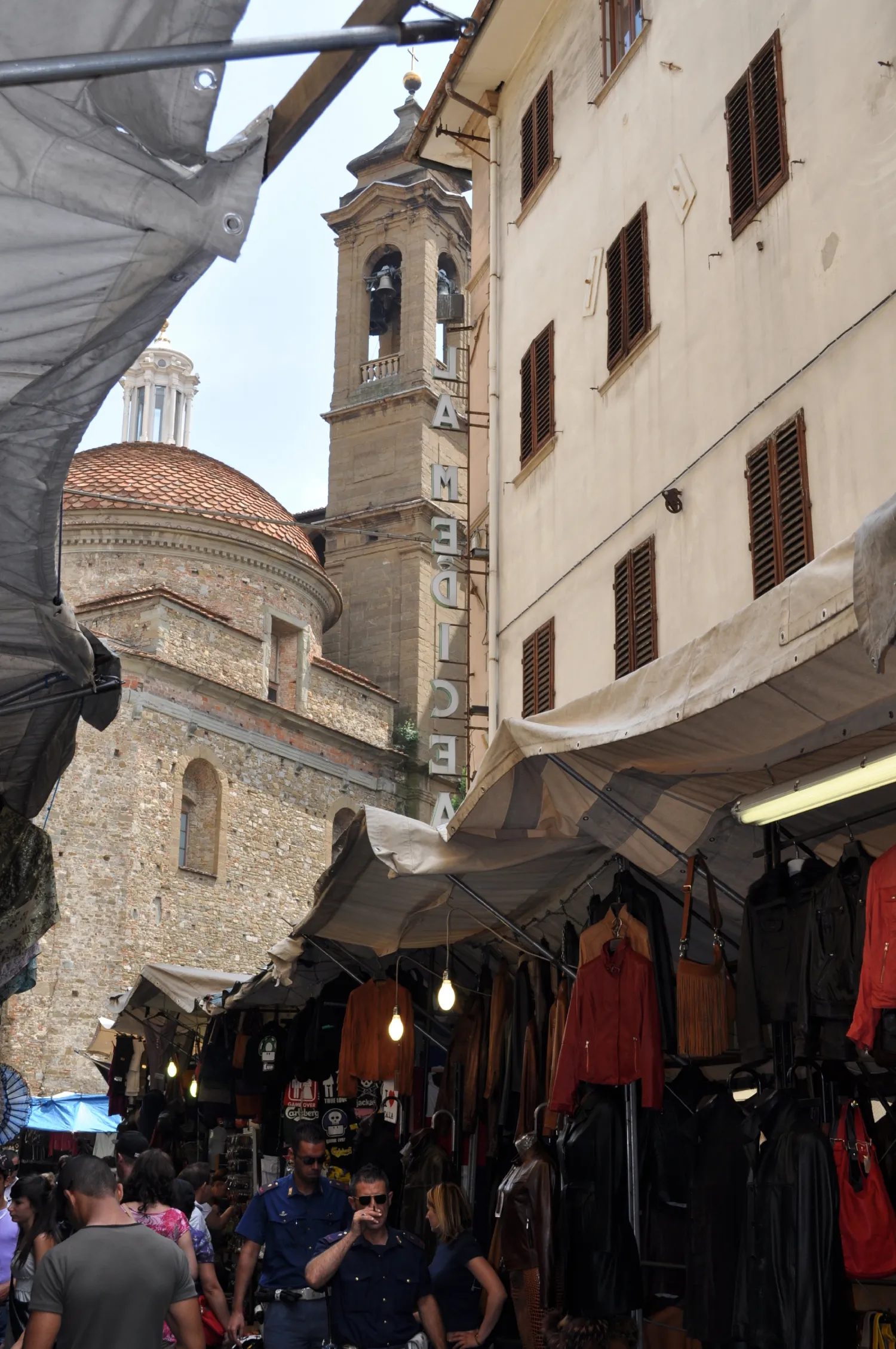
The La Medicea sign viewed from the other side, against the backdrop of San Lorenzo, the Medici family church and burial place.
After so many years on the ground, it is not easy for the Florentines to astonish me. But how can it be— in a city that confounds nostalgia with fetishism —that we find nothing online about La Medicea?
I would have expected a website at very least, possibly competing websites and maybe a support group for those still recovering from its departure twenty-five years ago.
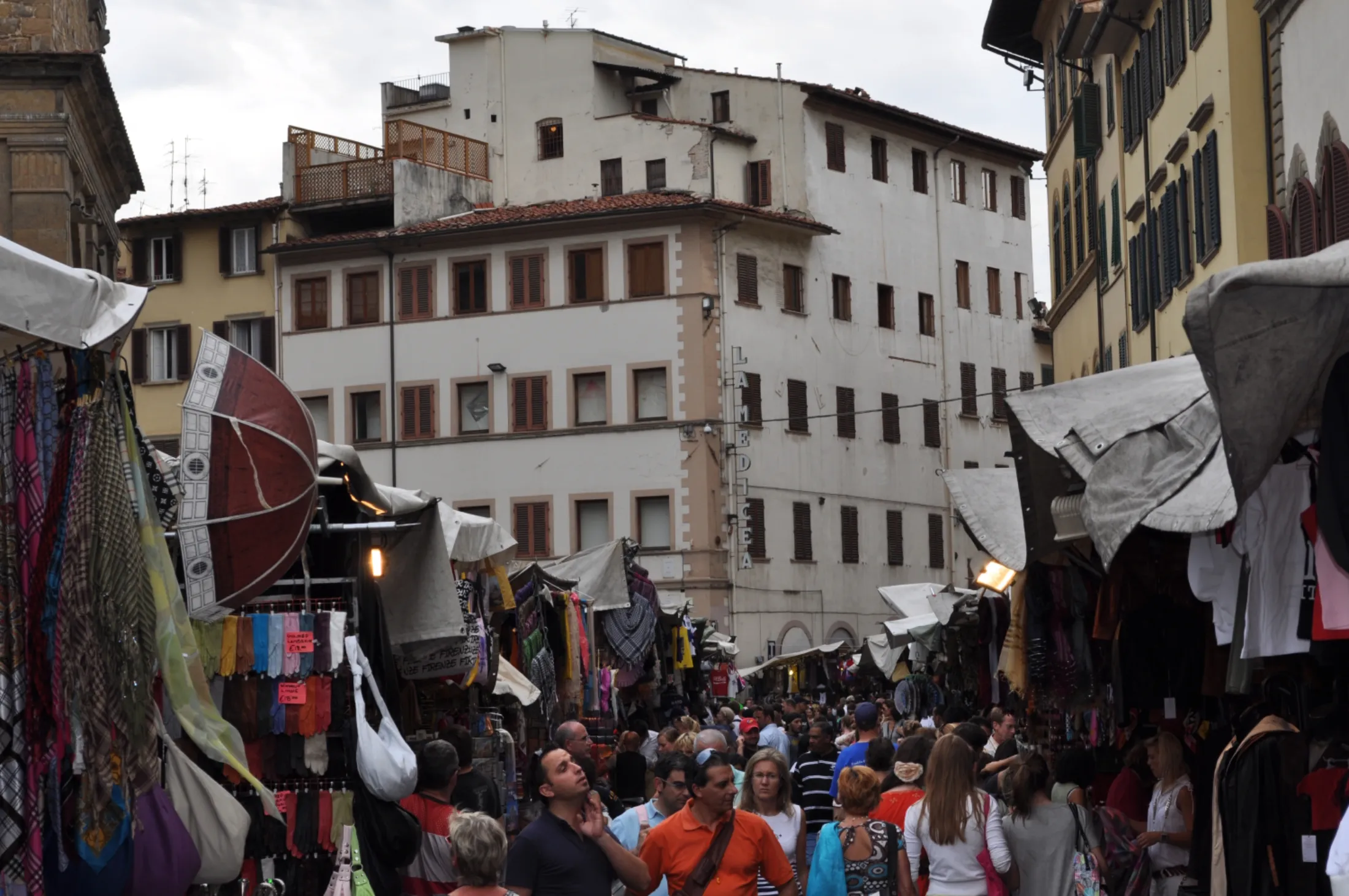
A distant view of the Merceria La Medicea sign, shortly before its consignment to the dustbin of history, having outlived the dry goods store of that name by at least a decade. There was already a pizzeria for tourists on the ground floor and a fancy residential hotel soon to arrive upstairs.
When I first came to Florence in the 1970s, locals were unanimous in steering me to La Medicea for linens and such on a grad student budget.
Why was it called La Medicea? I can't imagine that anyone thought to ask. They were in San Lorenzo, the family's home neighborhood. The name implied traditional quality, with the popular message of "good enough for the Medici and you too" thrown in.
La Medicea was a big, no-nonsense merceria —dry goods store —in the old style. Near the door, there was always a cluster of women in blue smocks. Being a foreign male, they took for granted that I was utterly incapable of making choices on my own.
La Medicea featured long-wearing, non-designer sheets, towels, blankets and the like. Also, underwear (male and female), pajamas and unfashionable sweaters guaranteed to last for generations. Plus “novità" (fancy goods)—flouncy curtains, doilies, antimacassars and tablecloths, not to mention brightly printed oil cloth by the meter.
There was a seasonal aspect as well. In the autumn came a massive display of school smocks and book bags in every size from primo elementare on up. Towards Christmas, festive items appeared (often distinctively Italian, before the days of massive Chinese imports). Then in the spring arrived beach towels and mosquito netting.
Everything about La Medicea made perfect sense in a Florence that was gradually but inexorably winding down. I am not surprised that the store closed, but I do wonder about the sign. It was mythic by any reckoning and I have seen die-hard Florentines threaten revolution over far less.
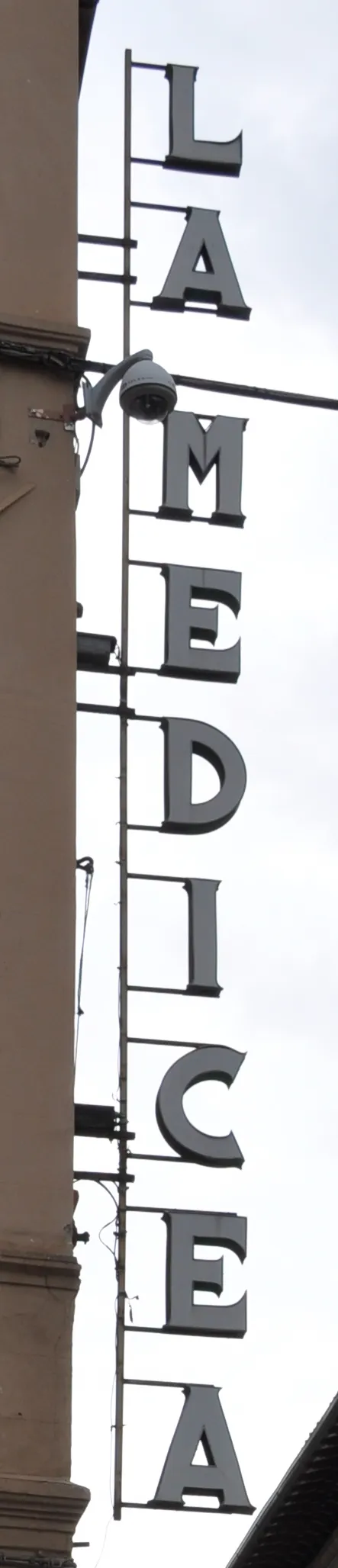
Related posts
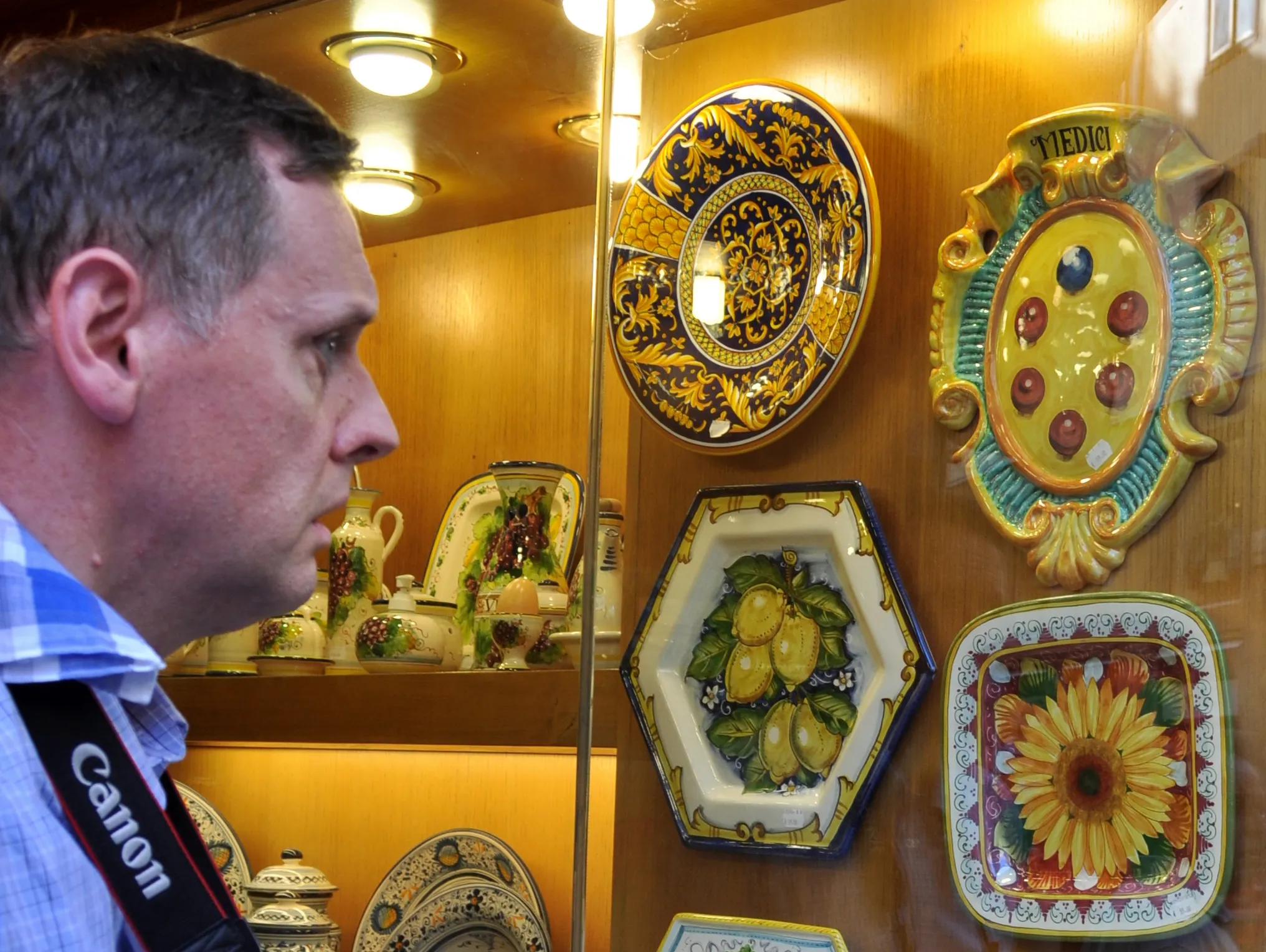
MEDICI SYNDROME: Their Coat of Arms is only the beginning...
"Medici Syndrome" (a specialized strain of "Stendahl Syndrome") is characterized by blinding flashes of Cosmic Angst induced by too much of a cultural good thing.
Most outbreaks occur within a few hundred yards of the Arno River.

Lorem ipsum dolor sit amet, consectetur adipiscing elit. Suspendisse varius enim in eros elementum tristique. Duis cursus, mi quis viverra ornare, eros dolor interdum nulla, ut commodo diam libero vitae erat. Aenean faucibus nibh et justo cursus id rutrum lorem imperdiet. Nunc ut sem vitae risus tristique posuere.