WERE THE MEDICI JEWISH???

CONTENTS:
(1) "Well... the Medici were all Jewish... of course..."
(2) "Medici money was Jewish money..."
(3) " 'Medici' means 'Medical Doctors' and Medical Doctors are usually Jewish..."
(4) "The Medici always hung out with other Jews..."
(5) JEWISH MEDICI! Here are the exceptions that prove the NOT-JEWISH rule...
The Medici were Jewish...
This intriguing premise has persisted until the present day— defying time, historical evidence and common sense.
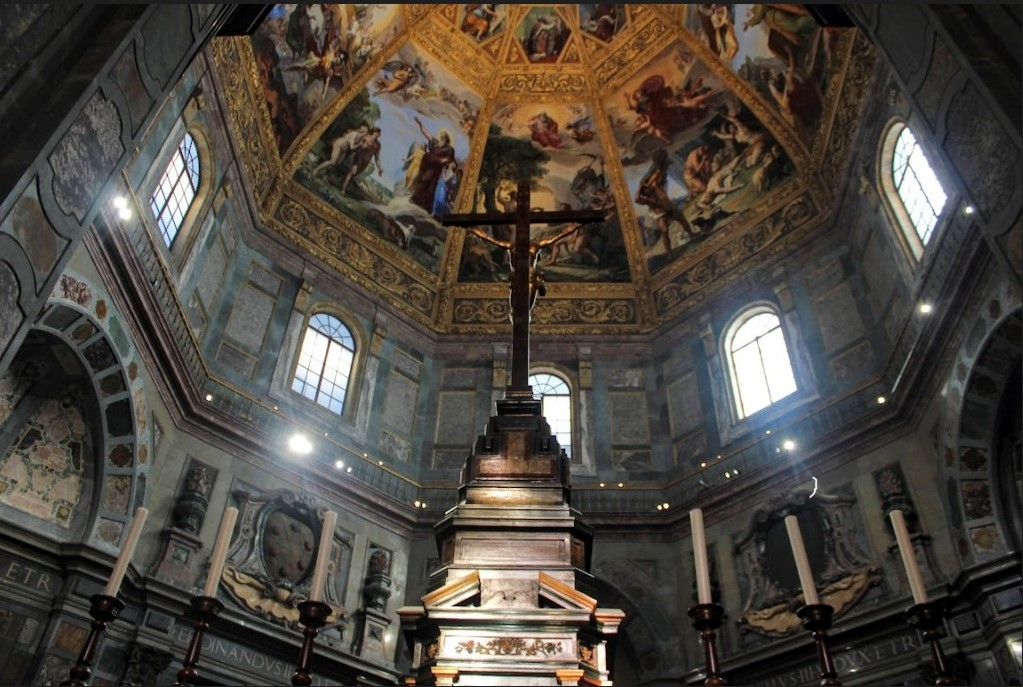
The Chapel of the Princes is the burial place of the seven Medici Grand Dukes of Tuscany.
FOR THE RECORD:
The Medici family dominated Florentine politics and culture for four centuries.
Along the way, they produced four popes: Leo X (1513-1521), Clement VII (1523-34), Pius IV (1559-65) and Leo XI (1605). Also, no less than nineteen cardinals.
At no time— from the primordial Giovanni di Bici (1360-1429) to Anna Maria Luisa "Last of the Medici" (1667-1743) —were they not professed Catholics.

In this strangely allusive Holy Family by Justus Suttermans, Grand Duchess Vittoria della Rovere de' Medici channels the Virgin Mary with her son (the future Grand Duke Cosimo III) as Jesus. The role of Joseph is enacted by the boy's tutor Cosimo Giraldini.
But Jewish Medici!!! Of all things... Where did this stuff come from anyway?
Mostly the realm of historical fantasy ...I would say... with just a tinge of fact to complicate matters.
FOR OTHER POPULAR MISC0NCEPTIONS REGARDING JEWS IN ITALY, PAST AND PRESENT, SEE:
JEWISH IN ITALY?
JEWS AS JEWS
WHO CAME FIRST? Jews, Etruscans, Someone Else...
THE SORDEVOLO PASSION: Jewish Infamy Takes Center Stage in the Foothills of the Alps
Let's try out a a favorite story line:
* The Medici were bankers and they made a great fortune lending money at interest.
* Lending money at interest was forbidden by the Church as the mortal sin of "usury".
* Meanwhile, Jews in various parts of Europe happily enriched themselves through usury, just like the Medici.
* So, the Medici could not have been Christian and were obviously Jewish.
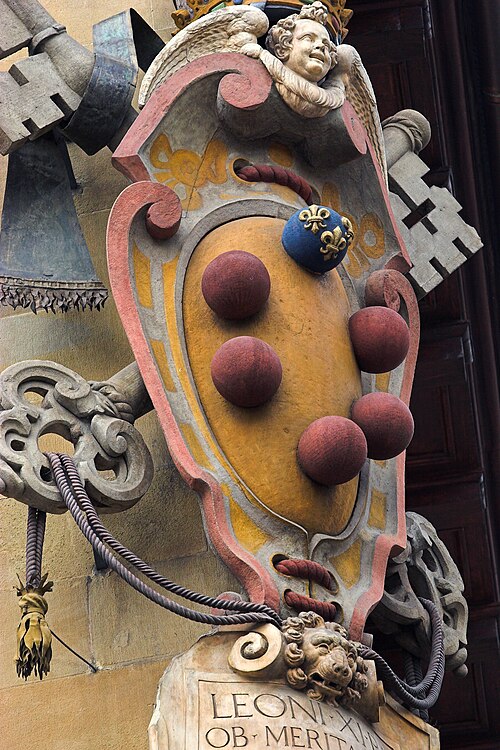
If you follow that train of thought, the balls on the Medici Arms are visual proof— representing either coins or bags of money, as you wish.
Both readings, however, are equally tenuous. In heraldry, balls (properly "roundels") are merely a notional device.
They usually signify "armorial balls" and nothing more —in whatever number, color and arrangement they appear.
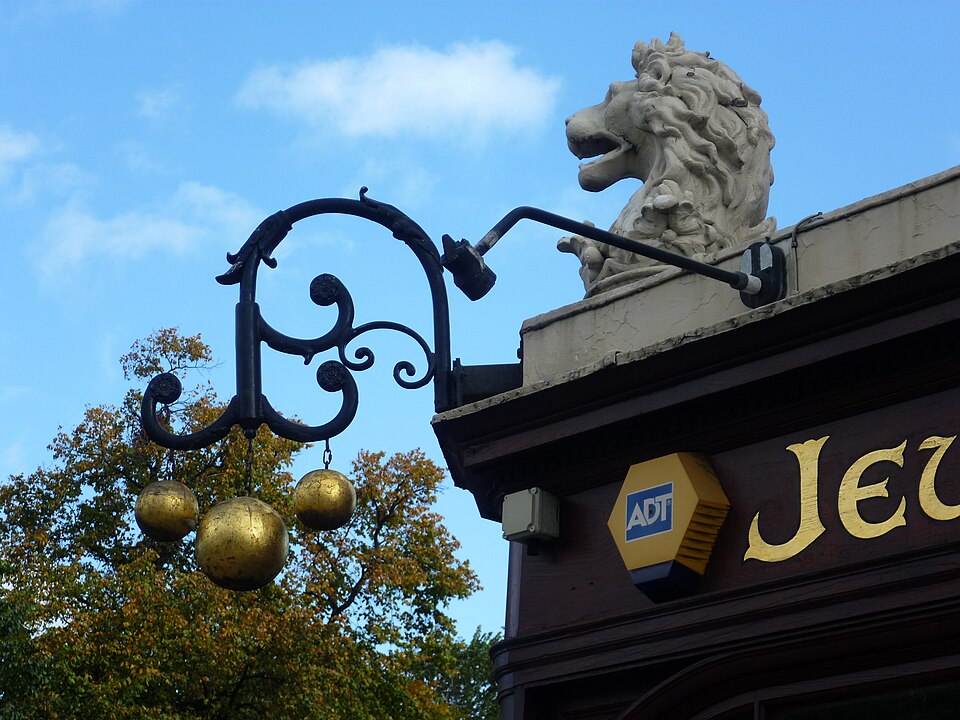
The truncated word next to the ADT security alarm is in fact "Jewelry".
There is seeming evidence to the contrary— circumstantial or not.
Three pendant balls is the universal sign of a pawnbroking establishment, Medici-adjacent at least.
And in English (particularly British English), "going to the Jews" has long denoted "borrowing money at interest", usually from pawnbrokers and often on extortionate terms.
%20detail.jpg)
A man's life is encapsulated in the moneylender''s balls.
%20reduced.jpg)
This harrowing film that cuts between the Holocaust and latter-day America.
Even today, the juxtaposition of a pawnbroker's sign and a Jew (especially an elderly Jew) can trigger intense emotions, conjuring a long and fraught history.
As for the alleged Medici Balls dangling over the shop, there are other competing theories.
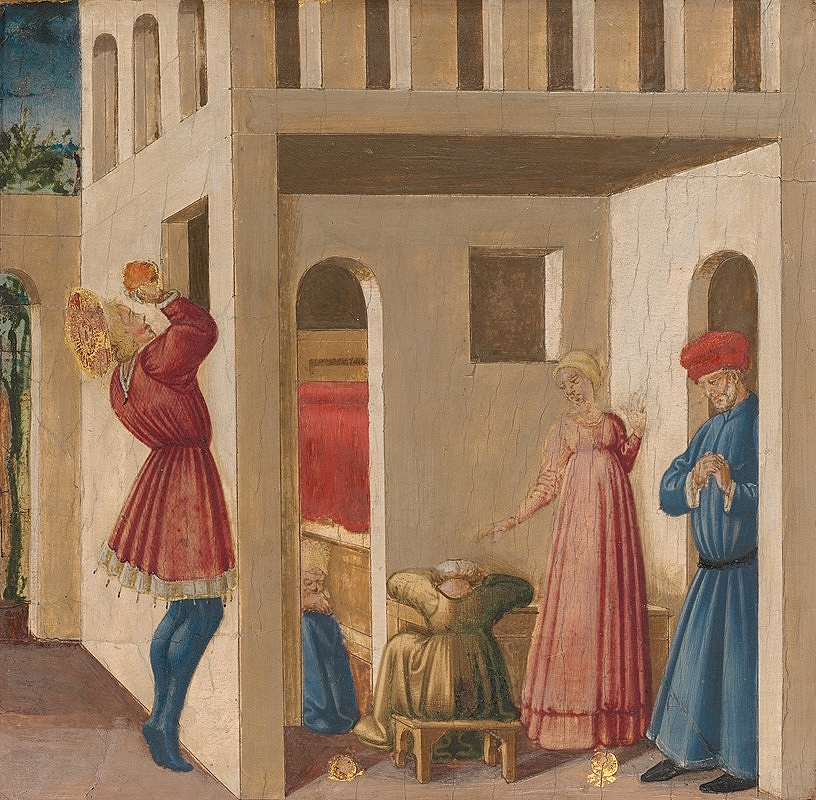
The saint is pitching glittering sacks of gold through the girls' bedroom window.
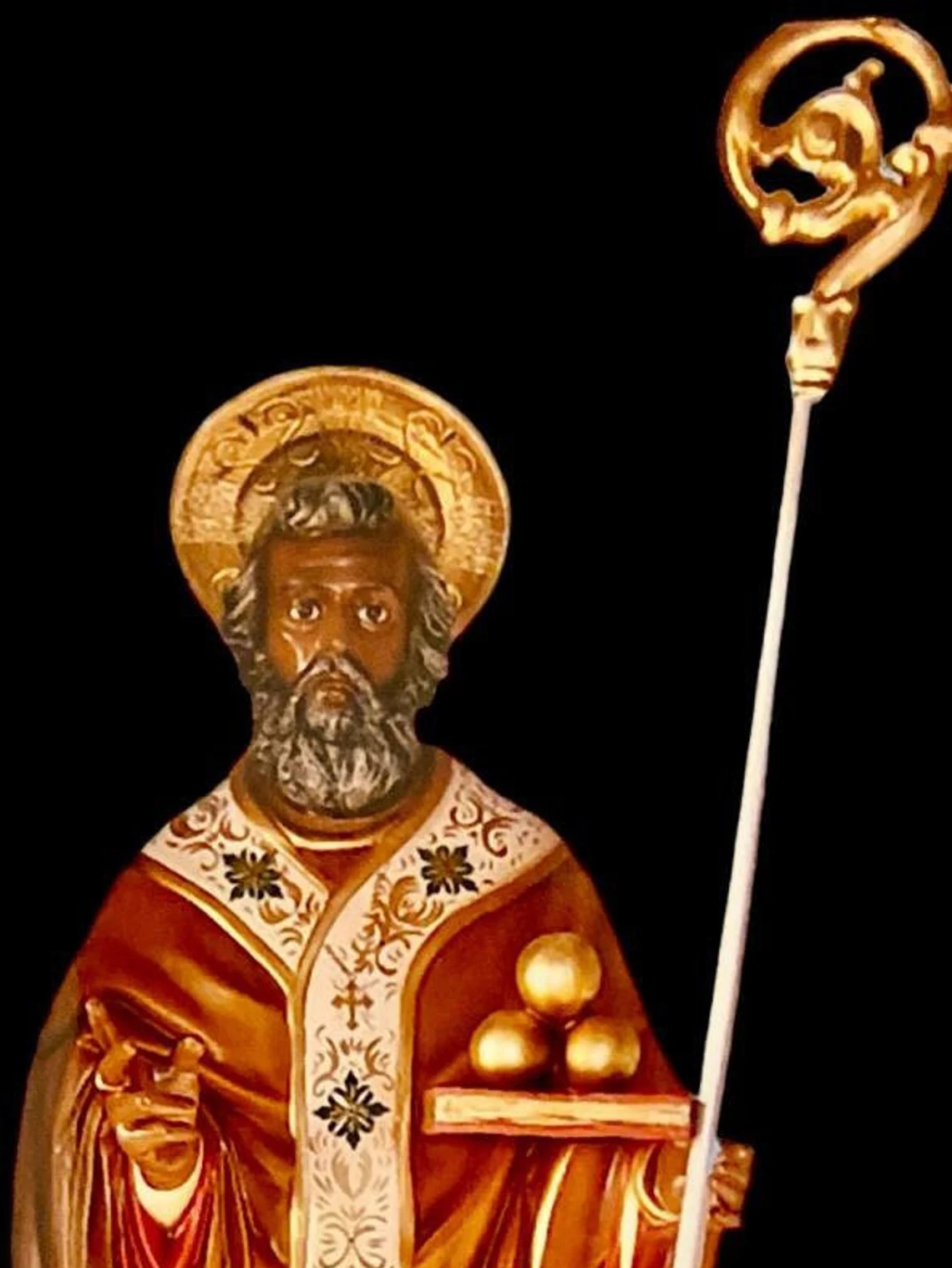
Probably the most convincing involves St. NIcholas of Bari— not coincidentally the patron saint of pawnbrokers. He is revered for his charitable gift of three bags of gold to three dowry-less girls, allowing them to marry and escape a life of prostitution.
"Medici Money = Jewish Money" might seem a neat piece of deduction, if only things worked that way in the past.
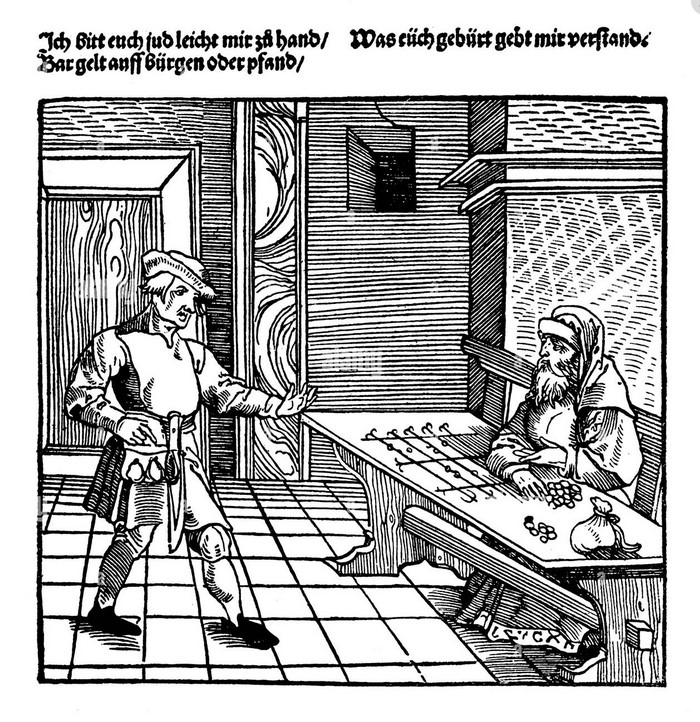
Christian supplicant to Jewish money-lender, both of whom knew the deal, "I am not asking you to give me what is my due, but rather—as I understand it— ready cash against guarantees or collateral."
No one can deny the ancient tradition of Jewish money-lending in Christian lands, which Church authorities condoned at least sporadically.
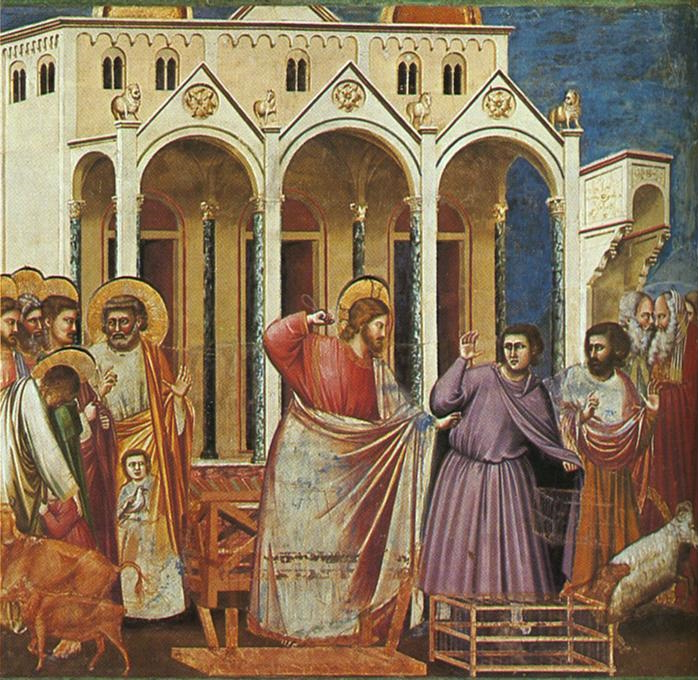
For centuries, this scriptural episode exemplified the Church's purported war on usury —Jewish and otherwise.
As for Christian loan-sharking, we know that the Church insistently banned their faithful from business of that sort —time and again, implying that the ban never really stuck.
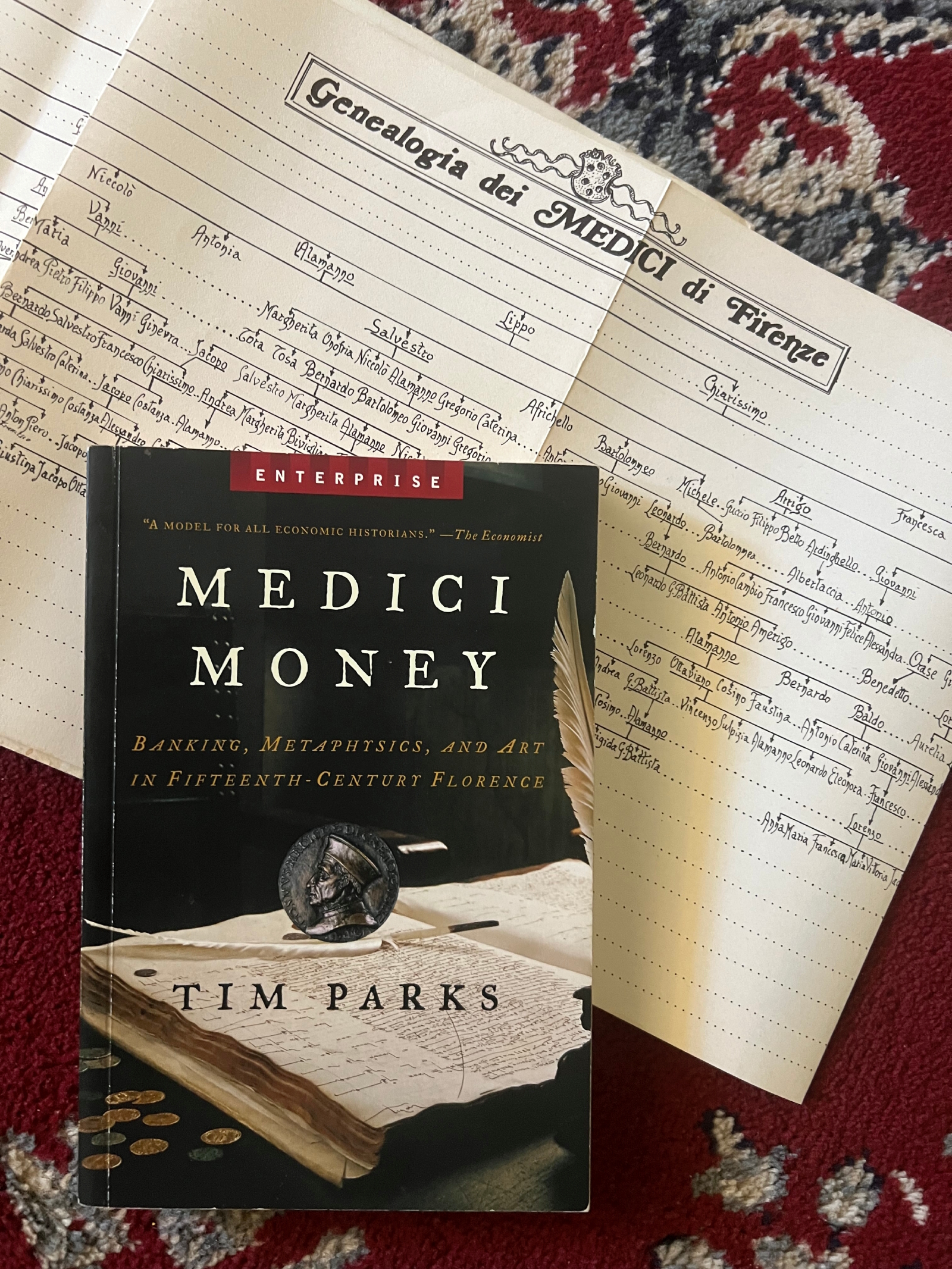
Tim Parks offers an inside view of the culture of high-level Christian Usury during the ascent of the Medici Family in the 15th Century.
Meanwhile, gentile capitalists could spin intricate webs of theological quibbles and moral reservations, while making vast fortunes without the help of Jews
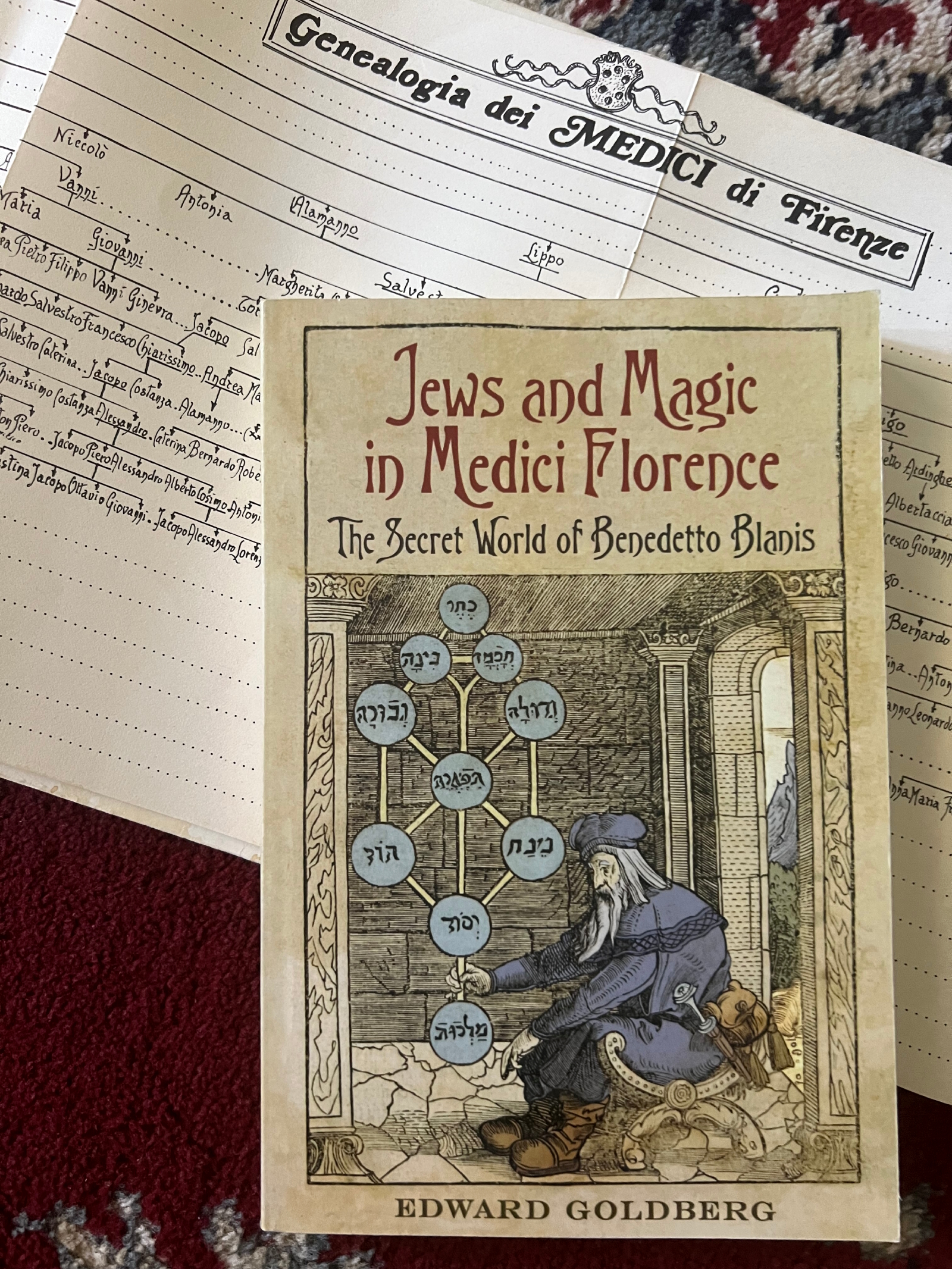
In Chapter 7: The Market, I assess Jewish business practices in early seventeenth century Florence—usury and crypto-usury included.
Meanwhile, we should never underestimate the infinite flexibility of Catholic Dogma, the Church's perennial skill at playing all sides of every game and man's insatiable inventiveness (whatever his faith) when it comes to personal gain.
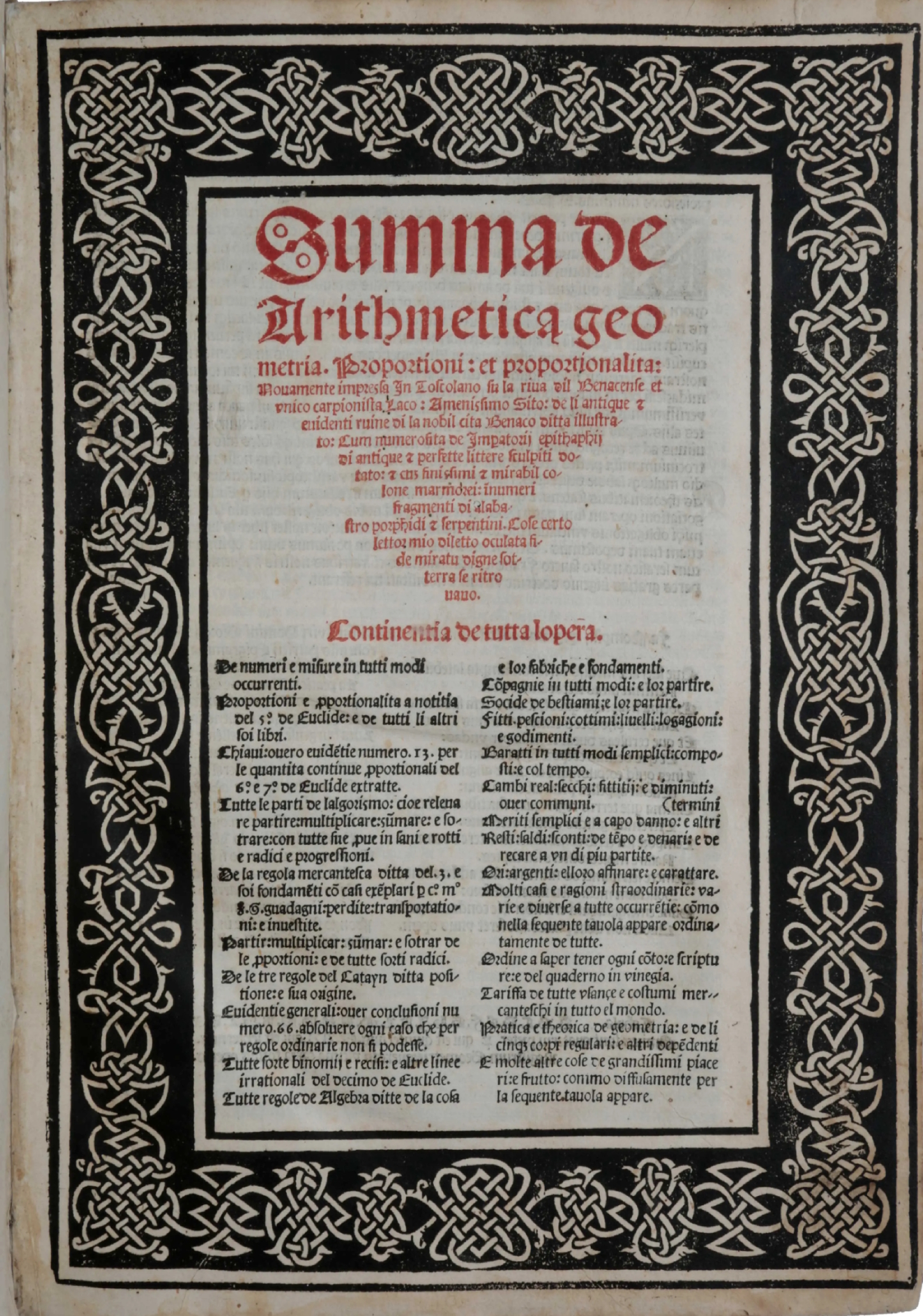
This is the first printed treatise on double-entry book-keeping and other related skills.
In Italy, the Fifteenth Century was the heroic age of modern commerce. The Medici and other mercantile families cultivated an expanding range of methods and means —monetizing goods and services in cash, in kind and on paper.
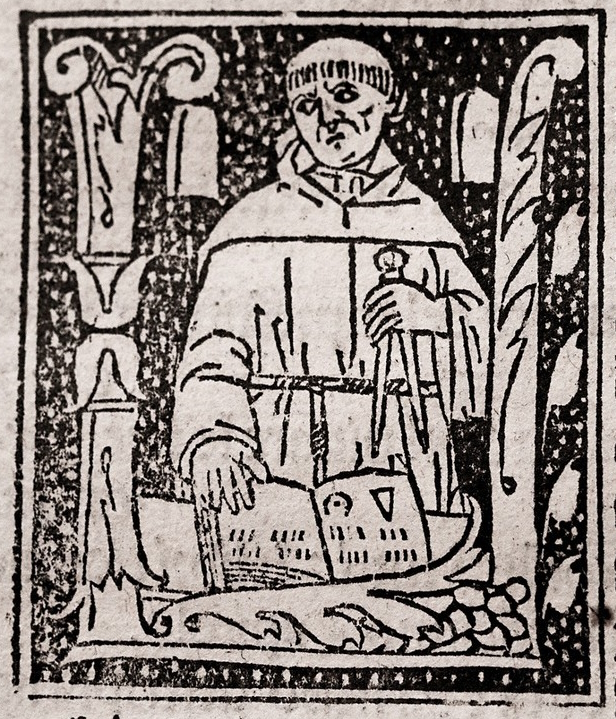
Pacioli was a Franciscan monk, a mathematician and a pioneer of creative capitalism.
In his momentous publication, Pacioli specifies nine principal ways of making acquisitions: (1) by cash, (2) by immediate credit, (3) by exchanging one item for another, (4) partly in cash and partly with credit, (5) partly in cash and partly by goods, (6) partly by goods and partly by exchange, (7) partly by goods and partly on time, (8) partly by credit and partly by time draft, (9) partly by credit, partly by time draft and partly by goods.
Five of these nine modes involve delayed payment, opening the door to usury and its various derivatives.
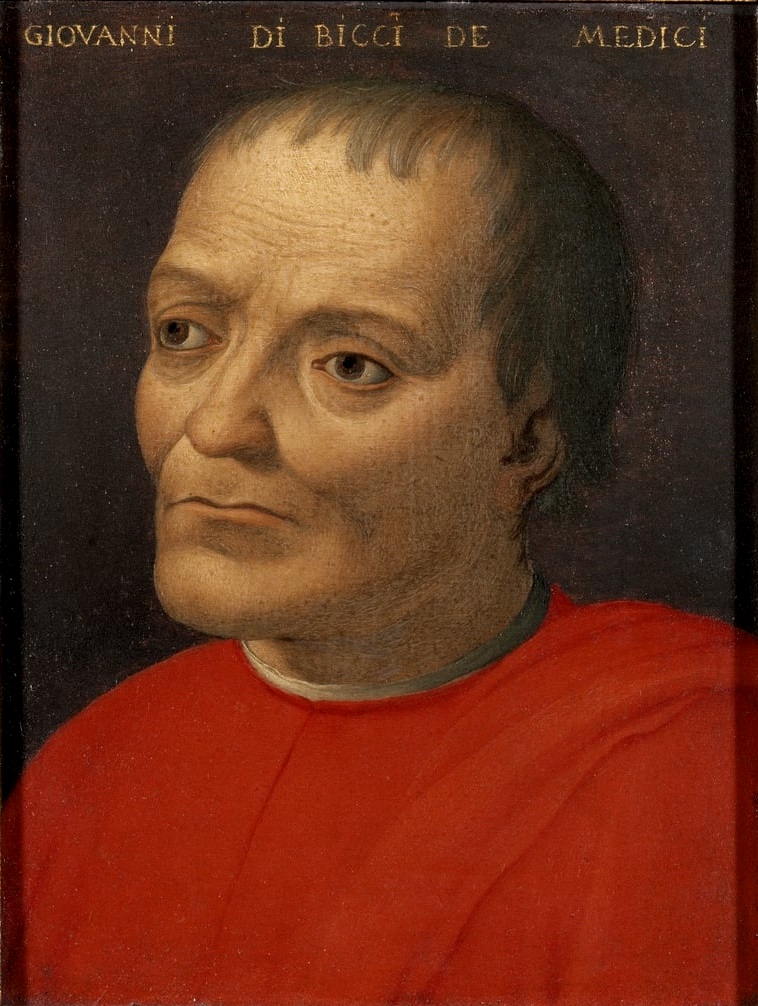
Giovanni di Bicci (1360-1429) founded the Medici family fortune by exploiting the financial structures that supported their commerce in wool.
Well before Pacioli's treatise, Giovanni di Bicci de'Medici was already covering much of the same ground— deploying money in Rome, Venice, Naples and elsewhere on behalf of his family's burgeoning Florentine bank.
There were many ways that more-or-less Good Christians (Medici and otherwise) could profit usuriously while pretending to do something else.
Above all, there were the "money-changing" and "money-transferring" dodges. You could pay out cash in one currency and recoup it months or years later in another —or else in some other place— while racking up hefty "service fees".
Often this occurred only on paper, in notional "money of account", generating illicit interest in all but name.
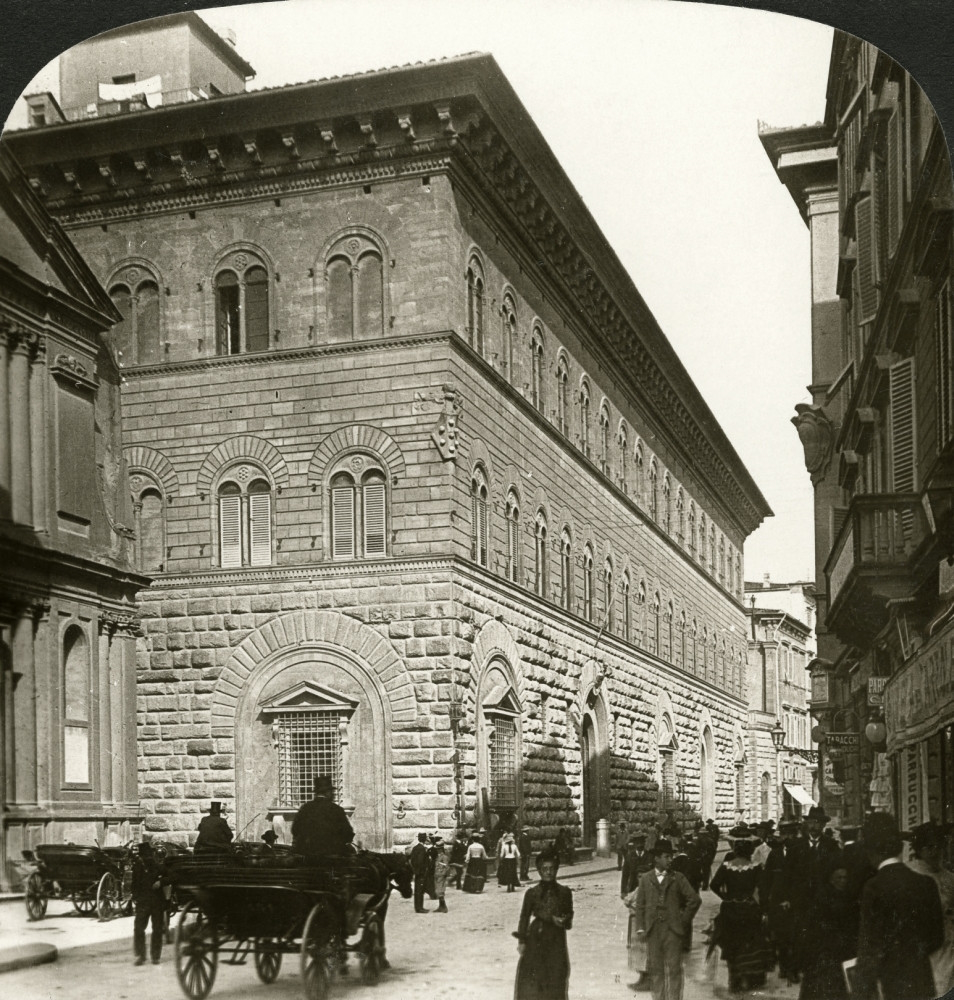
The Medici bank had its headquarters on the ground floor of their family palace, accessed by an open loggia on the corner with their coat-of-arms above. When the Medici restyled themselves as sovereign princes and withdrew from banking, Michelangelo Buonarroti filled in the monumental arches.
For five generations— from Giovanni di Bicci (1360-1429) to Cosimo the Elder (1389-1464) to Piero the Gouty (1416-69) to Lorenzo the Magnificent (1449-92) to Piero the Fatuous (1472-1503)— the Medici of Florence presided over an international financial empire while emerging as heads of state.

Cosimo the Elder, son of Giovanni di Bicci de'Medici, entrusts the project for their family Church of San Lorenzo to the architect Filippo Brunelleschi and the sculptor Lorenzo Ghiberti.
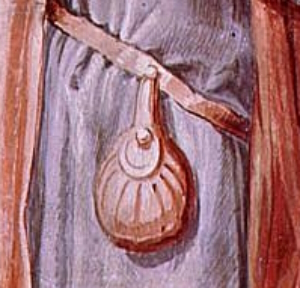
Cosimo's power of the purse is on full view.
All along, there was a curious scheme of moral equivocation at play, based on the deferred laundering of ill-gotten gains— spiritual usury, if you will.
For much of their lives, the Medici and other businessmen could amass troublesome fortunes, then redirect conspicuous sums to good works as the end drew near.
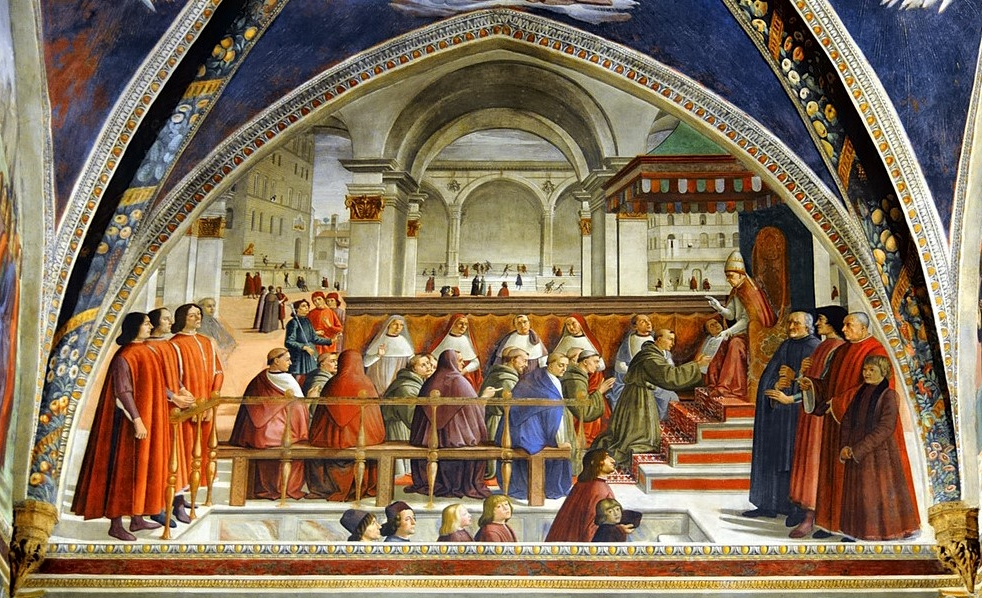
In the heart of quattrocento Florence, Lorenzo the Magnificent presides vicariously over the establishment of the Franciscan Order several centuries earlier.

Lorenzo the Magnificent (second from left) is flanked by Francesco Sassetti (second from right), general manager of the Medici bank.
In Florentine public life, there were ample opportunities for performative virtue— especially if you were Catholic (like the Medici) and pretty much owned the city.
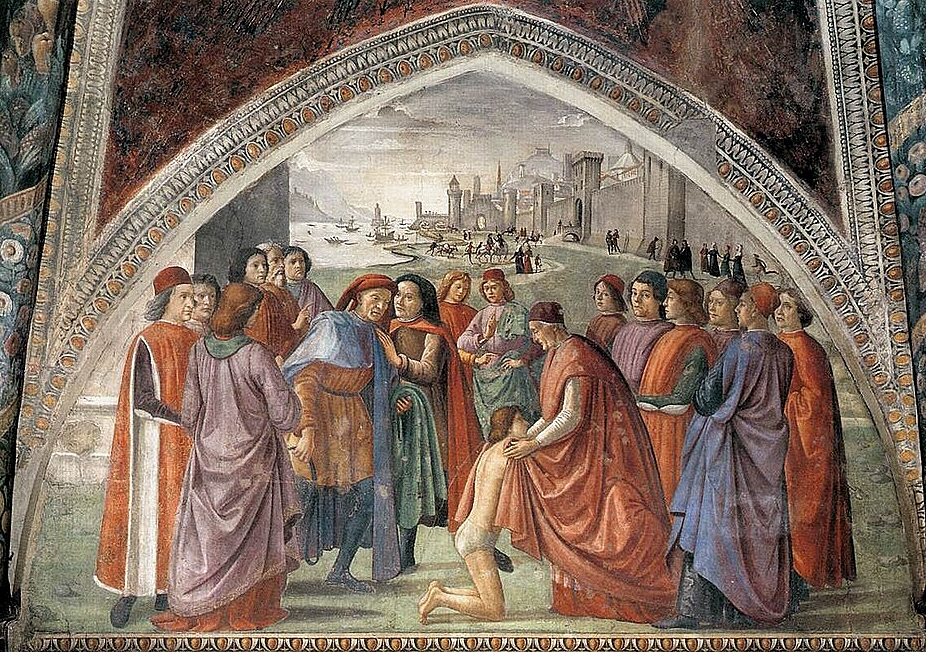
Vow of Poverty: the young Saint Francis renounces worldly goods while the financial elite of later-day Florence learn whatever lesson they choose.
The name "Medici" does indeed mean "medical doctors".
Following that train of thought, some imagine that they are looking at pills —not coins or sacks of money —on the coat-of-arms.
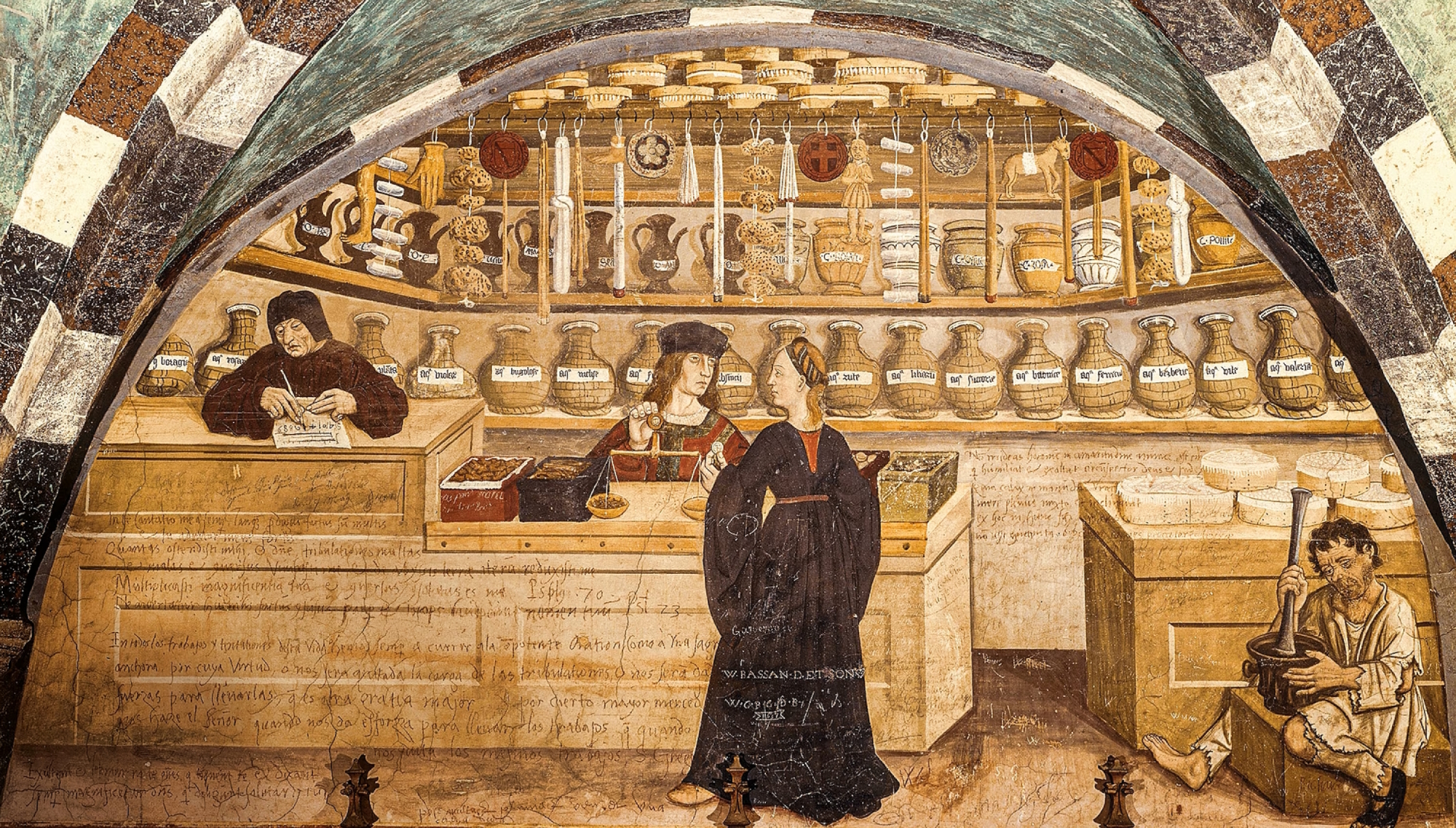
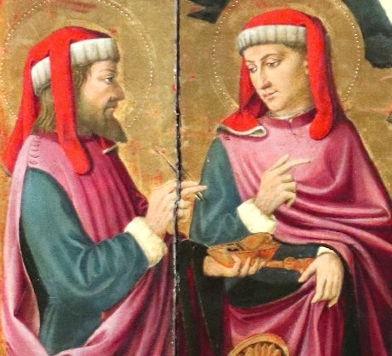
Then they see Saints Cosmas and Damian in the entourage— shared patrons of both medical doctors and the Medici family.
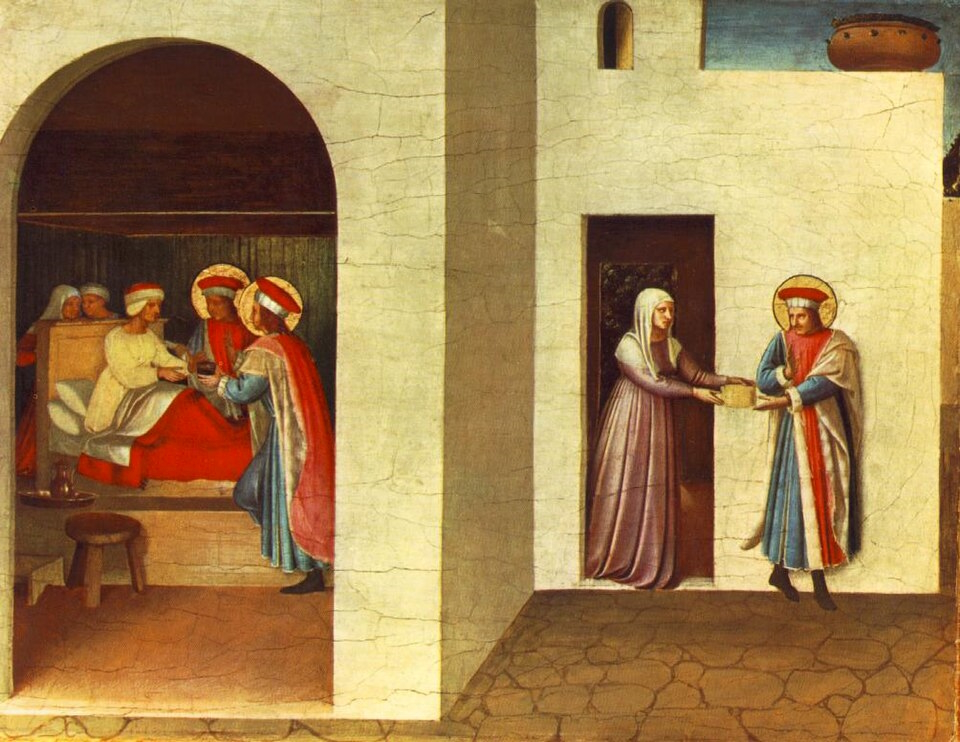
According to the story, these twin brothers practiced medicine in 3rd Century Syria, treating patients for free while converting them to Christianity— thereby earning martyrdom and a place on the Church calendar.
As for their association wtih the Medici family, that is indeed a historical fact —but only a belated one.
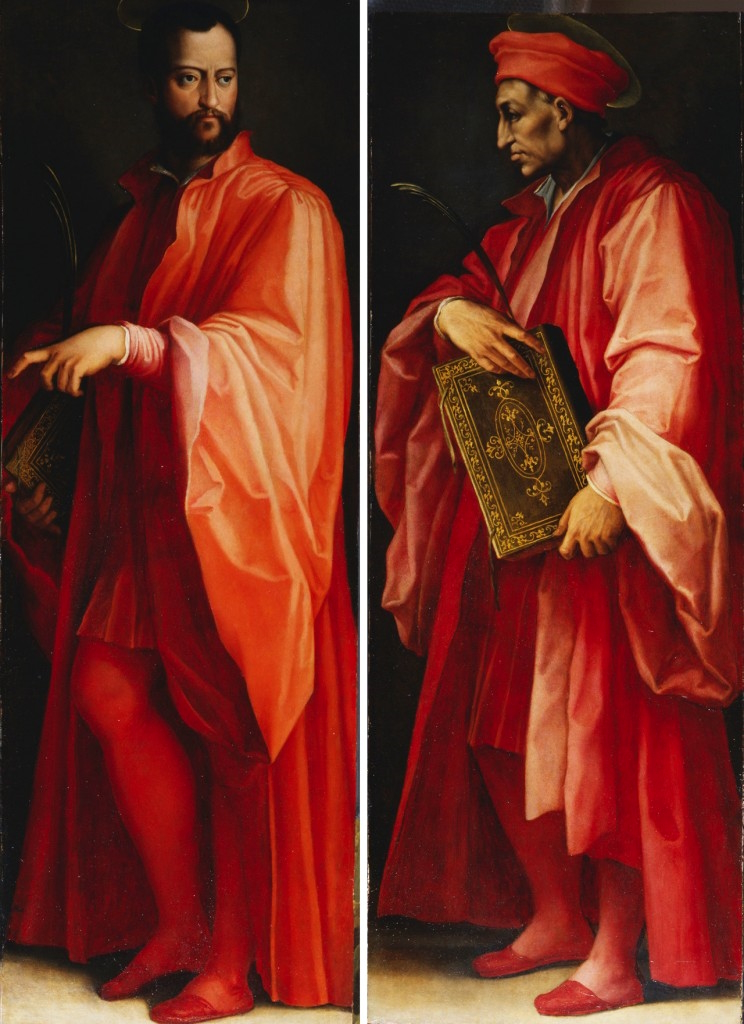
Thereby hangs a tale...
A pair of Medici twins was born on 27 September 1389 —the Feast of Saints Cosmas and Damian.
People took "destiny" seriously in those days, so the conjunction of twins, medical saints and the Medici name could not be ignored (although there was only a plausible assumption that their forebears might once have practiced medicine).
The two boys were named Cosimo and Damiano, but Damiano promptly died— leaving Cosimo and his descendants to chart the course of Medici history.
That included Cosimo the Elder (the original Cosimo; 1389-1464) and three subsequent Grand Dukes of Tuscany: Cosimo I (1519-74), Cosimo II (1590-1621) and Cosimo III (1642-1723).

The heavy-set woman looks like she might be the boy's mother; in fact, she was Dorothy Dworkin, a renowned pioneering nurse.
The instinctive overlap of “Jews” and “doctors” can seem quaint these days —at least in America, where your guy is as likely to be named Patel, Chang or Sayed as Ginzberg.
But meanwhile, there was indeed a notable history of Jewish doctors reaching back to the time of the Medici and beyond.
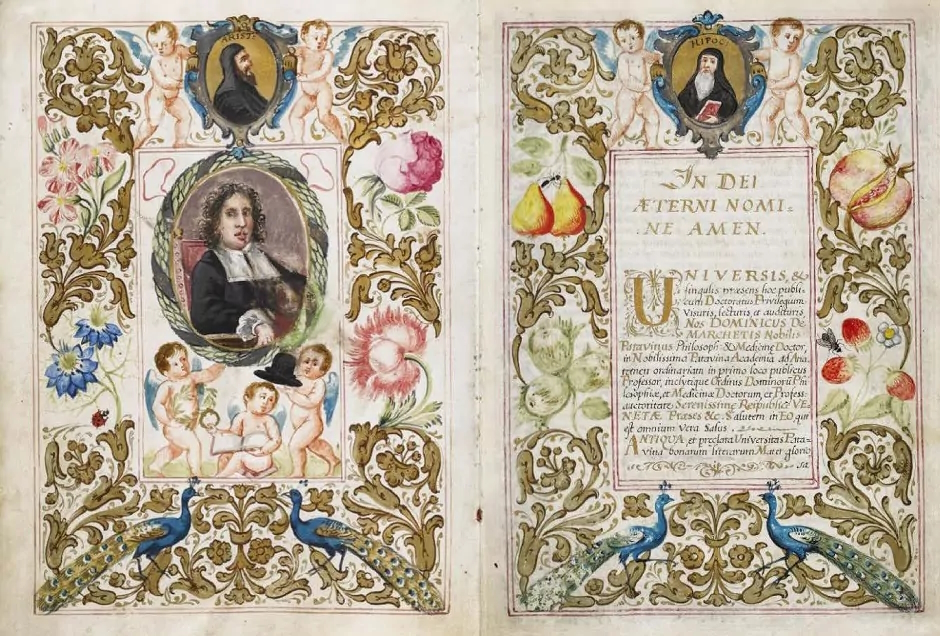
This splendid certifcate has been associated with a Jewish medical graduate due to the invocation “In Dei Aeterni Nomine Amen” (“Truly in the Name of the Eternal God") rather than the unequivocally Catholic “In Christi Nomine Amen” (“Truly in the Name of Christ”). That conclusion is problematic since the designated graduate is Domenico de Marchettis from a celebrated dynasty of Catholic surgeons.
Italian universities generally excluded Jews, although a few (primarily Padua, but also Siena and very rarely Pisa) admitted them to their faculties of medicine and no other.
For Jews, Medicinae Doctor was the only social and professional distinction formally recognized by the Christian authorities.
In fact, many Rabbis were also licensed physicians, thereby enhancing their status and supplementing their income.
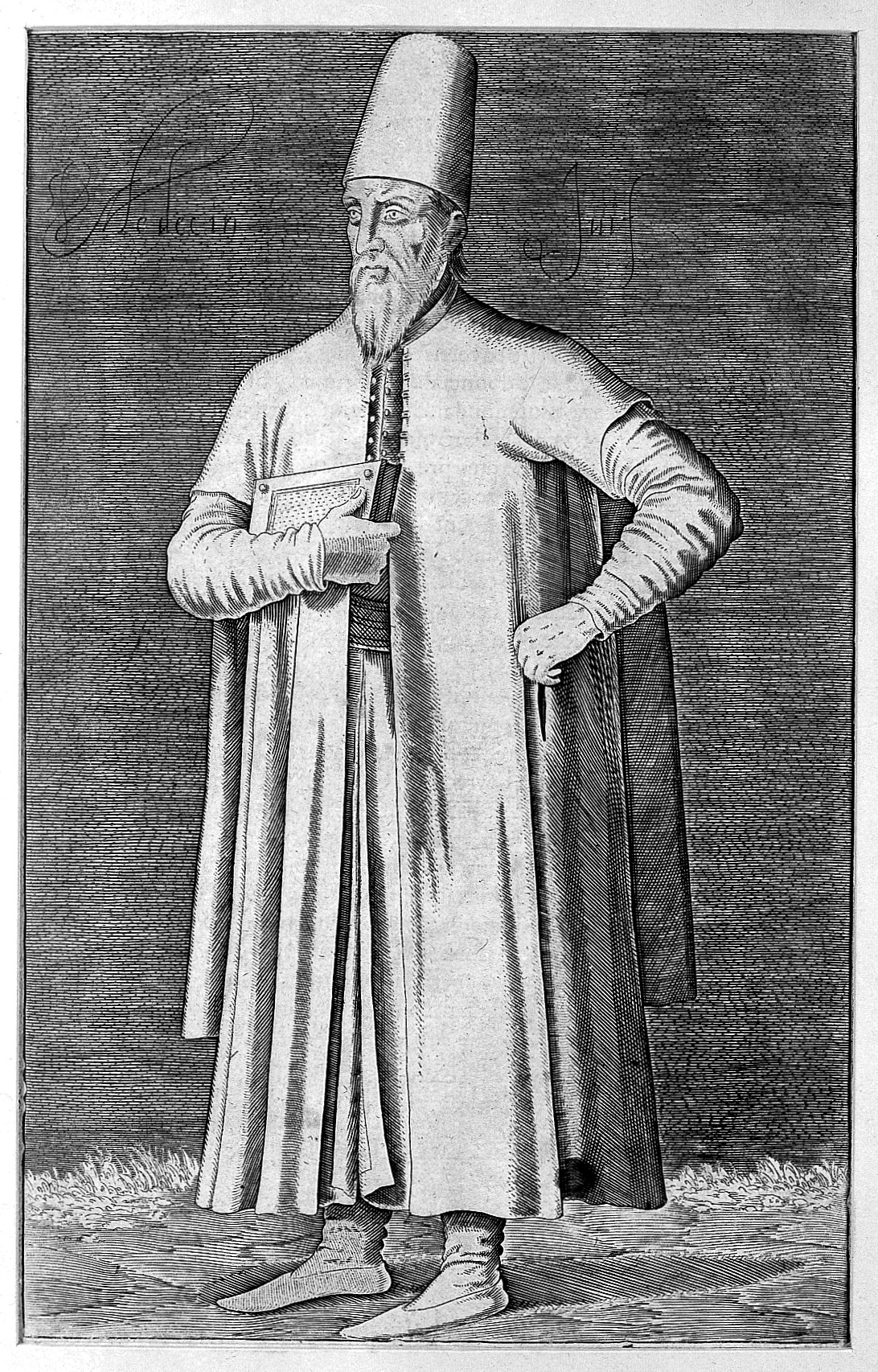
In the Middle Ages and Renaissance, medicine was primarily a theoretical study, linked to philosophy, astrology and sometimes the occult.
With their proprietary interest in Kabbalah, Jews were thought to have a distinct edge in accessing healing powers.
Some could also channel knowledge from the East, including ancient Greek treatises that survived only in Arabic translation.
In later years, with the expansion of empirical research in the universities and the scientific academies, Jews could also draw on a widening range of modern skills and expertise.
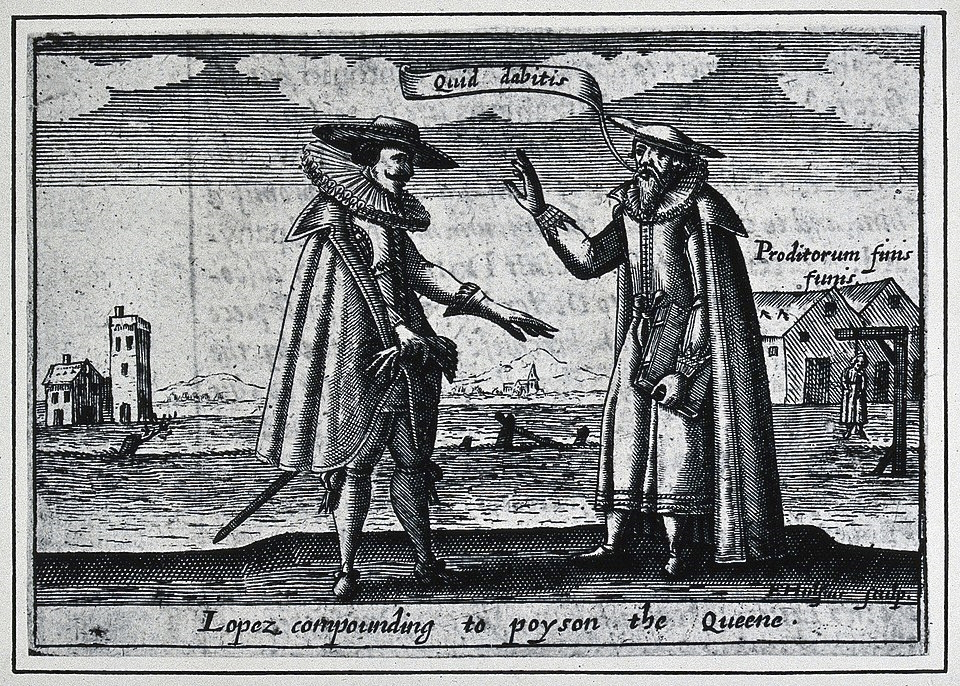

Lopes conspires with a Spaniard to poison Queen Elizabeth; at the far left, he dangles from a gallows.
There were relatively few Jews in Italy and Europe at the time of the Medici and not many Jewish medical doctors. Those few, however, gripped the public's imagination— especially highly-skilled "Portuguese Physicians" (often professing Christians with a crypto-Jewish past).
Probably the most notorious case was that of Roderigo Lopes. His father was a royal physician at the Portuguese court, of Jewish descent like many. Roderigo himself was raised as a Catholic and took a degree in medicine at the University of Coimbra —but fled to England in 1559 when accused by the Inquisition of “Judaizing” (indulging in secret Jewish practices).
Doctor Lopes converted to Anglicanism and launched an enviable medical career based in London, with Elizabeth I as his patient. This all collapsed in 1594, when the queen’s favorite Robert Devereux (2nd Earl of Essex), accused the Portuguese doctor of plotting with England’s enemies to poison his royal charge.
Evidence was tenuous but the pervasive distrust of both Jews and Iberians carried the day, so Lopes was hanged, drawn and quartered before a large crowd. On the scaffold, he allegedly asserted that "he loved the Queen as well as he loved Jesus Christ”, eliciting ironic laughter.
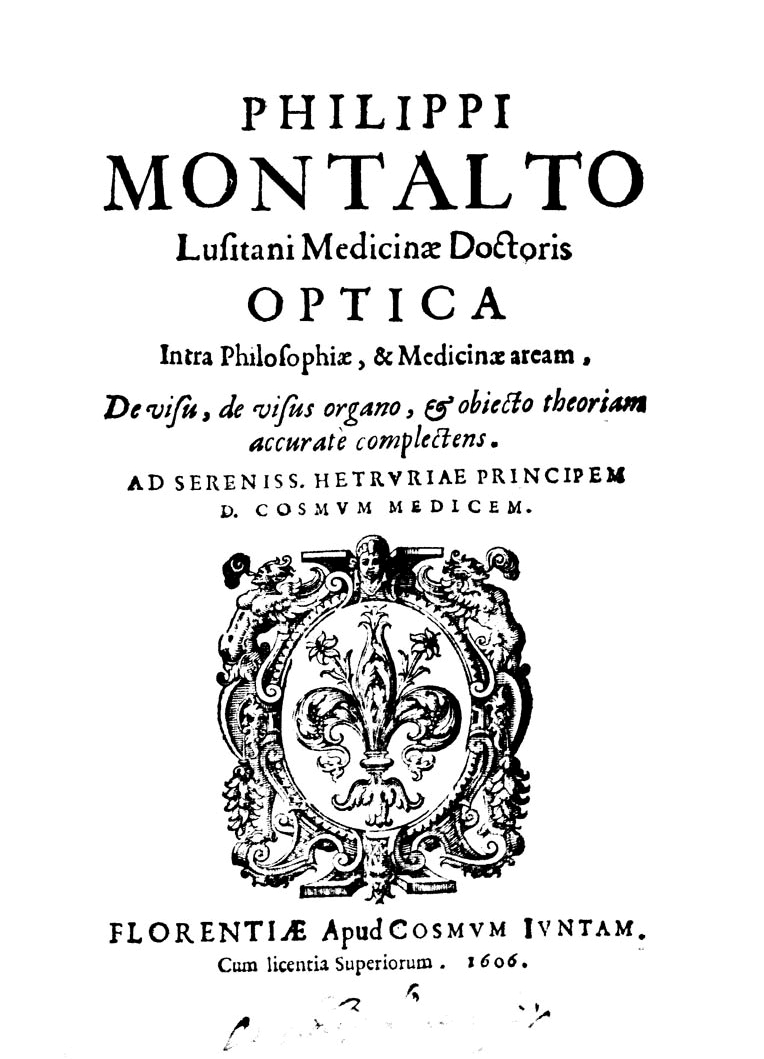

Elia Montalto's monumental treatise, "Optics in the context of philosophy and medicine, accurately encompassing the theory of sight, the organ of sight and its relation to the object" was published in Florence in 1606 and dedicated to Grand Duke Ferdinando’s son Cosimo (later Cosimo II).
Almost as sensational was the case of Elia Montalto (1567-1616) who served three members of the Medici family: Grand Duke Ferdinando I and Grand Duke Cosimo II in Tuscany and Queen Maria de'Medici in France.
Born in Portugal in 1567 to a distinguished family of “New Christians”, Montalto attained his degree in medicine at the University of Salamanca. There he was known as Felipe Rodrigues de Castelo Branco, a grand gentile apellation.
In 1602, the Montalto family resettled (evidently as Catholics) in the cosmpolitan Tuscan port city of Livorno. The doctor then established himself at the University of PIsa and also at the Medici Court. After this initial success, he encountered a series of professional obstacles, likely linked to his suspect origin.
Then in 1606, he fled from Florence to Venice —amidst great clamor —and took up residence in the Ghetto there as a declared Jew, calling himself Philotheus Eliahu de Luna Montalto.
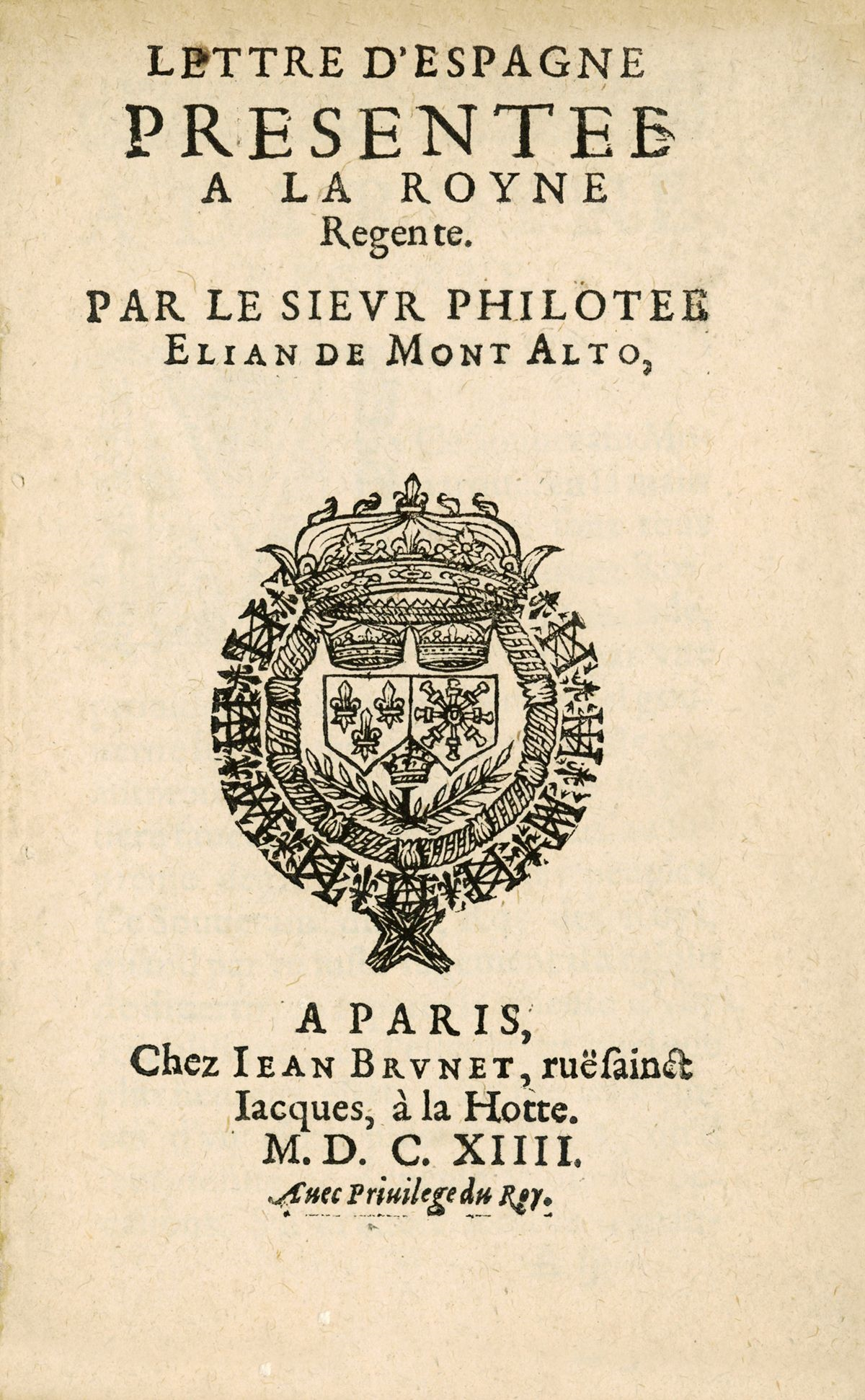
"Letter Regarding Spain presented to the Queen Regent by Lord Philothée Elian de Mont Alto" (Paris 1614). Montalto expresses gratitude to his royal patron who allowed him to live openly in his faith.
Montalto then entered the service of Queen Maria de'Medici (niece of Grand Duke Ferdinando), serving as her personal physician. As the only professing Jew explicitly allowed to live in the Kingdom of France, he emerged as an outspoken polemicist, fiercely defending his people's rights and prerogatives.
.jpg)
Elia Montalto's tomb is the conspicuous white construction spot-lit in the middle.
Montalto died suddenly in 1616, while accompanying the royal court on a visit to Tours. His patroness then ordered an astonishing tribute— embalming his body and transporting it to the new Portuguese Jewish cemetery in Ouderkerk near Amsterdam.
The physician’s tomb quickly became one of the cemetery's chief sights, often depicted by artists. Jacob van Ruisdael featured it in his most famous painting, The Jewish Cemetery—a moving evocation of time and human mortality.

IN CONCLUSION: Were the Medici of Florence Jewish Medical Doctors?
We can tabulate the facts, then answer with a resounding "NO!"
(1) We have Medici (the Tuscan dynasty, four centuries of them on the world stage) and medici (medical doctors, present and past).
(2) The Medici might well have been medici (medical doctors) at some phase in their evolution but that remains to be proven.
(3) During the four relevant centuries, some medici (medical doctors) were Jewish and a few of them were associated with the Medici family.
(3) But as for actual Jewish Medici (with a capital “M”)... medici (medical doctors) or otherwise ...we can't get there from here!
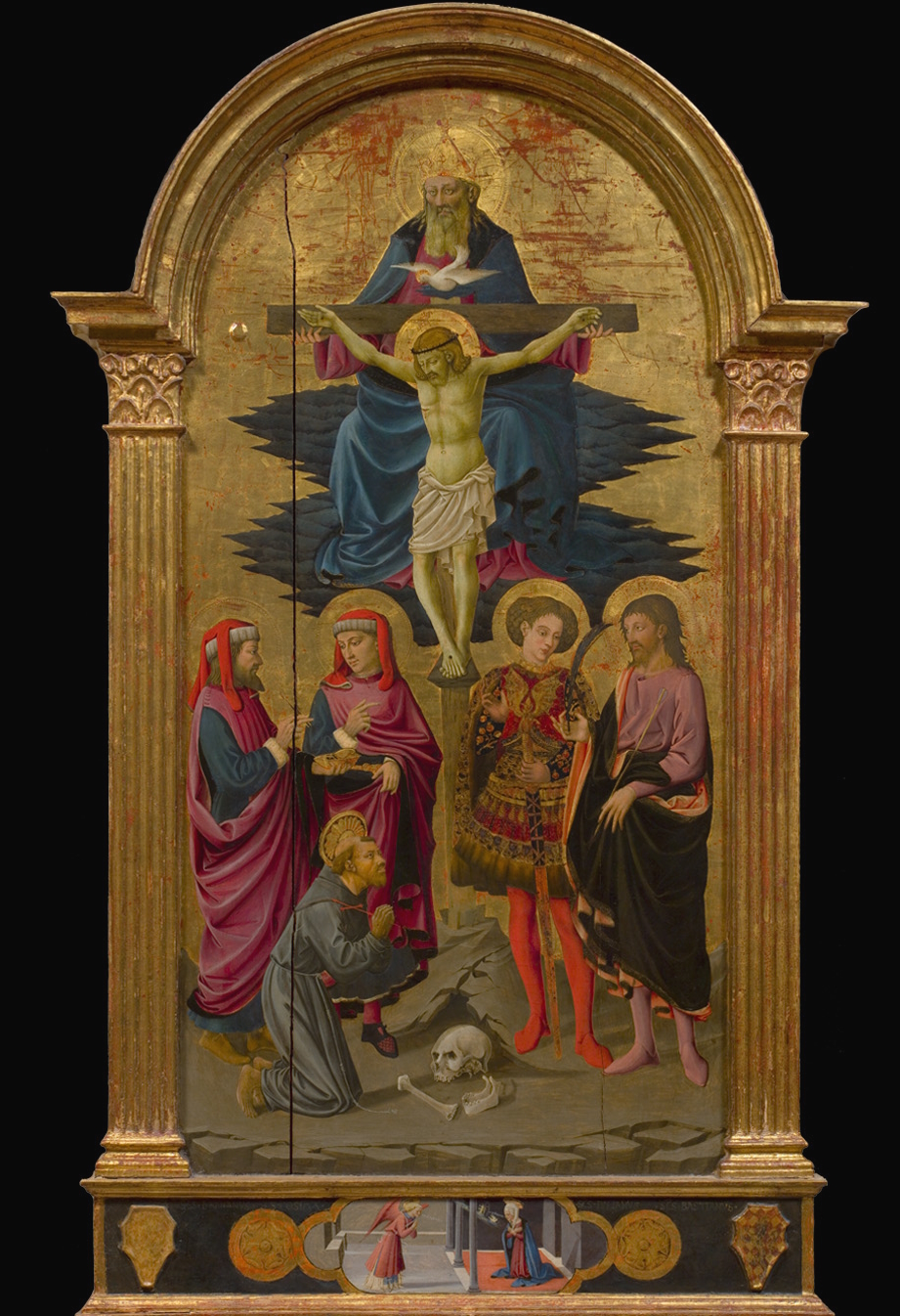
"Members of the Tribe!"
"You know how clannish Jews are!"
"And the Medici were right there in the mix!"
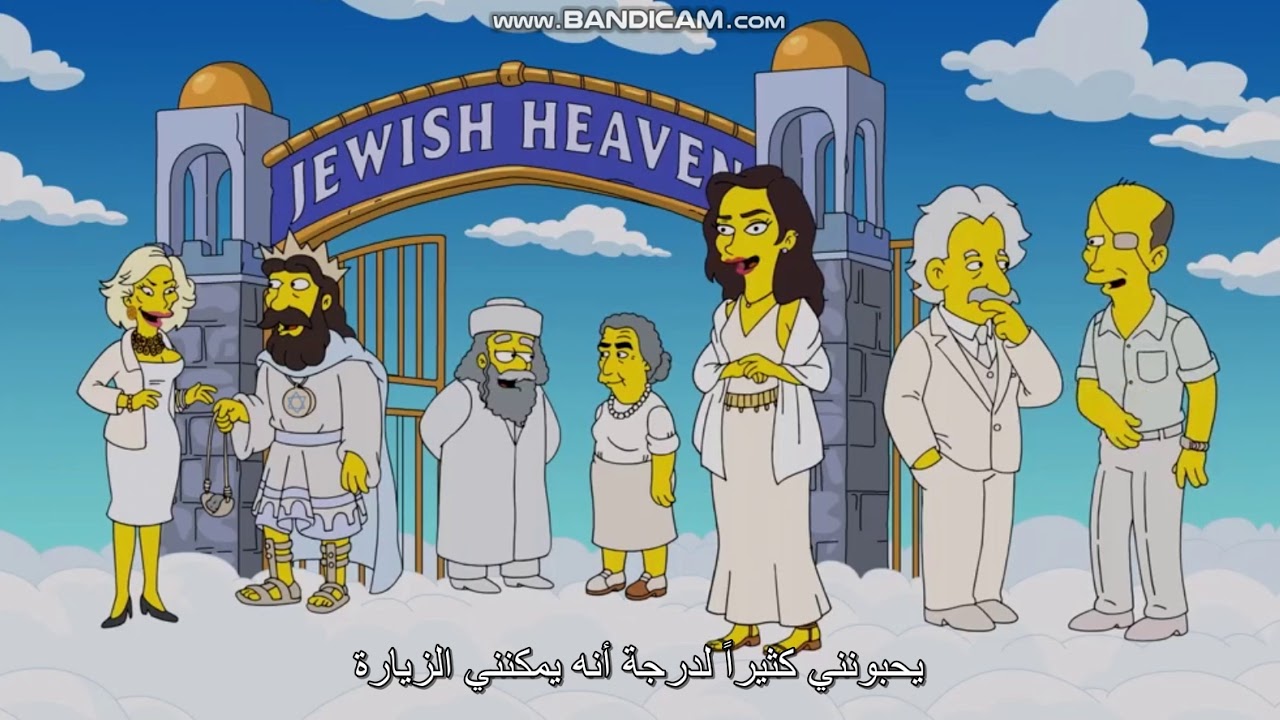
Left to right: Joan Rivers, King David, Rabbi Hyman Krustofsky (deceased father of Simpsons character Krusty the Klown), Golda Meir, Gal Gadot (alive and well in real life), Albert Einstein and Moshe Dayan. (Arabic language captioning).
If you went looking for Medici ...back in the day... you found Jews too... right there in the mix.
We have all heard this, or something like. Let's call it the "Jewish by Association Theory".
But what, if anything, does this actually mean? Since we are already bouncing on clouds, let's dive into AI...
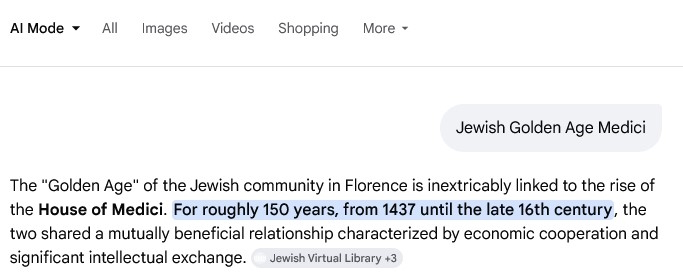
AI wisdom... What goes around comes around —or not? When I clicked on the Virtual Jewish Library link to sources, I was amused to see that their supporting material was stuff that I wrote for the Medici Archive Project a couple of decades ago. "Golden Age", I assure you, is not a term that I ever used in this context—even in quotes.
The Jewish Golden Age and the Medici Golden Age:
(1) There was "Economic Cooperation".
(2) There was "Significant Intellectual Exchange".
But is any of that true???
I can give you a good Jewish answer: Yes and No...
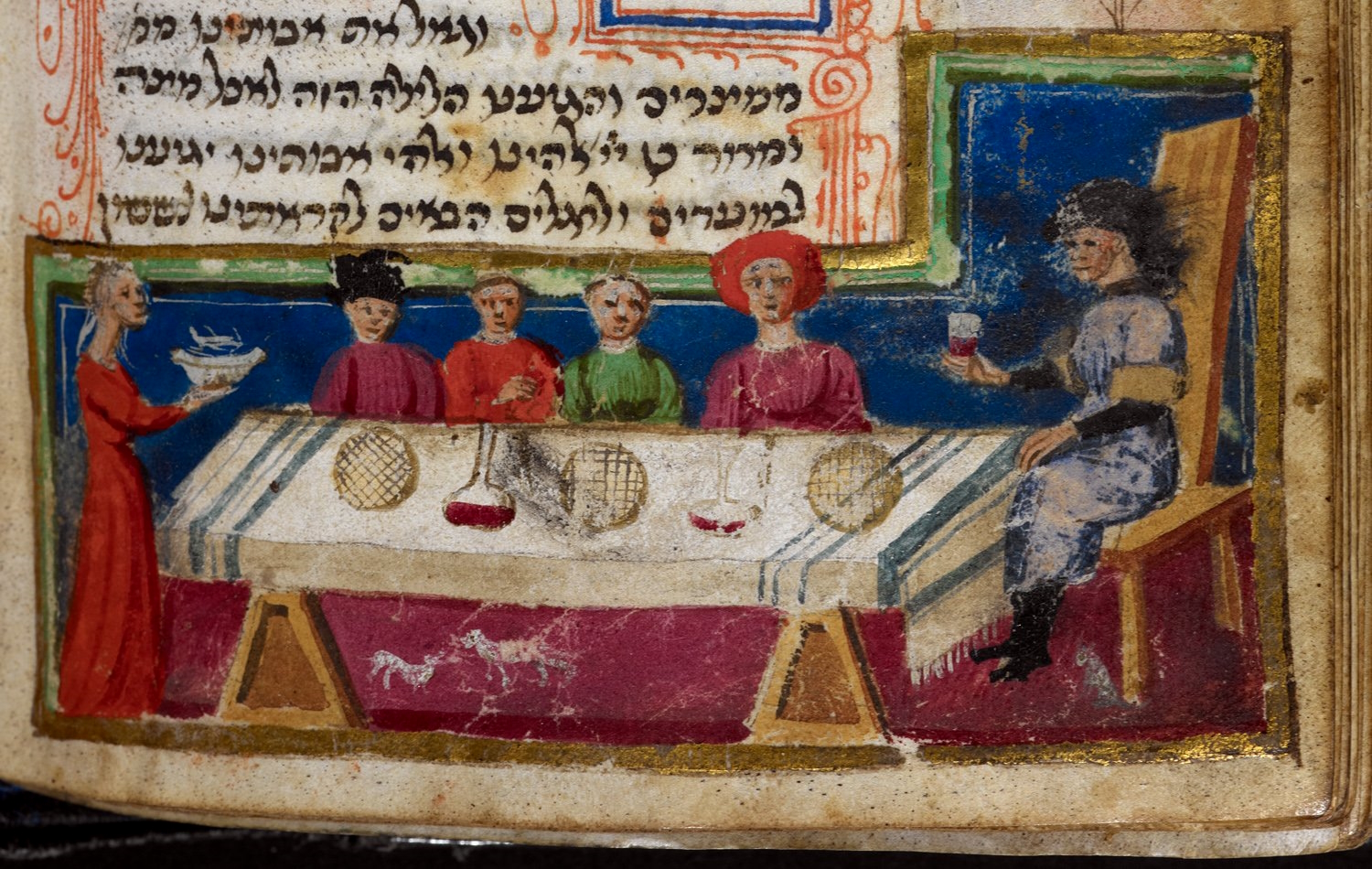

Let's begin at the beginning: No one ever liked Jews very much.
Going back over the centuries, we run into that essential truth again and again.
So, let's not waste time asking, "Who wished the Jews well?"
"Who wished them less ill?", is a more productive question.
And "Who invested least effort in making their lives hell?"
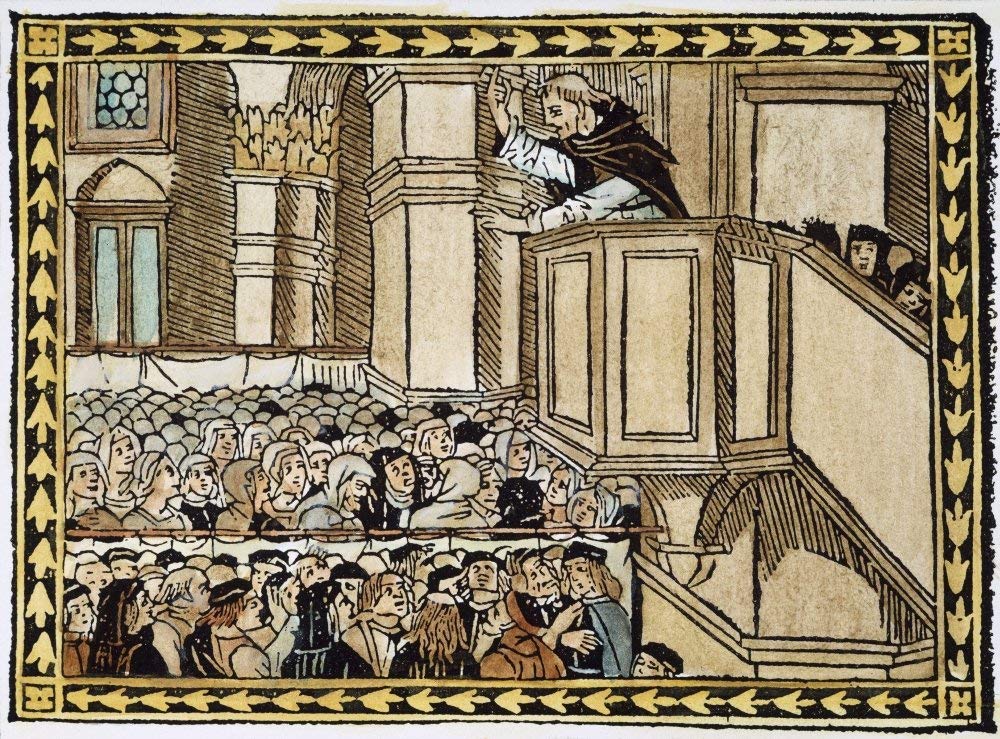
Girolamo Savonarola (1452-1498), a Jew-hating Dominican friar, preaches to an enthralled crowd in Florence Cathedral.
The Medici and the Jews...
Were they all— in fact —friends hanging out together in Renaissance Florence?
They certainly shared enemies and that is probably more to the point.
When the Medici were expelled in the 1490s, during the theocratic dictatorship of Savonarola, Jews were sent packing too (unconverted ones, at least).
Obstinant Jews followed the Medici out the door again in 1527, during the final upheaval that ended the Republic and substituted a Medici princely state (ultimately the Grand Dukedom of Tuscany).
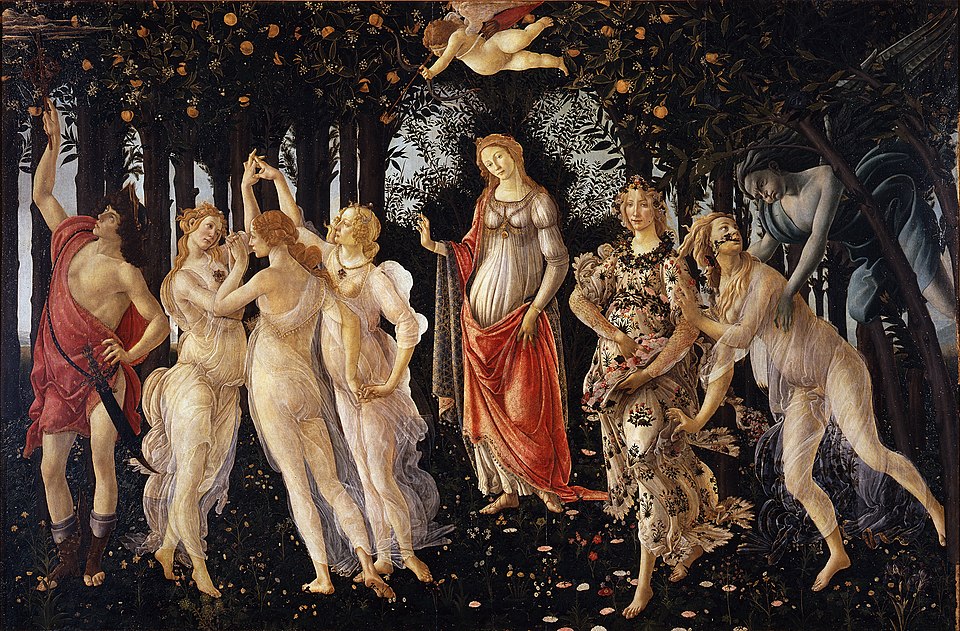
The aristocratic neo-paganism that characterized this picture —and much of Medici culture —did not permeate the entire city.
We like to see the Medici as the epitome of Fiorentinità (Florentine Self-Identity) —but many or most of their townsmen would not have agreed, back in the "Golden Age".
In those years, the Medici and their opponents were locked in a fierce struggle for Florence’s soul— Christian or otherwise.
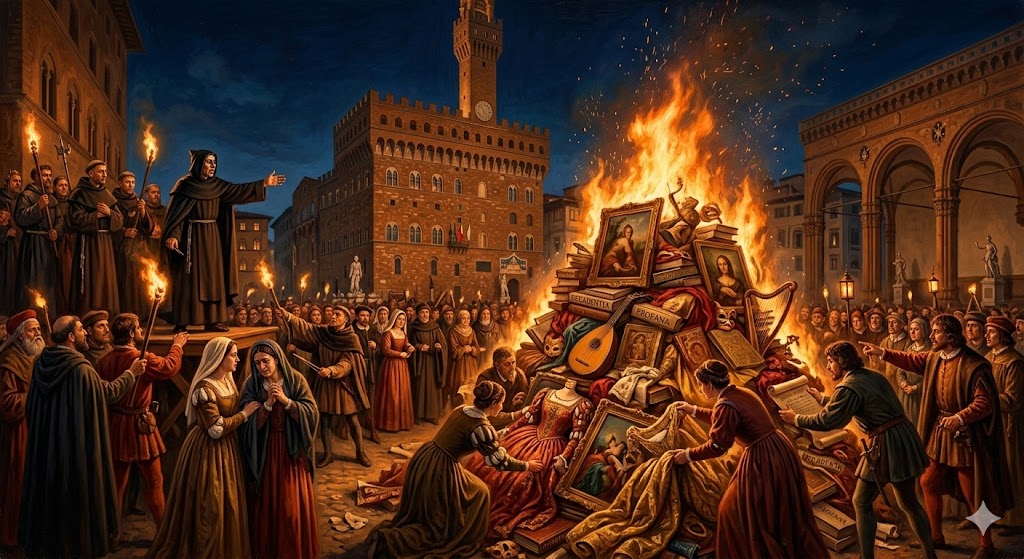
The Frate (Girolamo Savonarola) presides over a so-called Bonfire of the Vanities (circa 1497) in a hilariously anachronistic Piazza della Signoria. We see Ammannati's Neptune and Michelangelo's David in front of the Palazzo Vecchio and a host of latter-day knick-knacks on the pyre.
Savonarola led the attack on secular humanism— but predictably enough, he had a second enemy in sight: Jews and especially Jewish usurers.
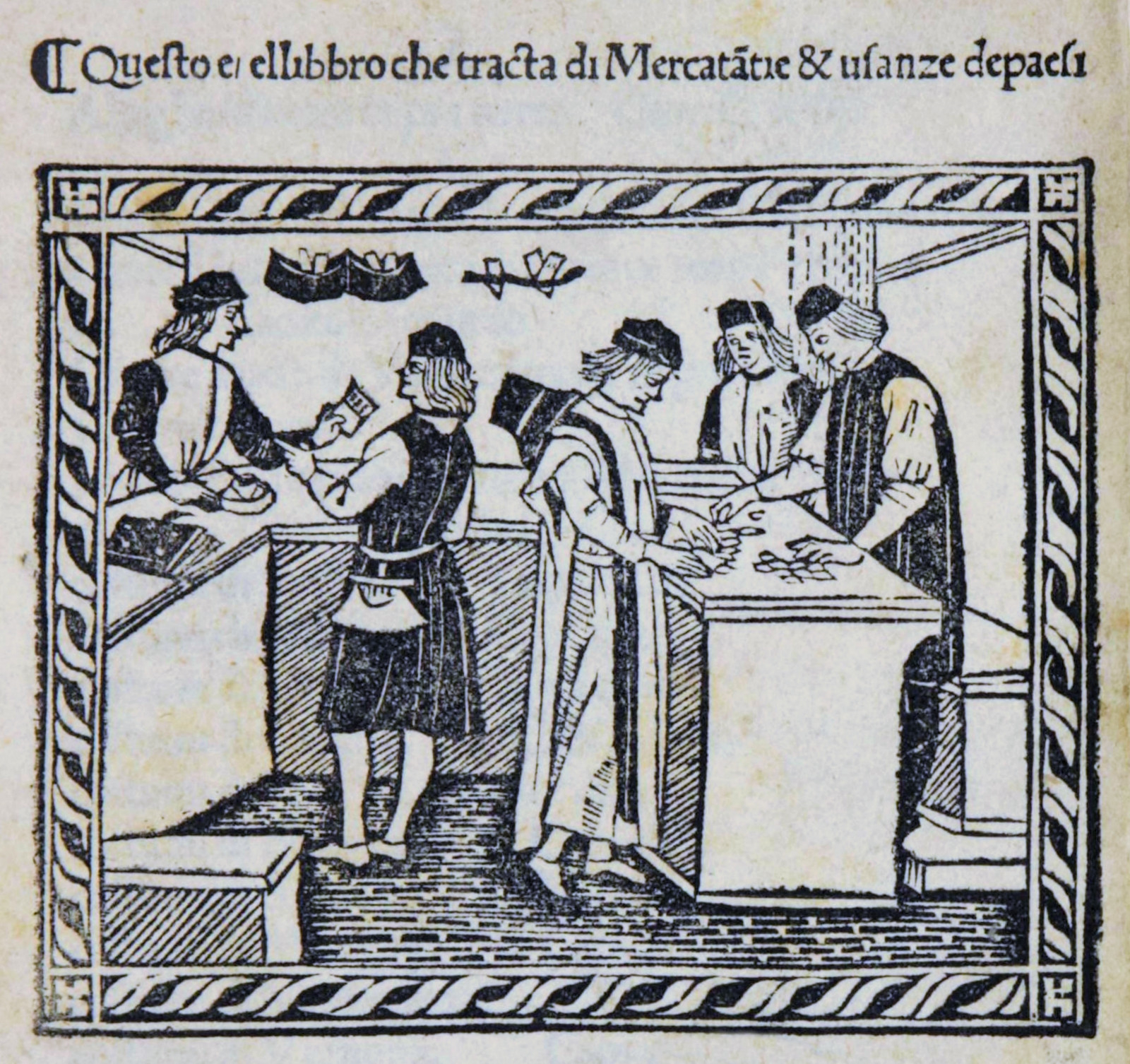
We see an orderly and well-run Italian banking establishment in the late 15th Century. The title, A Book Discussing Mercantile Practice and the Norms of Various Lands, emphasizes the global aspect of modern business.
Like the Jews, the Medici were using money to make money —usury, that is to say.
The Medici, however, didn't see them as competitors and condoned their activity— mostly servicing small Christian borrowers and offering a useful stream of everyday liquidity.
As early as 1473 (before Savonarola), some Florentines moved to circumvent Jewish usury by founding a Monte di Pietà— an ostensibly Christian pawnbroking operation that slipped between the letter and law of Church dogma. This initiative failed, largely due to Medici opposition.
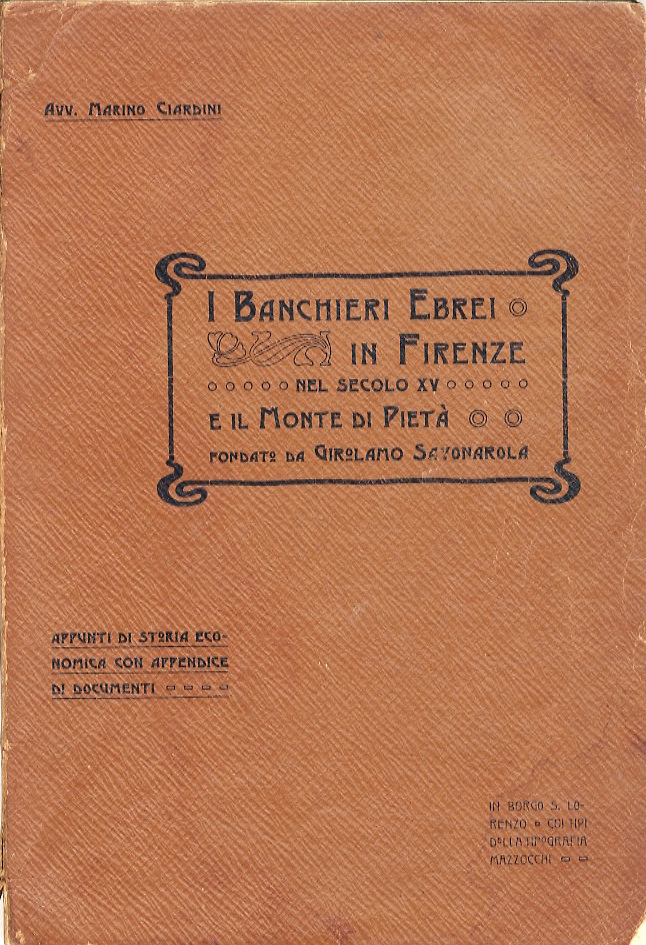
Marino Ciardini's pioneering study, "Jewish Bankers in Florence in the Fifteenth Century and the Monte di Pietà founded by Girolamo Savonarola".
Then came 1494...
The French invaded Italy, giving political and military cover to Savonarola.
The Florentines seized this opportunity to expel the Medici— triggering the closure of the already-ailing Medici Bank.
Without the Medici to intervene, the Jews were expelled as well— thereby ending Jewish money-lending.
Then in 1495, Savonarola founded the Monte di Pietà in Florence— eliminating the need for both Jewish and Medici usury (in theory, at least).
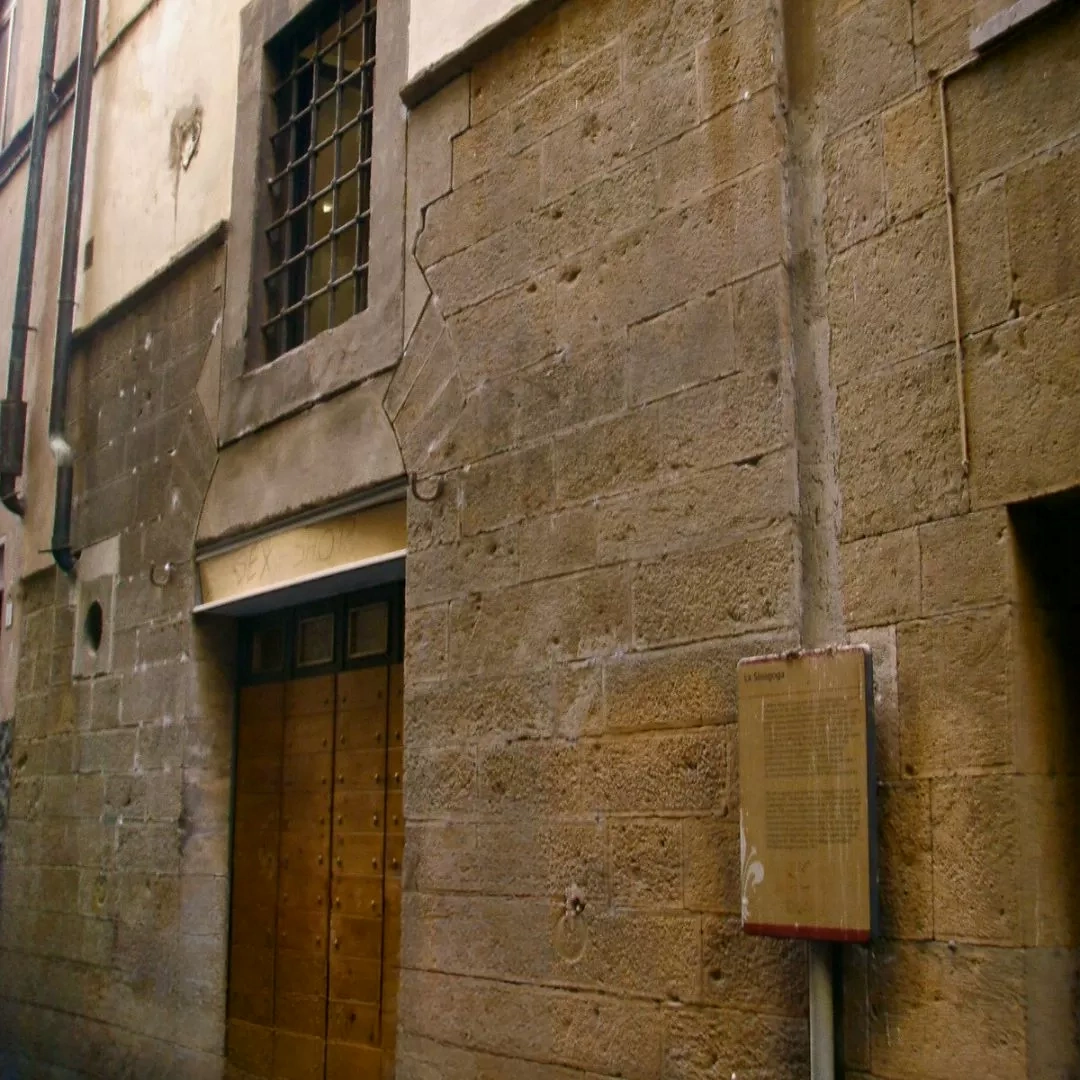

Florence’s first- known Jewish community lived in Via dei Giudei (now Via dei Ramagiianti), across the river from the city’s official center.
TO RECAP:
In 15th-century Florence, while the Medici held the reins of power, Jews were allowed to reside, practice their religion and earn a living.
In the broad sweep of Jewish diaspora history, that was about as good as they could hope —but did it add up to a "Golden Age"?
Regarding the two main criteria:
(1) Yes, there was at least economic complicity with the Medici. "Economic Cooperation" remains to be proven (regularly doing deals together, that is to say).
(2) As for "Significant Intellectual Exchange" ...what is "significant" anyway and what is "exchange"?
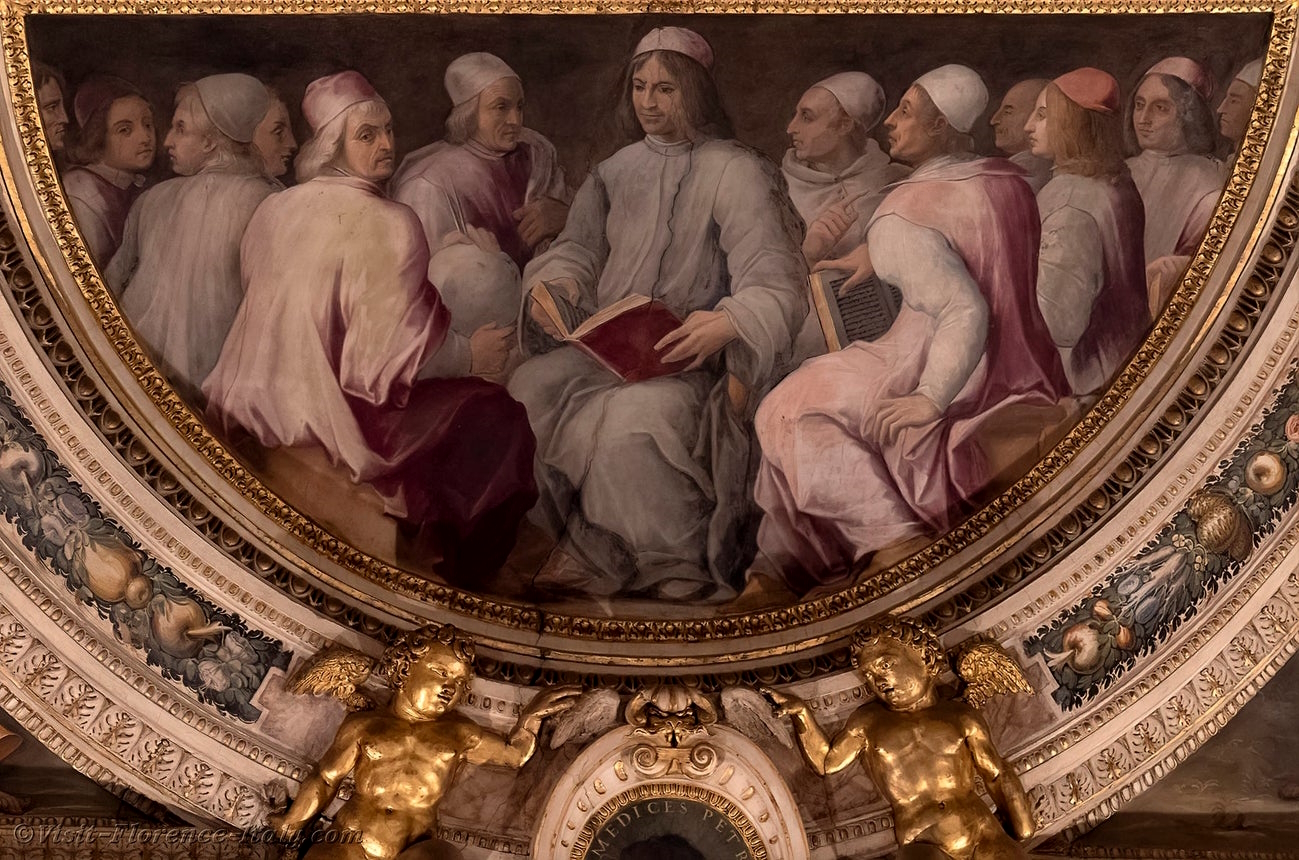
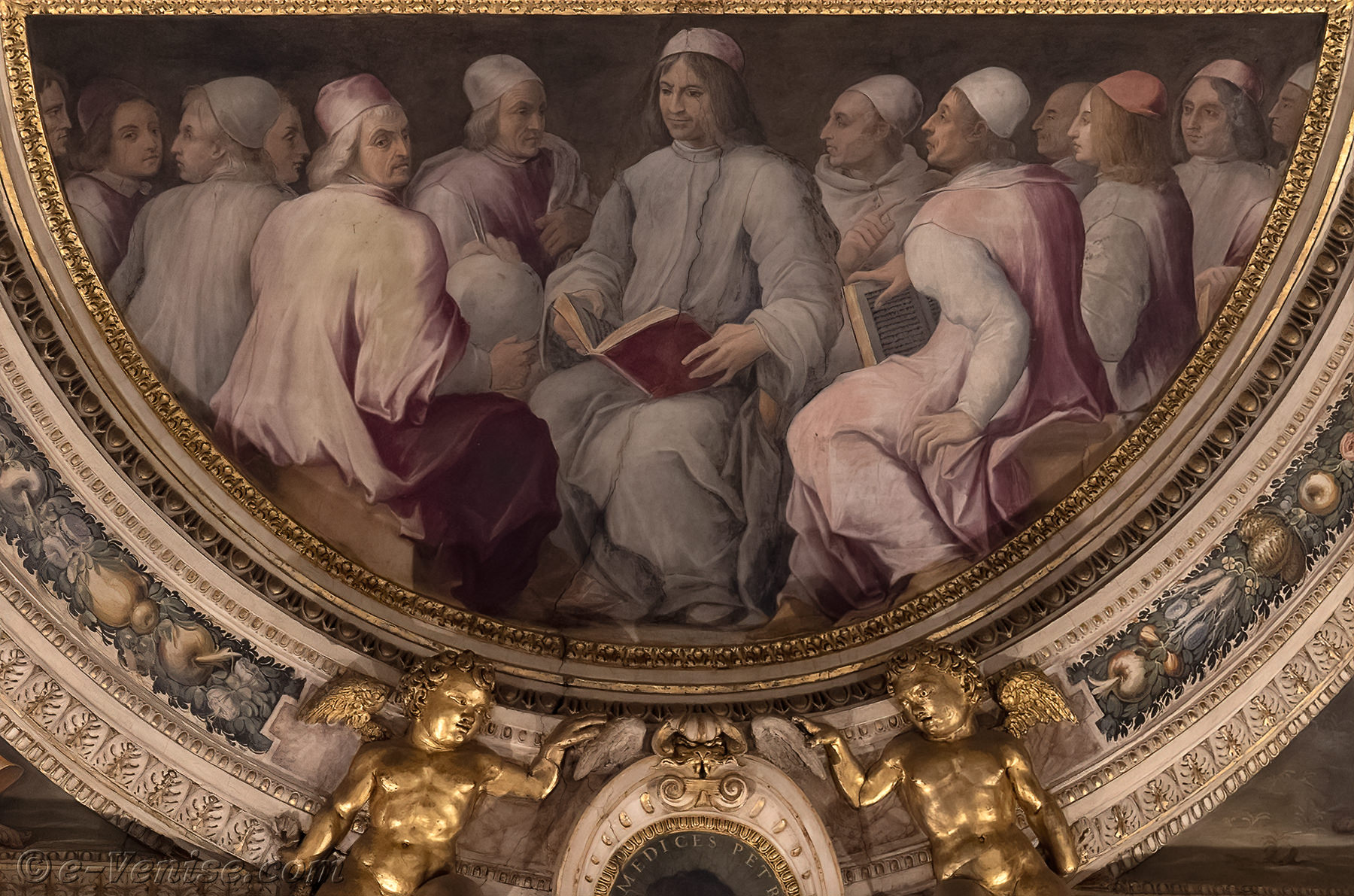
Giorgio Vasari offers an iconic image of Medici culture in the Renaissance, showing Lorenzo the Magnificent amidst the scholars and writers he patronized.
Behold! The Medicean Golden Age of Jewish Intellectual Inclusion (as depicted two generations later in the formative years of the Medici princely state).
So...why are there no Jews in the picture?
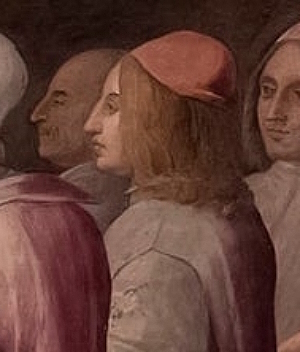
As far as I can tell, the pleasing whiff of Judeophilia in the "Medicean Golden Age" emanates almost entirely from a configuration of personalities around Giovanni Pico della Mirandola (1463-94).
This Emilian nobleman was a brilliant polymath and one of the most influential members of Lorenzo the Magnificent's circle, with a dazzling intellectual range and an astounding memory. An accomplished mathematician and linguist, he mastered French, Latin, Greek, Hebrew and Aramaic.
Above all, Pico della Mirandola was a synthesist, seeking a universal philosophy— which he found in the realm of Christian Kabbalah, a Jewish-derived field of mystic learning with major Christian and Neo-Platonic components.

From the Complete Works of Giovanni Pico della Mirandola, printed in the Protestant city of Basel in 1601, more than a century after his death.
Pico frequented Marsilio Ficino, Angelo Poliziano and other humanists in the environs of Lorenzo the Magnifcent's Accademia Platonica (Platonic Academy) at the Medici Villa of Careggi.

The Loggia of Lorenzo de'Medici's Platonic Academy, directed by Marsilio Ficino. The nearby villa of Careggi is visible to the right.
There were eminent Jewish scholars too... somewhere "in the mix":
Yohanan Alemanno taught Pico della Mirandola the essentials of both Hebrew and Kabbalah.
Elia del Medigo was not a Kabbalist himself but an all-purpose advisor to Pico regarding Jewish languages and literature.
Flavius Mithridates (a convert to Christianity) instructed Pico in Aramaic and translated a vast body of kabbalistic texts into Latin for his patron— while living in Pico's own home near Perugia.
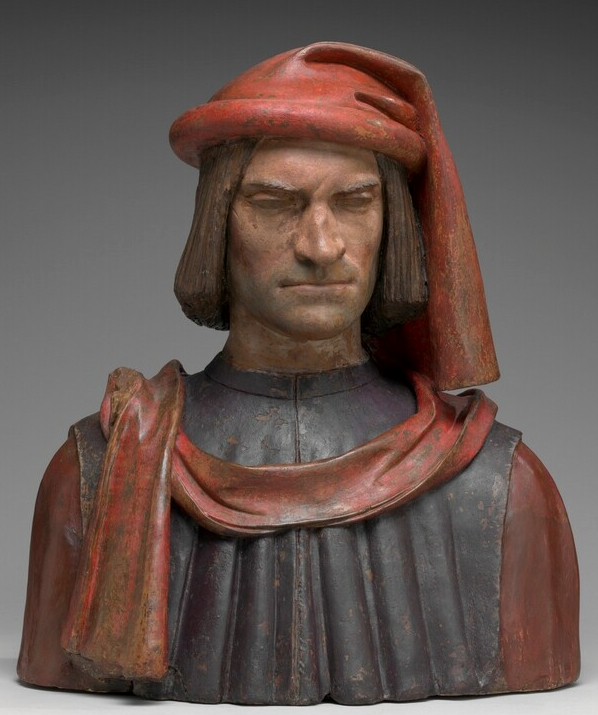
Can we see Yohanan Alemanno, Elia del Medigo and (the now ex-Jewish) Flavius Mithridates in the thick of things, batting around ideas with il Magnifico himself? “Significant Intellectual Exchange”, for sure!
Can we also imagine the Jews not in the room at all, as Giorgio Vasari would have it and as history leads us to expect?
Yohanan, Elia and Flavius are then hard at work, just offstage. We can see them shuffling papers, indexing pages and collating notes— helping Christian patrons build Jewish-inflected narratives of their own.
Looking back over the centuries, was it a "Golden Age" for these Jewish scholars too— give or take a few degrees of separation? They might well have thought so, considering the world they lived in and their prevailing lack of options.
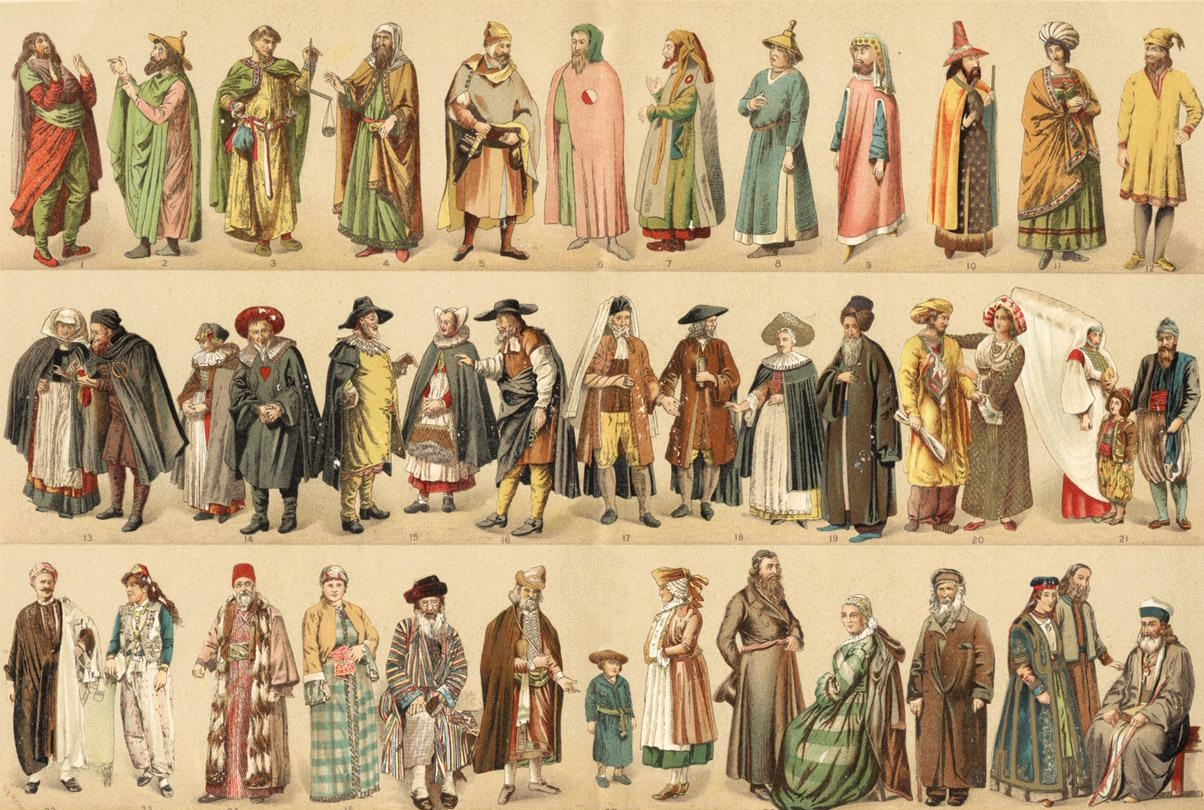
Now a FINAL RECAP after several failed attempts to connect the pieces: WERE THE MEDICI JEWISH???
At the top of this section, we offered an alleged "fact" followed by an intriguing "deduction".
FACT: "The Medici always hung out with other Jews..."
DEDUCTION: "...so obviously the Medici were Jews themselves."
“Hanging Out”, however, is not a quantifiable reality and “Jewish by Association” dissolves before our very eyes.
So here we are —at the end of the road— leaving the Medici as Catholic as we found them.
Still, I don't expect the Jewish Medici Myth to vanish any time soon.
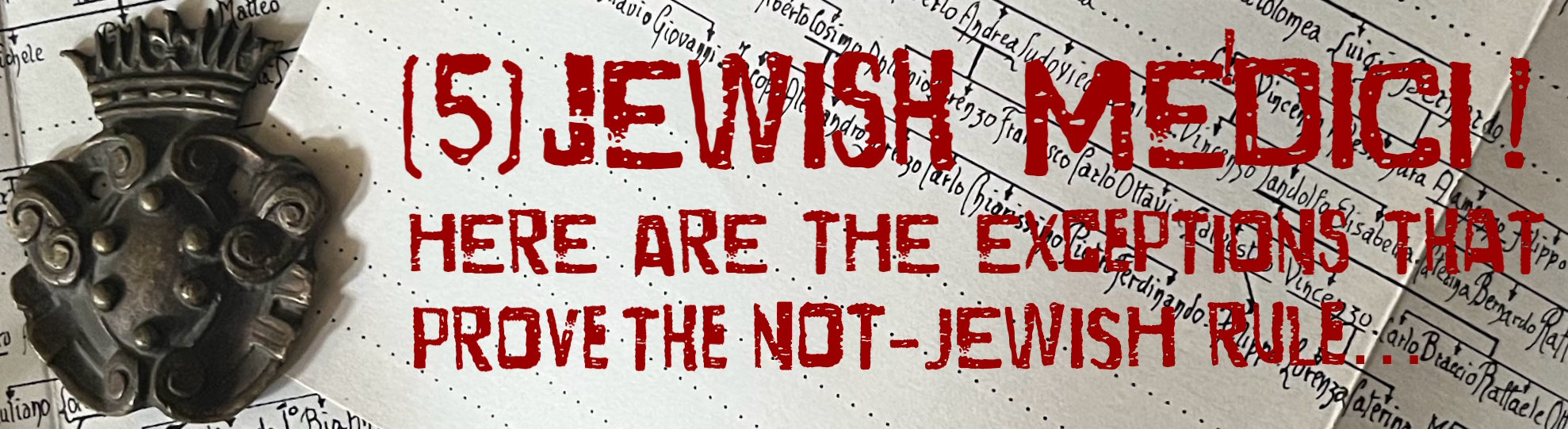
Vitale Medici... Antonio Medici... Alessandro Medici...
Who are these people? They don't figure in most dynastic histories, television series, videogames or comic books.
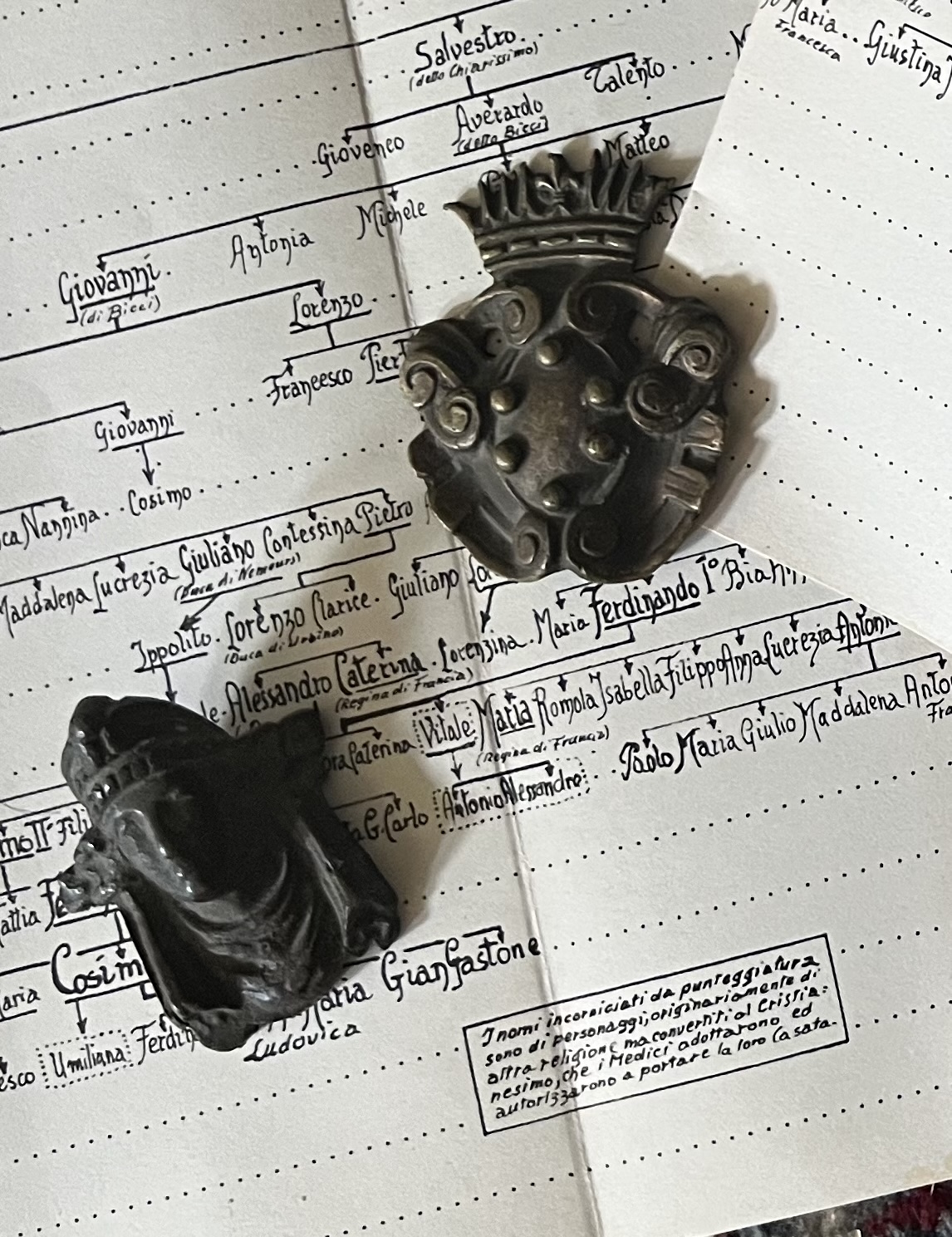
My focus here is the vast Albero Genealogico (it folds out to 5 feet) in Grassellini & Fracassini's Profili Medicei (1982), an essential handbook for researchers like me back in pre-electronic days. Its full title (in English) is, "Medici Profiles: The Origin, Development and Decadence of the Medici Family Through Its Various Components".
We find all three —Vitale, Antonio and Alessandro— on at least one ultra-exhaustive family tree. Vitale Medici hovers right next to Maria, Queen of France (or so it seems; Vitale is actually the last ramification of Grand Duke Ferdinando I and Maria the first of his predecessor Grand Duke Francesco I).
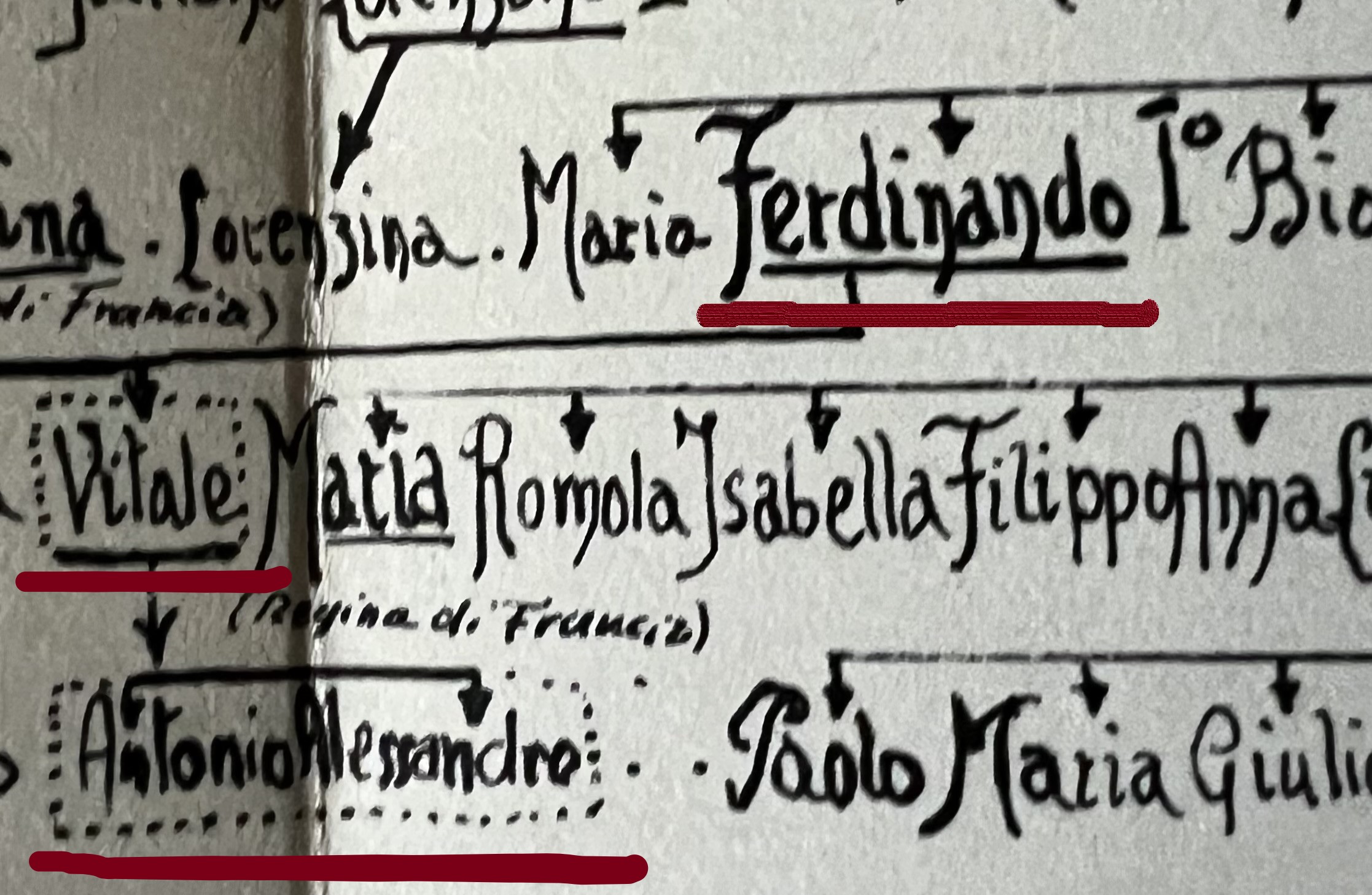
How about the dotted lines— hinting at perforation, perhaps?
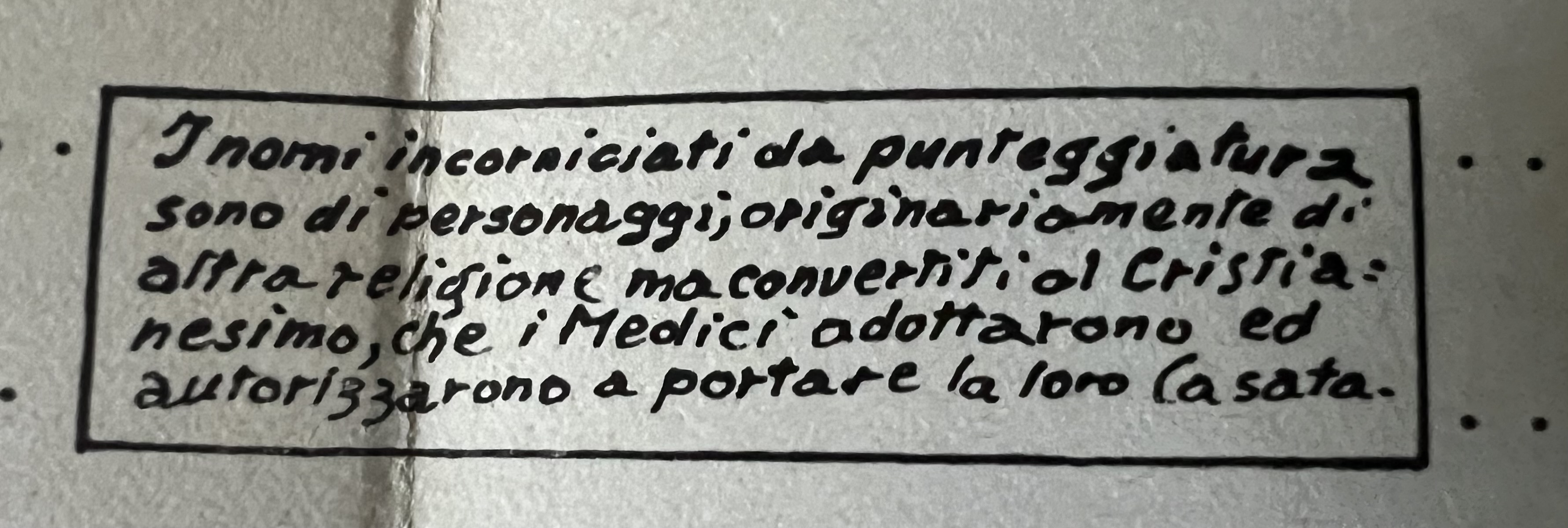
"The names set off by dotted lines represent personages originally of another religion who converted to Christianity and were then adopted by the Medici and allowed to display the emblem of their house."
"Another Religion" usually means "Jewish" in high-profile cases like this.

Whatever Vitale and his kin left behind when they lept over the ghetto wall, they were eager to make the most of their new armorial trappings.
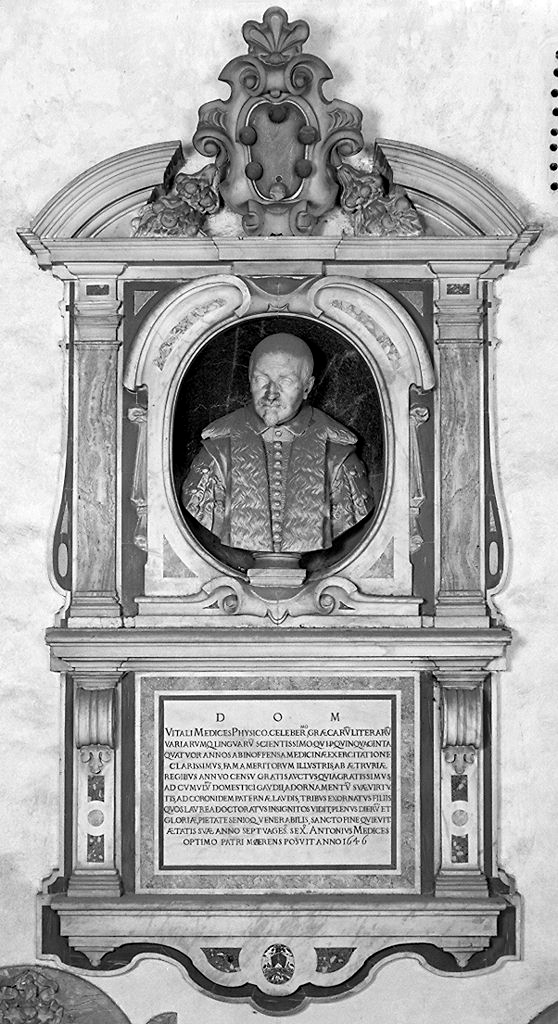
Funerary monument of Doctor Vitale Medici (b. circa 1559- d. before 1635) under the Medici Coat of Arms (1646; commissioned by Vitale's son Antonio and sculpted by Francesco Mochi.) According to the inscription, he died at the age of 76 having practiced medicine for 54 years.
Vitali Medices Physico Celeberrimo (Vitale Medici Renowned Physician) as attested by his opulent memorial right outside the Sacristy of the Madonna at the Florentine Church of the Santissima Annunziata.
So, this newly-minted Medici was a medico too— giving us (at long last) a plausible claimant who was both a Jew and Medical Doctor. (His sons Antonio Medici and Francesco Medici were physicians as well.)
No less to the point, Vitale had also been a rabbi and a popular preacher in the Florentine Ghetto.
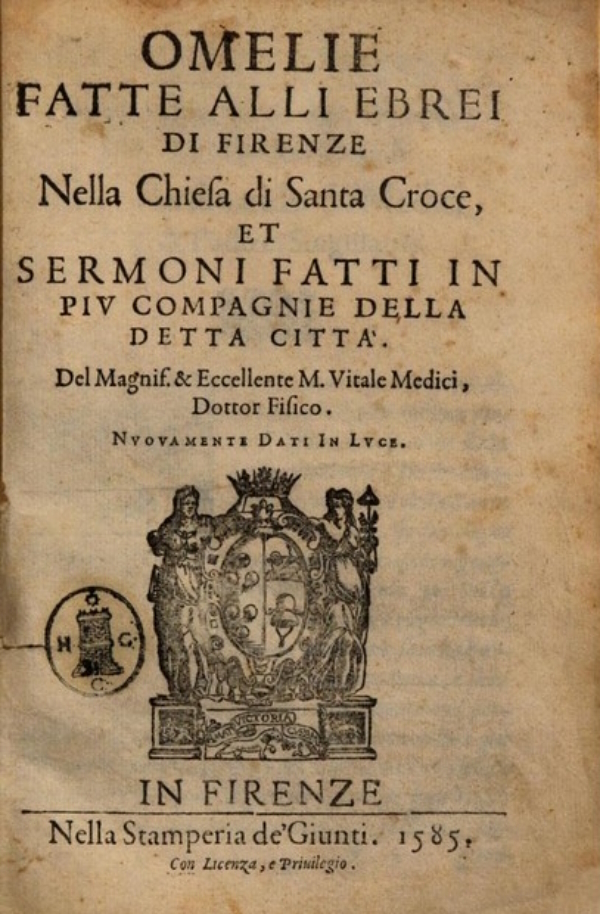
"Homilies Presented to the Jews of Florence in the Church of Santa Croce and Sermons Delivered in Various Gatherings in the City by the Magnificent and Excellent Master Vitale Medici, Doctor Physician."
Until recently, our chief first-hand evidence regarding the sensational conversion of Vitale Medici (previously known as both Vitale di Salomone da Cascia and Jechiel da Pesaro) was a cycle of sermons that he presented in the Florentine Church of Santa Croce.
Printed, they became a matter of public record. Less durable, however, were the reactions of his Jewish former brethren—more accustomed to hearing him preach rather differently in their own Synagogue.
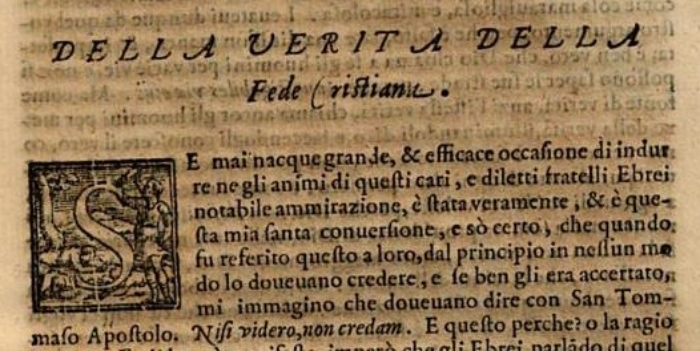
"REGARDING THE TRUTH OF THE CHRISTIAN FAITH
Never was there a greater and more effective occasion for generating wonder in the souls of my dear and much loved Jewish brothers than this my holy conversion. When word first reached them, I knew that no one would believe it. Even when they were assured of this fact, I could imagine them echoing Saint Thomas the Apostle, “Nisi videro non credem” (I will not believe it unless I see it.)"
As Vitale knew, questions were swirling around the Florentine Ghetto and beyond. His apostasy was inconceivable to most, so there had to be an urgent back-story —a presumption that Vitale was eager to dispell.

"And why is this? The cause is self-evident, according to the Jews, when they consider those who approach Baptism. No one would want to become Christian, they argue, without violent or external pressure. As a rule, according to them, the most compelling motive is finding oneself in the grip of the law for some criminal excess deserving severe punishment or even the ultimate penalty of death."
Vitale then touches more lightly on other plausible motives for conversion, including personal gain and a freer life outside the Ghetto, before taking final refuge in Divine Grace and the Holy Spirit.
What, in fact, was the essential story?
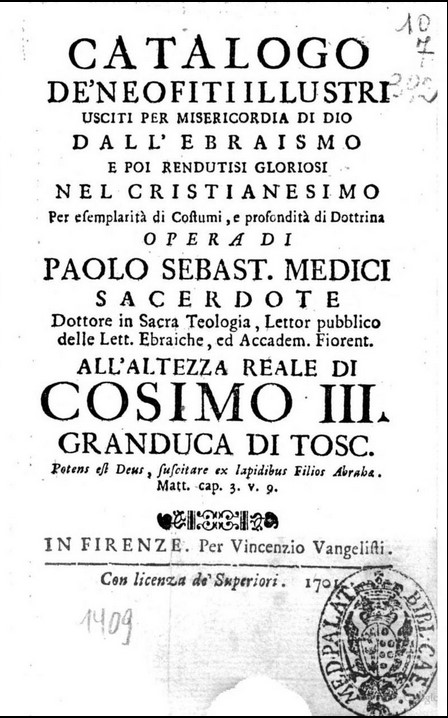
"Catalogue of Illustrious Neophytes Who Left Judaism Through the Mercy of God and Then Found Glory in Christianity... Work of Paolo Sebastiano Medici, Priest, Doctor of Sacred Theology, Public Lecturer in Hebrew Letters and Member of the Florentine Academy, Dedicated to His Royal Highness Cosimo III [de’ Medici], Grand Duke of Tuscany" (Florence, 1701). Cosimo III was Paolo Sebastiano's godfather and the source of his new last name.
For several centuries, most viewed Vitale Medici's baptism through the eyes of Father Paolo Sebastiano Medici (1671-1738), another ex-Jew, also godson and namesake of Grand Duke Cosimo III.
This later neo-Medici (by then a Catholic priest) was writing with a distinct conversionist agenda. So, he offers a text-book account of a seemingly inevitable transmutation, notable only for the brilliant attributes of those involved.


"Vitale de’Medici, also known as Rabbi Jochiel di Pesero, was a most learned Jew, versed in Philosophy, Medicine and Jewish studies, richly talented and first among the Rabbis of his Century. In Florence, he heard preaching by the Father Inquisitor Dionisio Castacciaro and was so moved by inner feeling that he left the Hebrew Superstition and embraced the Faith of Christ. In 1582, he went to Rome…"
No ordinary neophyte, he was received with much pomp by Pope Gregory XIII himself.

"Then after some days, the same Supreme Pontiff brought him to a new life at the Sacred Baptismal Font. His godfather was the Most Serene and Most Eminent Cardinal Ferdinando de’Medici."
It was Cardinal Ferdinando de'Medici (soon to become Grand Duke Ferdinando I) who bestowed the family name on Vitale, then watched over his post-Jewish career with an exceedingly benevolent eye.

"In Florence, he [Vitale] preached to the Jews various times in the Church of the Conventual Minorite Fathers (ie. Franciscans) at Santa Croce and published these discourses in 1585."
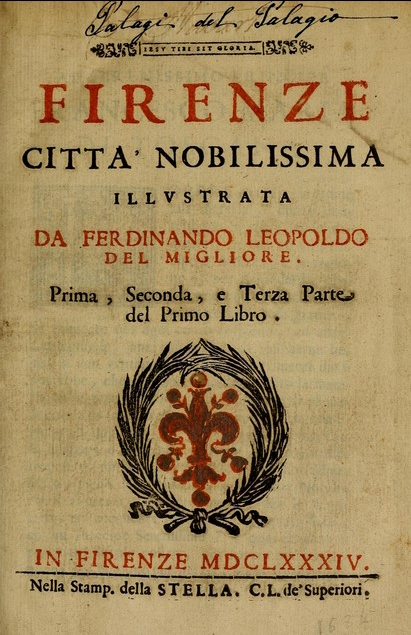
By 1684, the Vitale Medici story had become an essential element of Florentine lore —a century after the event and a few years before Paolo Medici's account.
That year, the local historian Ferdinando Leopoldo del Migliore published the first and only volume of his Firenze Città Nobilissima Illustrata (The Most Noble City of Florence Made Illustrious). He addresses the Jewish question on several occasions, at greatest length in his account of the city's Ghetto (pp.518-28).
Vitale figures prominently in del Migliore's chronicle (but with a number of substantial errors regarding the specifics of his conversion). In any case, del Migliore offers a colorful evocation of the already legendary Santa Croce sermons.
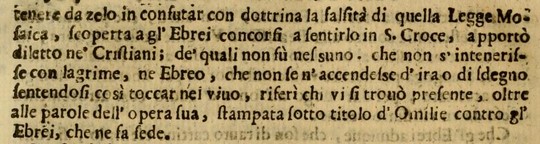
“Overcome with zeal, [Vitale] confuted the false doctrine of the Law of Moses and revealed this to the Jews who flocked to hear him in Santa Croce. The Christians were all delighted and broke down in heart-felt tears. The Jews, meanwhile, were cut to the quick and reacted with rage and disdain. This was noted by those present and further attested by Vitale's own words in his publication, Omilie Contro gl’Ebrei.”
The actual title was Homilies Offered to the Jews, not Homilies Against the Jews. Be that as it may, del Migliore was presumably right when it came to the fraught atmosphere of the event.
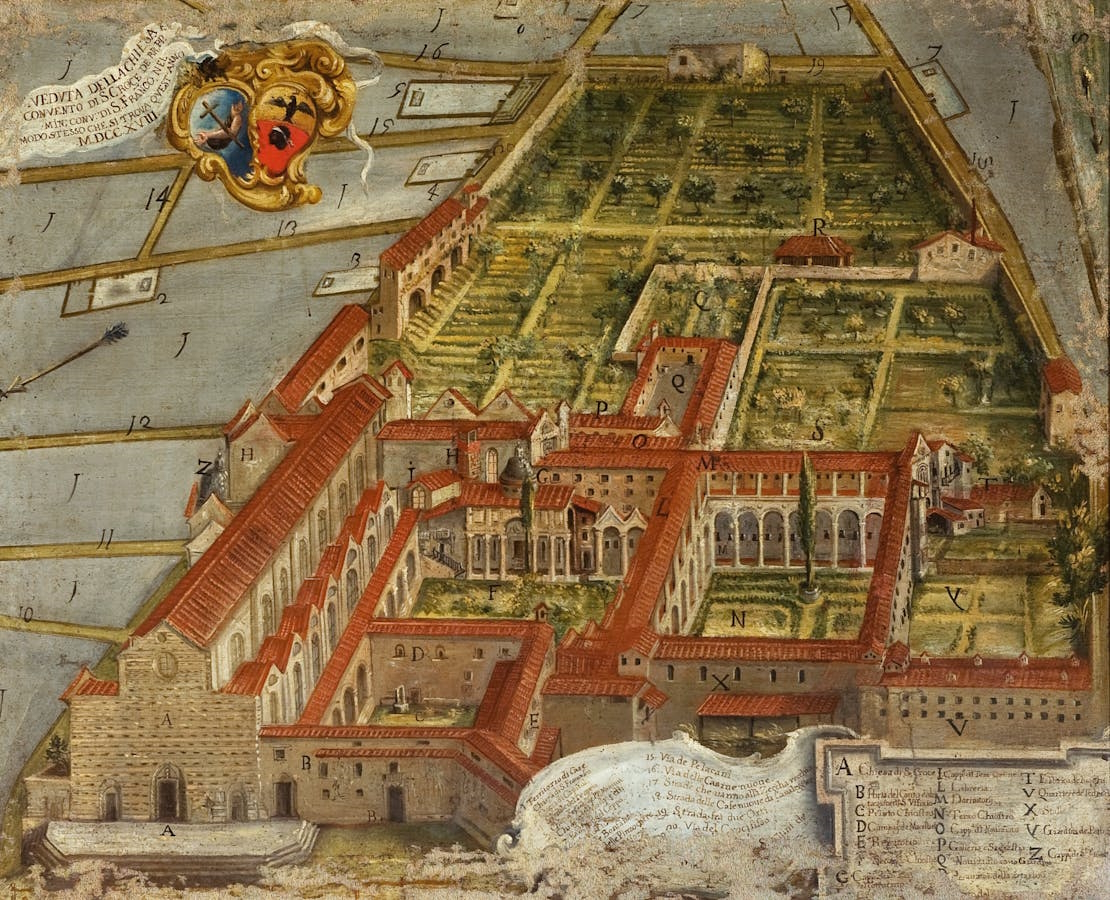
Until the suppression of the Florentine Inquisiton in 1782, it was housed in the section immediately to the right of the Church, looking out on the piazza. Its former premises were eventually razed in 1870.
For the Jews of Florence, this was nothing new. They had long been assaulted by fiery Lenten sermons right there at Santa Croce, often arousing anti-Hebraic mobs.
By the time of Vitale Medici, however, the emphasis had shifted from retribution to conversion and who better than this eloquent neophyte —still in the first fine rapture of his new faith?
While Vitale elucidated his state of soul, Christian and Jewish listeners could hardly ignore the unique context of Santa Croce— with the looming presence of the Inquisition which operated right next door.
According to Paolo Medici, an acknowledged expert on the local culture of conversion, it was there at Santa Croce that Vitale heard the call and was "so moved by inner feeling" that he renounced "the Hebrew Superstition".
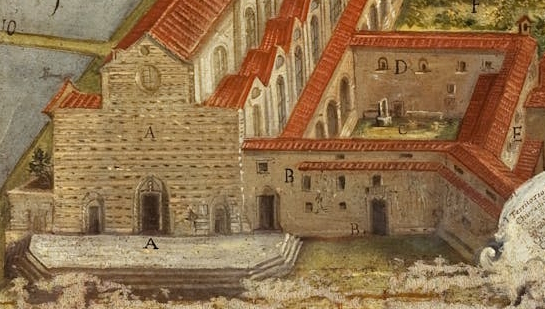
The Church of Santa Croce is to the left and the Tribunal of the Inquisition with its appurtenences to the right.
There was more to this story, of course —as Lucio Biasiori and Samuela Marconcini recently revealed in an illuminating piece of research, Public Secrets: Vitale Medici’s Conversion and Its Impact on the Social, Religious and Urban Landscape of Early Modern Florence.
We now know that Vitale's Coming-to-Christ was a gilded plea-bargain for the neophyte and a timely public-relations coup for the Church.
As for "finding oneself in the grip of the law for some criminal excess"— that is exactly what the soon-to-be ex-Rabbi faced.

Vitale (not yet "Medici") was neither the first nor last Jew to get in over his head, while working the dark side for a Christian client.
The Jews were long viewed as an uncanny people with arcane skills, ranging from astrology and alchemy to divination and the black arts.
Often they took extreme risks— braving prison, torture and worse —in pursuit of secret knowledge, occult powers and unearthly wealth. (I explore this phenomenon in my book, Jews and Magic in Medici Florence.)
For Vitale, it began picturesquely enough —as detailed in the record of the case eventually heard in Florence by the Tribunal of the Inquisition, with Father Inquisitor Dionisio Castacciaro presiding.
(ACAF TIN 1, 27, ff. 633-735; Contro Vitale ebreo medico, contro Sebastiano da Cagli e contro don Valerio da Bologna prete sacerdote / Against the Jewish Medical Doctor Vitale, against Sebastiano da Cagli and against the Ordained Priest Don Valerio da Bologna).
In 1581, the patrician Francesco Ruspoli found a small silver cylinder containing a paper scroll with an intriguing message. Long ago, during a time of plague, one of Ruspoli's ancestors hid a reportedly vast cache of gold and silver coins somewhere beneath their residence in Via dell'Anguillara (not far from Santa Croce). But where?
This was clearly a job for the Jews, since treasure-hunting by magic was a prized speciality of theirs. Ruspoli went to the principal Rabbi in the Ghetto, a certain Jacopo, who passed him along to Vitale as the best man for the job.
Then one thing led to another... Ruspoli's accomplices (including the rabbi and priest) worked through the whole bag of forbidden tricks: casting spells, summoning spirits of the dead and more.
As was often the case, too many people were involved and they talked too much —with word reaching the local branch of the Holy Office of the Inquisition and Inquisitor Dionisio Castacciaro himself.


In central Italy (Florence included), the Inquisiiton was administered by the Franciscans, elsewhere (Rome included) by the Dominicans. So, Galileo faces off with Dominicans (in black-and-white), not Franciscans (in brown).
Paolo Medici stated:
"In Florence, [Vitale] heard preaching by the Father Inquisitor Dionisio Castacciaro and was so moved by inner feeling that he left the Hebrew Superstition and embraced the Faith of Christ. In 1582, he went to Rome…"
None of this "just happened", of course. Castacciari and his tribunal found Vitale guilty of illicit activity on 28 June 1581 and sentenced him to close supervision and a shifting term of confinement in the Florentine Ghetto, later the City of Florence (thus allowing him to treat non-Jewish medical patients and earn a living).
Another aspect of Vitale's salutory penance was weekly visits to Father Castacciari at Santa Croce, where and when he presumably heard preaching and was moved by inner feeling.
Vitale settled on conversion by the end of 1582. In 1583 (not 1582, as stated by Paolo Medici), he headed off to Rome where his baptism could be staged to the greatest public effect.

"Homily on the Excellence of the Most Holy Baptism. Presented by the Magnificent and Excellent Master Vitale Medici, Doctor Physician. In the Magnificent City of Florence, in Santa Croce,on the second day of Pentecoste, 1583."
By 30 May 1583, Vitale was back in Florence and preaching his first sermon at Santa Croce —on the Sacrament of Baptism, cogently enough.

"VITALE, JEW WHO BECAME CHRISTIAN, PREACHED IN SANTA CROCE: On the 30th day of the present month of May, at the 12th hour, a Jew who became Christian named Maestro Vitale preached in Santa Croce here in Florence. He presented himself so well that he amazed everyone who heard him. His goal was to induce all the Jews to undergo Holy Baptism, not just the ones who were there— those few who live in this city— but all the rest of them too. He amazed everyone with his beautiful and gracious persuasion. Here in Florence, he practices as a Doctor of Medicine."
This thrilling occasion attracted Florence's preeminent diarist Agostino Lapini (as above), who noted that Maestro Vitale was currently working as a physician.


The converso Paolo Medici describes the converso Vitale Medici's magnificent donations to religious establishments.
Paolo Medici ofered his own summation more than a hundred years after the events of 1582-83. Vitale was a glorious figure to him— an alter ego perhaps —both as an ex-Jew and a Medici client. Meanwhile, he could still admire Vitale's splendid patronage in religious establishments around the city.
In Paolo's own account:
"Not only in words did [Vitale] show his zeal to honor God but also in deeds. He left his entire estate to the Canons of Florence Cathedral. At his own expense, he realized the façade we see at the Church of Ognissanti…"
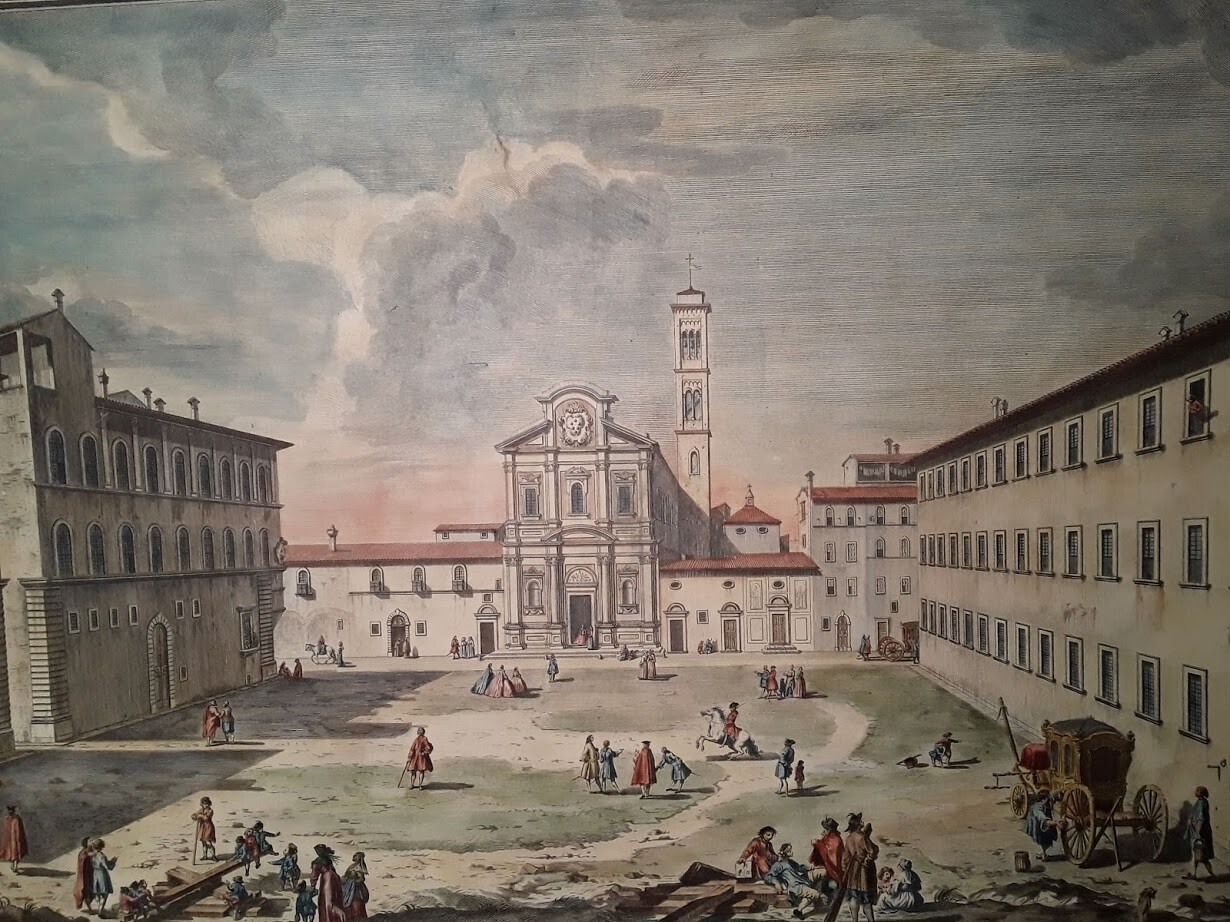
The facade of the church was conceived by Matteo Nigettii in 1637, then refaced in 1870 with a more durable stone but closely adhering to the orignal design.

In the pediment are the arms of the ex-Jewish Medici.

Inscription: "Alessandro and Antonio Medici, sons of Vitale, made this in the Year of Salvation 1637". When the facade was renovated in 1870, the original dedication was replicated.
Paolo Medici on Vitale Medici:
"...he also placed a rich and precious tabernacle above the high altar in the illustrious Temple of the Santissima Annunziata…”

The silver ciborium (center) by Giovan Battista and Marc’Antonio Merlini was commissioned by Antonio Medici (featuring ex-Jewish Medici family saints Vitale, Alessandro, Francesco and Mercuriale). For this project see Dora Liscia Bemporad.
Paolo Medici on Vitale Medici:
“…and in the Cloister of that Church [of the Santissima Annunziata) we discern two sculptures with an eulogy by [Vitale's] sons; this was commissioned by those friars in memory and gratitude for the magnificence of that family…”
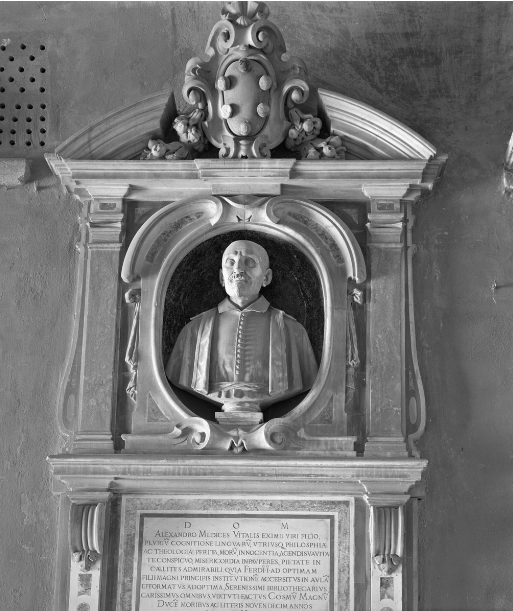
Physician Antonio Medici commissioned Francesco Mochi (1646) to sculpt this memorial for his brother Alessandro Medici (a priest), matching that of their father Vitale on the other side of the entrance to the Sagrestia della Madonna.(For the activity of the formerly Jewish Medici at that sanctuary, see Bernice Ida Maria Iarocci, Chapter 3, pp.206-226.)

In Jews and Magic in Medici Florence, I describe Father Alessandro de'Medici —colorfully but I think accurately —as "the king of Jewish converts in Florence" (p.200). In fact, he was given a watching brief by the Grand Ducal administration to keep an eye on Jewish affairs.
Alessandro was as well-versed as his father Vitale in Jewish letters, but even more deeply entrenched in the Christian-Academic world of his day. As Florence's designated expert on potentially heretical Hebrew texts, he kept an eye on scholarly relations between observant Jews and those they came in contact with.

The Sagrestia della Madonna was furbished by Doctor Antonio Medici in the elegantly understated Early Baroque style that the family seems to have adopted.

Jacopo Vignale's quiet and refined Assumption of the Virgin features Saints Vitale and Alessandro (kneeling), the family's name saints.

Paolo Medici on Vitale Medici and his sons:
“…and in many other convents of religous orders are to be found other mementos of Vitale’s liberality and that of his sons.”
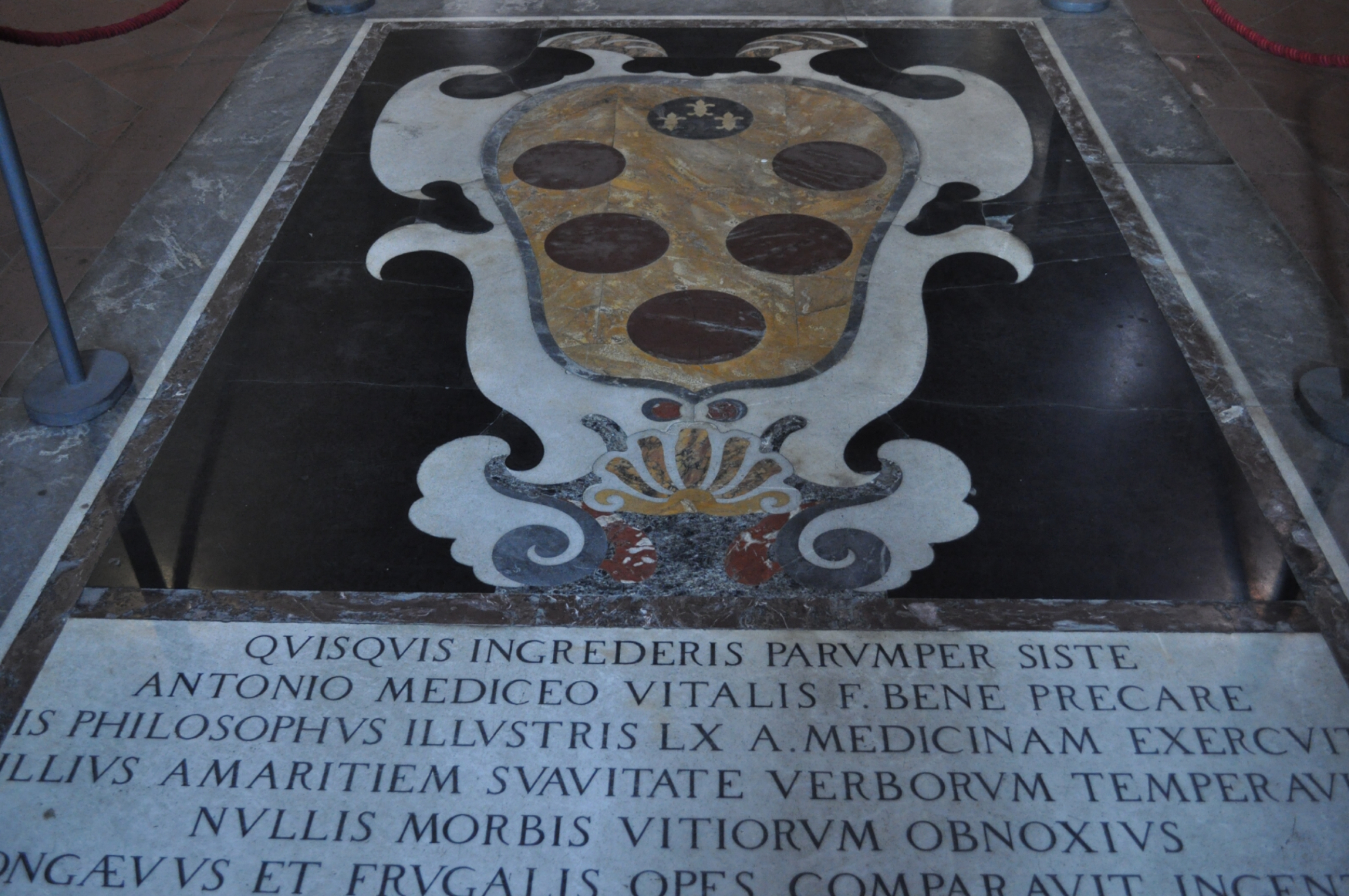
An astonishingly luxuriant work, the coat of arms of these other Medici is inlaid in colored stone in the church floor, just inside the entrance.
Many questions arise... The first is not particularly subtle:
Where did all that money come from?
The post-Jewish Medici were not just a little bit rich and their new mode of life had succeeded beyond all measure, in worldly terms at least.
In his single-minded focus on Vitale as lead converso, Paolo Medici overlooks the fact that it was son Antonio who mostly covered the outlay for sacred embelllishment.
In retrospect, it seems that Vitale did well in the practice of medicine but Antonio did even better —cultivating patients at the very highest level of Florentine society, which presumably paid off in other ways as well.

This massive silver ciborium by G.B. and M.A. Merlini was another benefaction of these quasi Medici.
Jews, it would seem, had a lot of scope in late Medici Florence if they came from elite families and weren't overly fussy about remaining Jewish. However, their social and economic advancement did not pass unnoticed and could generate unease —at very least— in some circles.
Ferdinando Leopoldo del Migliore, author of the Firenze Città Nobilissima Illustrata (Florence Most Noble City Made Illustrious) comes to mind. He was a distinguished antiquarian (to use a term of the time) and an indefatigable researcher, but also an obsessive traditionalist with a cultic veneration for ancient Florentine customs and institutions. (For del Migliore and his ethos, see my book After Vasari, pp.123-33.)
Purity of blood was what made a people "noble" and “illustrious” (as in the title of his book). So, the eruption of ex-Jewish Medici in the inner precincts of Fiorentinità could not pass unnoticed. Take the case of the fine wooden ciborium on the high altar of the Santissima Annunziata, created by Giuliano and Filippo di Baccio d’Agnolo in 1541, then lavishly upgraded by Antonio a century later.


"Since the ciborium installed there as replacement needed to be of silver, it would be worth between six and seven thousand scudi and realized at the expense of a Jew who became Christian —that is to say Antonio de’Medici son of Master Vitale. The underlying motive deserves much consideration. The Lord God is to accept so conspicuously meritorious an external act as a small outward sign, manifesting an intense interior desire to enrich that place by entrusting so precious an object."
Del Migliore struggles —it would seem —to answer his own nagging questions while avoiding words like "inappropriate" and "self-aggrandizing".

Then there were Antonio’s other interventions at the Santissima Annunziata, with their abundant displays of neo-Medici heraldry.
In effect, Antonio annexed the hallowed Sagrestia della Madonna (Sacristy of the Madonna), which housed the magnificent vestments that ornamented the miraculous image of the Virgin Annunciate. Then, he recycled it as a de facto family chapel.

"In marble niches are life-sized portrait busts sculpted by Orazio Mochi representing Master Vitale de’Medici and his son Alessandro. Those two, along with Alessandro’s brother Antonio, rejected Judaism and became most pious Christians. Here they made a fine chapel which you enter through a marble doorway set between those two niches [with the portrait busts]. You then face a coat of arms blazoned with the balls bestowed at the time of their baptism and accession into the House of Medici, as ordered by Ferdinando I. His action won much praise, since it was truly due to him that they extricated themselves from that dreadful Nation and became virtuous Philosophers and Professors of Medicine."
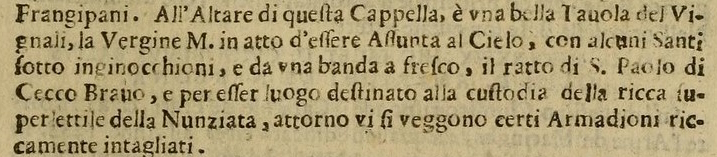
"On the altar of this Chapel is a beautiful picture by Vignali showing the Virgin Mary assumed into heaven with various saints kneeling below…and since this place is designed for storing the rich accoutrements of the [Miraculous Image of the] Virgin Annunciate, all around you see various large cabinets richly carved."
For as long as I can remember, the Sacristy of the Madonna was always locked up tight. However, in recent years— since I left Florence and moved back to Washington DC— it emerged as a more-or-less public exhibition space.
On my next visit, I will try my luck with other photos. In the meantime, what you see below (snatched off the web) can commemorate the vita, morte e miracoli (life, death and miracles) of the “Jewish Medici”.

Related posts

JEWISH IN ITALY?
What's it like— being Jewish in Italy?
Especially when you're a mildly observant foreign Jew like me?
Social and cultural affinity kick in.
And it isn't always "religion" that matters most.
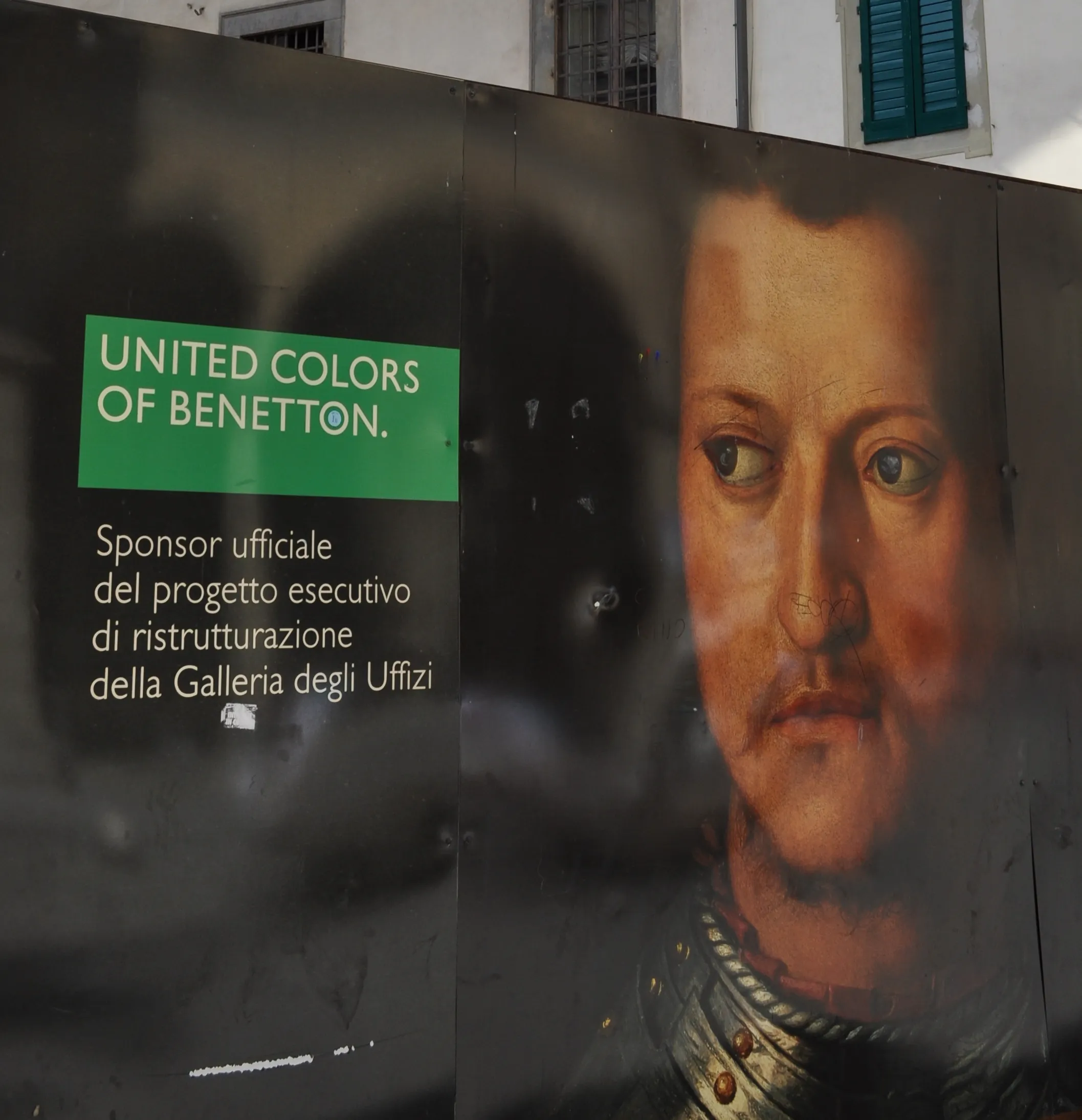
MORE MEDICI?! Family Myth and a Contested Legacy in Modern Florence
In Florence, the Medici follow you wherever you go.
But who were they really—back in their heyday?
And who are they now?
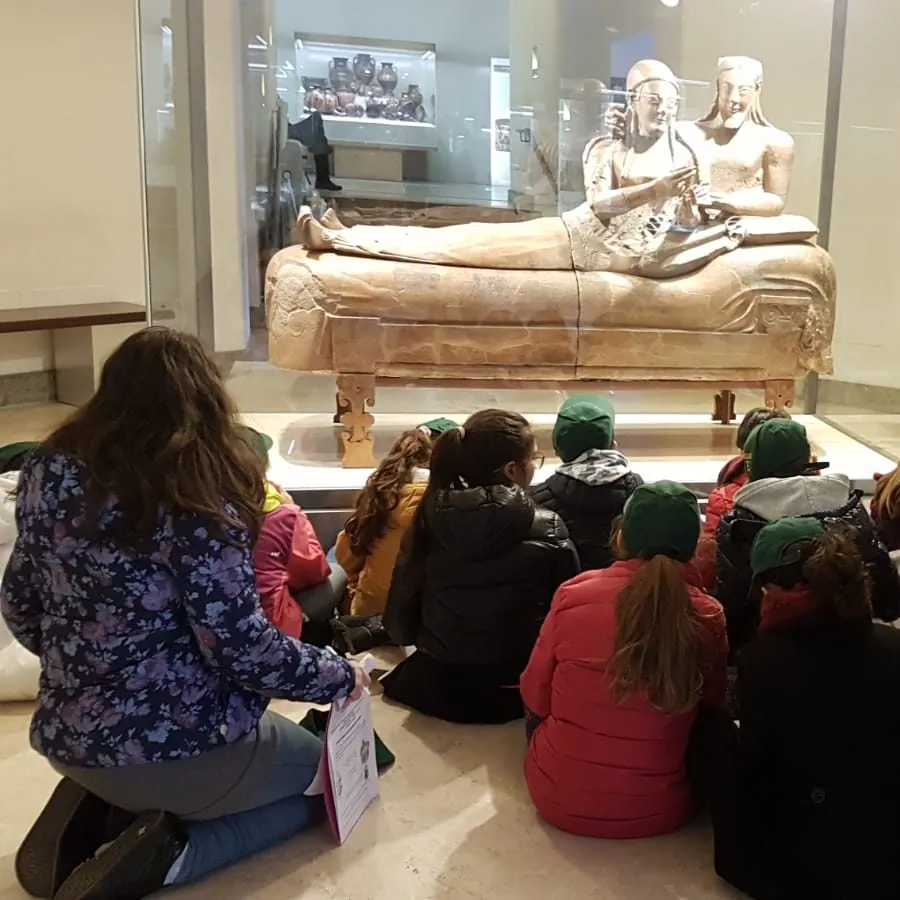
WHO CAME FIRST? Jews, Etruscans, Someone Else...
Why are the Etruscans so supremely "mysterious"? In the popular imagination, that is always the first word that comes to mind...
By way of Giorgio Bassani's 1957 novel, The Garden of the Finzi-Contini, we search for ancient clues in the Etruscan Necropolis of Cerveteri.
Who are these Etruscans anyway—real or imagined?
What secrets do they share with the author's own more recent dead —Holocaust victims from Jewish Ferrara?
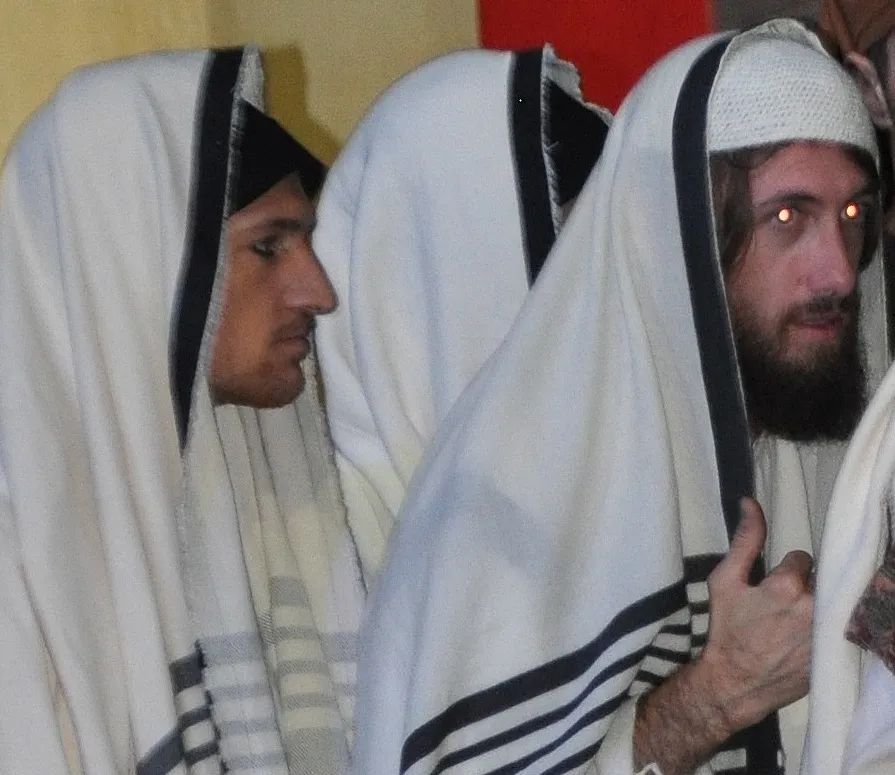
THE SORDEVOLO PASSION: Jewish Infamy Takes Center Stage in the Foothills of the Alps
Every five years, the inhabitants of the tiny Piedmontese town of Sordevolo stage a compelling recreation of the last days of Christ— as long imagined by Catholic believers.
There they are...before our very eyes....the cursed Killers of the Savior!
What on earth is happening here?!
I can promise you an answer, but not a simple one.
Lorem ipsum dolor sit amet, consectetur adipiscing elit. Suspendisse varius enim in eros elementum tristique. Duis cursus, mi quis viverra ornare, eros dolor interdum nulla, ut commodo diam libero vitae erat. Aenean faucibus nibh et justo cursus id rutrum lorem imperdiet. Nunc ut sem vitae risus tristique posuere.